admin
admin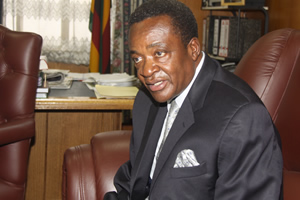
Publicity Minister Webster Shamu urging broadcasters to adhere to standards and ethics that value the country’s revolutionary ideologies.
Minister Shamu said it was important for broadcasters to adhere to standards that promote national interests the way liberation struggle broadcasters did.
As part of the commemorations, Minister Shamu toured Radio Zimbabwe Studios in Mbare alongside with veteran broadcasters Mr Dominic Mandizha and Mr Sobusa Gula Ndebele, the former Attorney General.
“Whenever broadcasting, one should always convey messages that earn him credibility from listeners,” he said.
“This is why during the liberation struggle Voice of Zimbabwe gained popularity other than stations that peddled falsehoods about the war.
“The whites had a tendency of giving hyperbolic statements with a lot of exaggeration simply to intensify their propaganda but we stuck to the ethics and won the hearts of many people.”
He said because of professionalism, Zanla and Zipra ended up establishing many stations in Mozambique, Zambia, Ethiopia, Tanzania and Egypt, among other countries.
Veteran broadcaster Mandizha, who started broadcasting in 1956, chronicled how they managed to convey messages to various parts of the world under the oppressive colonialists.
“We were broadcasting from Lusaka and we would provide news of what was happening back home on a weekly basis,” he said.
“I was promoted and got a senior position here but back then the management constituted mainly white people and it was very rare to see a black person in a managerial post.
“We soldiered on simply because we wanted to motivate people by providing them with updates of the liberation struggle and day-to-day activities.”
Gula-Ndebele, who broadcasted from Maputo, Mozambique, in 1979, also gave an account of the challenges they faced during the liberation struggle.
“You had to be tactical with the information you gathered before you broadcast it.
“It was a time when the liberation struggle was intense and you had to be strong and courageous enough to survive under the white regime,” he said.
ZBC Radio Services general manager, Allan Chiweshe, said radio was important for all sectors of the economy.
“It (radio) has got an effect in terms of informing people. You can advertise through it and politicians use it for political communication,” he said.
Radio Zimbabwe and Power FM coverage of the country was now 80 percent, while television transmission had increased from 45 to 75 percent.
The World Radio Day is being commemorated for the first time after its establishment by the United Nations Educational, Scientific and Cultural Organisation on November 3 last year.
February 13 is also the anniversary of the day when the United Nations established the UN Radio in 1946.
The day is set aside to encourage and promote the creation of more and better radio content and expand access to information through the channel.


 Online Reporter