malvernmugadzikwa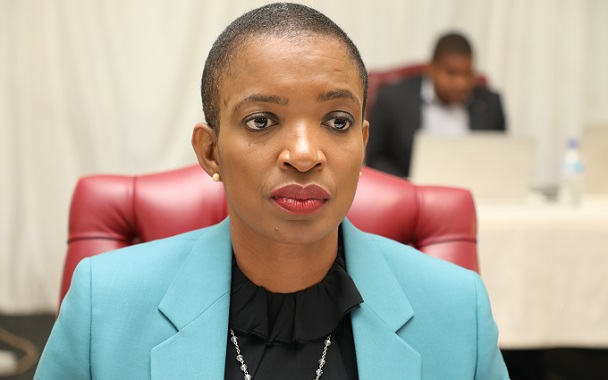
ZIMBABWE is set to host two key regional meetings over the next month, a development that will give a major boost to the tourism and hospitality industry. In an interview with The Sunday Mail’s TANYARADZWA RUSIKE, Tourism and Hospitality Industry Minister BARBARA RWODZI speaks about Zimbabwe’s exciting role as host of the first-ever Regional Forum on Gastronomy Tourism for Africa, unpacks plans for the upcoming SADC summit and shares her vision for propelling the nation’s tourism sector to new heights.
************************
Q: Zimbabwe is set to host the first-ever Regional Forum on Gastronomy Tourism for Africa, which seeks to showcase and promote consumption of indigenous foods. Can you outline the significance of hosting this historic forum?
A: First of all, allow me to acknowledge the critical role that has been played by the First Lady of the Republic of Zimbabwe, Dr Auxillia Mnangagwa, in initiating the gastronomy tourism concept in Zimbabwe since 2019, and taking it to Southern Africa.

In 2023, the First Lady was invited to San Sebastian, Spain, by UN Tourism, where she was honoured and rewarded for her excellent work and commitment in the field of gastronomy tourism.
It was at the World Forum on Gastronomy Tourism that the UN Tourism made the decision for Zimbabwe to host the First Regional Forum on Gastronomy Tourism for Africa, in honour of the excellent work by the First Lady.
As the patron of the tourism industry, the First Lady officially handed over the programme to the Ministry of Tourism and Hospitality Industry in 2022.
The journey has been exciting, and the hosting of the first-ever Regional Forum on Gastronomy Tourism for Africa is relevant to Zimbabwe, which is nurturing itself as a leading meetings, incentives, conferences and exhibitions (MICE) destination in Africa.

From July 26 to 28, the African continent will converge on Victoria Falls for three days, presenting an opportunity for the destination to showcase its diverse tourist attractions and investment opportunities.
Hosting the forum will bring a positive economic impact to the Victoria Falls resort town, as businesses will experience increased patronage from tourists seeking authentic culinary experiences, recreational activities and entertainment activities.
It will be a weekend to remember.
Definitely, the GDP (gross domestic product) for Victoria Falls will also experience a major boost during and after the forum.
The inclusion of local communities in the gastronomy tourism activities has also empowered previously marginalised communities in several ways, leading to self-sustaining projects and improved livelihoods across the country.
Through the First Lady Cookout Competitions, we have also witnessed a sense of community pride and the strengthening of social bonds among women, youths and people with disabilities.
The hosting of the forum is a huge brand endorsement for destination Zimbabwe, in positioning the country as a MICE destination of choice, recognised by UN Tourism, which is a specialised tourism agency of the United Nations.
At the global level, the hosting of such events has previously been the preserve of global gastronomy powerhouse countries.
Previous World Forum editions have been held in the following places: San Sebastian, Spain, in 2015; Lima, Peru, in 2016; San Sebastian, Spain, in 2017; Bangkok, Thailand, in 2018; San Sebastian, Spain, in 2019; Bruges, Belgium, in 2021; Nara, Japan, in 2022; and San Sebastian, Spain, in 2023.
The Ninth World Forum on Gastronomy Tourism will be hosted by Bahrain in 2024, on dates to be advised.
We are happy that UN Tourism decided to cascade the World Forum on Gastronomy Tourism to regional levels.
Zimbabwe and the Philippines are privileged to host the first editions on their respective continents.
The Philippines held the First Asia and Pacific UN Tourism Forum on Gastronomy Tourism from June 26 to 27, and we are told it was successful and well-received in that region. Perhaps, after the successful conclusion of the first edition of the UN Tourism Regional Forum on Gastronomy Tourism for Africa, the UN Tourism may grant Zimbabwe the opportunity to host the First World Forum on Gastronomy Tourism on African soil.
Q: Can you outline some of the issues set for discussion during the forum?
A: The UN Tourism Forum will discuss contemporary issues in the field of gastronomy tourism. The expected outcomes from such discussions are that countries should develop gastronomy tourism strategies to ultimately stimulate economic growth, promote cultural exchanges and sustainable development.
Furthermore, the forum will explore how African countries can create policies that support the growth of gastronomy tourism, considering the richness and authenticity of African cultures.
Sustainable practices will also feature in the forum and the discussions will centre on the inclusion of local communities in mainstream tourism activities, the minimisation of food waste and responsible tourism practices, among other discussions.
Participating African countries will also have the opportunity to showcase their different cuisines during the forum.
UN Tourism will also have a ceremony to recognise Tourism Ambassador for Responsible Tourism. The tourism ambassadors will assume the role of global advocates of sustainable tourism practices in championing the transformative potential of travel.
UN Tourism will also provide mentorship for tourism start-ups in Zimbabwe.
The mentoring programme is pivotal in fostering sustainable growth and innovation in the sector.
Two Zimbabwean start-up companies will make presentations, alongside three international start-ups from Ghana, Rwanda and France.
A call for participation of Zimbabwean youths was made through an invitation for young people to take part in a photo contest for amateurs.
Zimbabwean youths aged between 18 and 24 years will also be recognised and awarded in the category for gastronomic artistry photo competition.
As part of the programme, delegates will also have the opportunity to experience the World of Wonders Brand through technical tours, courtesy of the Government of Zimbabwe.
Tour operators will also have the opportunity to provide optional tour packages to interested delegates.
Q: How many delegates are attending the meeting and from which countries?
A: As at July 11, 2024, 15 ministers; eight more African countries represented at senior official level from ministries and tourism boards; regional economic community representatives from SADC and West African Economic Community and Monetary Union; 11 UN Tourism Secretariat members; 10 international speakers; 54 international delegates and 130 local delegates will participate at the forum.
We are also anticipating the participation of 15 local embassies accredited to Zimbabwe.
Q: Zimbabwe will be hosting the 7th SADC Industrialisation Week and the 44th SADC Heads of State and Government Summit. How is this going to boost the tourism sector?
A: Firstly, the Industrialisation Week and the SADC summit will attract delegates from the SADC region and beyond, providing an opportunity for Zimbabwe to showcase the diverse tourism attractions that the country is blessed with.
The two events will also increase Zimbabwe’s visibility as a MICE destination, fit for purpose.
The tourism industry will definitely enjoy brisk business in terms of accommodation, food and beverages, recreation and entertainment activities, spotlighting our hospitality to visiting delegates.
The country’s rich cultural heritage, history and natural beauty will also be on display, whilst promoting people-to-people exchanges as the 16-member SADC regional bloc converges on Harare.
For the Industrialisation Week, the ministry has also mobilised tourism private sector operators to exhibit and participate in panel discussions.
It is expected that the industry will leverage on the discussion platforms to improve on their entrepreneurship skills, service delivery, innovation and competitiveness, among other deliverables.
Q: Can you outline progress that has been made in the renovation of hotel facilities ahead of the SADC summit?
A: Twelve hotels have been designated to accommodate delegates during the SADC summit. These hotels and lodges range from three- to five-star grading.
The hosting of the two events has also resulted in the public and private sectors joining hands in driving key infrastructural projects in preparation for the summit. Seven of the country’s top hotels have also been refurbished, ready to host delegates during the summit.
Rainbow Towers Hotel is undergoing extensive refurbishment, including the Harare International Conference Centre (HICC), in preparation for the SADC summit.
The project involves creating six diplomatic suites and renovating one suite, with an overall progress of 85 percent, and on track to meet the set timelines.
Additionally, the HICC is undergoing refurbishment, including the replacement of chairs and carpets, with a total of 3 600 new chairs to be installed.
The installation progress stands at 30 percent, targeting completion by July 26.
Monomotapa is undertaking soft refurbishments on three suites, with an overall progress of 85 percent. The work is expected to be finished by the end of July 2024.
Hyatt Regency has created a Royal Suite, which is now ready for occupation.
Presidential villas are currently being constructed in Mt Hampden, with a target of completion before the SADC summit.
These improvements will not only cater for the summit dignitaries, but also enhance Zimbabwe’s tourism and hospitality industry, attracting future events and visitors.
Q: Zimbabwe is targeting to grow the tourism sector into a US$5 billion industry by 2025. Can you outline the progress we have made so far?
A: Zimbabwe launched the National Tourism Recovery and Growth Strategy in August 2020 in the midst of the Covid-19 pandemic to identify strategies aimed at propelling the sector from its then-declining state to a US$5 billion tourism economy by 2025.
The tourism industry is recovering from the slowdown of 2020-2022 and is expected to grow over the remainder of 2024 and into 2025, with an annual average growth rate of 10,5 percent forecast from 2024 to 2028.
In order to reach the targeted goal of a US$5 billion tourism industry, the Government is taking the necessary steps, such as reactivating the Tourism Fund, launching the “ZimBho” festive season campaign and harnessing digital platforms designed to facilitate investment.
The country’s tourism receipts increased by 121 percent in 2022, and total tourist arrivals are projected to strengthen in 2024.
The upgrading of airports has also boosted the country’s total airport passenger handling capacity from five million to 9,5 million.
The 2025 target will also be intensified by domestic, regional and international tourism campaigns through thematic clusters, and we are on course to achieve our stated target, in line with the objectives of the National Development Strategy 1.
The thematic clusters are rural tourism; sports tourism; religious tourism; business; culture and heritage; wildlife; holidaying and nature; MICE; medical tourism; and expatriates, diplomacy and the diaspora/visiting friends and relatives, to accelerate a resilient and sustainable tourism sector going into the future.
Q: Some tourists may have outdated perceptions of Zimbabwe. How is the ministry working to address these concerns and showcase the country in a new light?
A: The ministry will leverage on hosting of the forum to not only promote gastronomy tourism, but also dispel the negative perceptions on Brand Zimbabwe.
This will in turn project a positive image of Zimbabwe to the world.
For gastronomy tourism to unlock the results that we expect as Africa, there is need to develop strong marketing strategies that position the African brand as a top destination for food enthusiasts, leveraging on digital platforms, social media and partnerships with tour operators and host communities.
We need to sell the true African story through gastronomy tourism and reconstructing the narrative that has previously dented Brand Africa so as to reposition destination Africa in the proper context.
Q: Accessibility is a key factor for many tourists. Are there any initiatives planned to improve infrastructure to make Zimbabwe an easier destination to reach?
A: As a long-haul destination, the country still lags behind on destination accessibility, particularly on direct flights from source markets.
However, the country now has a strong base for airline business driven by a demand for air services and attractive tourism products.
Airports are also being upgraded to increase passenger handling capacity and improving the already existing facilities.
The Ministry of Transport and Infrastructural Development, through the Airports Company of Zimbabwe, has been in overdrive to rehabilitate airports across the country, in line with the Second Republic’s mantra of leaving no one and no place behind.
As such, the modernisation and expansion programmes for these airports are also yielding positive results through the introduction of new airlines and the reintroduction of some of the airlines that had stopped their services to Zimbabwe.
In terms of connecting to regional and international source markets, Dubai, Qatar, South Africa, Kenya and Ethiopia act as our gateways and hubs for distribution on the African continent and abroad.
The well-programmed infrastructural development projects by the Government are also bearing fruit, as the country is progressively becoming a destination of choice, especially for drive-in tourists utilising our revamped highways.
Measures to simplify and streamline visa applications, such as online applications and relaxation of visa requirements, are being considered.
Improvements to road and rail networks, as well as exploring more efficient transportation modes like high-speed trains, are being explored.
Q: Technology is constantly transforming the travel landscape. How is the ministry embracing digital marketing and innovation to attract new generations of tourists?
A: The ministry and the Zimbabwe Tourism Authority are taking the necessary steps to embrace digital marketing and innovation given the technology revolution that has transformed the world.
Technology has indeed assisted the sector to reduce costs, enhance operational efficiency and improve services and customer experience through improved communication, reservation and guest service systems.
We will also endeavour to maintain strong social media presence on platforms to engage with younger generations on platforms such as Facebook, YouTube, Instagram and
TikTok.
We are also partnering with key travel influencers whom we believe will also promote Brand Zimbabwe in the different source markets, thereby connecting us to the world.
In April 2024, Zimbabwe hosted the Emirate Women Travel Bloggers from the United Arab Emirates on a familiarisation tour.
Q: Looking ahead, what are your long-term goals for Zimbabwe’s tourism industry, and how will you measure success?
A: As a long-term goal for the tourism industry, my plan is to improve the contribution of tourism to the national economy.
My vision is to improve on the current contribution of tourism to the national economy, specifically majoring in the contribution to the GDP, tourism investments, tourism receipts, tourist arrivals, employment creation and improving the length of stay in the destination.
Diversification of the tourism product
Zimbabwe is a land blessed with unique man-made attractions, as well as natural and cultural assets.
My aim is to develop and promote diverse tourism products beyond wildlife and safari.
The ministry has reconfigured tourism promotion around the thematic clusters mentioned above to broaden tourism offerings.
Sustainable tourism
My ministry will work closely with other tourism stakeholders to implement sustainable tourism practices, in line with the triple bottom line strategy, thereby preserving our natural resources for future generations.
Brand and image enhancement
My ministry will continuously work towards enhancing the tourism brand locally and abroad.
Locally, the ministry will join hands with the tourism industry to advance marketing campaigns such as ZimBho, URIPI and Meet in Zimbabwe, as well as others that we intend to introduce in the near future.
In regional and international markets, my ministry will strive to create destination awareness to raise the profile of destination Zimbabwe, through participation at major tourism fairs and exhibitions, roadshows and entering into strategic partnerships with other countries, regional economic communities and multilateral institutions.
Inclusive tourism
I look forward to working with all stakeholders in developing a tourism industry that is inclusive of relevant parties from the grassroots level.
Local communities, as custodians of natural resources, should benefit from the tourism value chain, guaranteeing full support towards the ongoing conservation efforts.



 Online Reporter