malvernmugadzikwa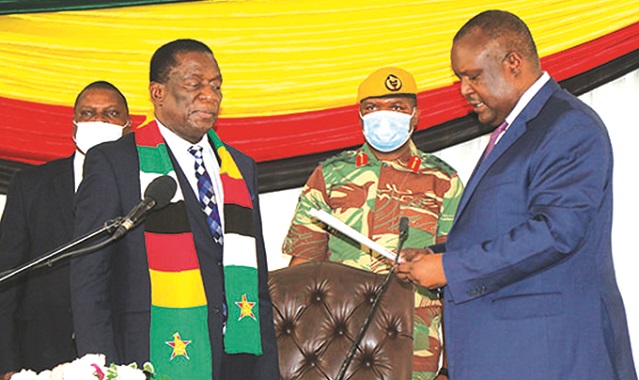
Sunday Mail Reporter
TODAY, a momentous occasion unfolds in Zimbabwe’s history.
President Mnangagwa launches the Gukurahundi Community Engagement Outreach Programme, a series of community hearings designed to resolve the sensitive and long-standing issue of the Gukurahundi disturbances of the 1980s.
This initiative marks a significant step towards understanding that part of the nation’s narrative, paving the way for a long-awaited path to healing, reconciliation and closure.
For decades, the spectre of Gukurahundi cast a long shadow over Zimbabwe.

Discussions surrounding the disturbances that gripped Matabeleland and parts of the Midlands provinces were taboo, hindering the nation’s ability to fully confront its past.
However, with President Mnangagwa’s assumption of office came a shift in the political landscape. He encouraged open discussions on the issue, personally vowing to tackle this sensitive matter head-on. This promise was not mere rhetoric.
Genesis
The journey towards today’s launch began on March 21, 2019, when President Mnangagwa met with the Matabeleland Collective, a coalition of civil society organisations.

This meeting marked the beginning of a series of crucial conversations with various stakeholders around the sensitive issue.
The President met with chiefs from Matabeleland in June of that year, followed by further discussions with the Matabeleland Collective in August.
These discussions were a concrete effort to understand the complex grievances stemming from Gukurahundi.
Grievances
Through these meetings, a list of grievances emerged, forming the foundation for a potential path forward.
Stakeholder concerns included the lack of documentation for victims’ families, which created a sense of “generational statelessness”.
It was agreed that there was need to consider relaxing Government protocols regarding the issuance of civic documentation.
Furthermore, some stakeholders argued that the people of Matabeleland provinces were experiencing marginalisation and alienation.
They said there was need for restorative justice for the people who were affected by Gukurahundi to foster development in their communities.
Some argued that there should be compensatory development by the Government through targeted programmes.
Stakeholders also recognised the need for intergenerational healing.
Deep-seated bitterness and tribal tensions were attributed to the prolonged silence surrounding Gukurahundi.
Truth-telling, they argued, was crucial for reconciliation, and victims needed a platform to share their experiences.
Additionally, the trauma inflicted by the disturbances also necessitated access to counselling and psychosocial support.
The Gukurahundi Community Engagement Outreach Programme seeks to address these grievances head-on.
Outreach
Traditional leaders will be central to the initiative, facilitating discussions and gathering testimonies from affected communities.
According to Mrs Virginia Mabiza, Head of the Secretariat for the Matabeleland Peace-Building Outreach Programme, this decision was made after extensive consultations with various stakeholders.
“Traditional chiefs, being deeply rooted in their communities, can facilitate open and honest dialogue without fear of reprisal,” she said.
“Their leadership ensures that affected individuals feel safe and supported in sharing their testimonies.
“Historically, chiefs have always played a crucial role in conflict resolution within their communities, making them well-equipped to handle such sensitive matters.
“Their involvement is pivotal in fostering trust, healing and reconciliation, allowing the Gukurahundi Outreach Programme to achieve its goals effectively.
“They also serve as a bridge between the community and the State, effectively communicating the concerns and recommendations of the community to the Government.
“Their leadership in the outreach process signifies respect for traditional governance structures and acknowledges the important role these institutions play in contemporary efforts to promote peace and reconciliation.”
The involvement of the chiefs is expected to strengthen the initiative by leveraging on trust and cultural legitimacy within communities.
Chiefs have already received equipment, including laptops, recorders and printers, to ensure the meticulous documentation of witness testimonies.
Recognising the importance of a victim-centred approach, traditional leaders and their panels, comprising 14 individuals, have undergone comprehensive training.
Last week, they gathered in Bulawayo to finalise preparations for today’s historic launch at State House.
Guiding the dialogue
Following the National Council of Chiefs’ report to President Mnangagwa on stakeholder consultations held in 2021, the chiefs developed a Manual on Community Engagement Processes on the Gukurahundi issue.
This manual outlines all potential actions the chiefs and their panels should take during the public hearings.
It outlines how the chief should prepare for their sessions, also providing a framework for the engagement process.
The manual equips chiefs with skills to analyse issues, share knowledge and ultimately, craft insightful findings and recommendations.
Objectives of the outreach programme
The initiative seeks to build a comprehensive record of individuals directly and indirectly affected by Gukurahundi.
It will also record the events of the Gukurahundi period for preservation of historical narratives.
Importantly, the initiative seeks to offer a platform for survivors to express their experiences and emotions, while identifying potential solutions to address grievances and foster healing.
Broadly, the programme is geared towards contributing to national peace-building and facilitating restorative justice.
Logistics and participation
The manual also establishes clear guidelines for conducting the community discussions.
Chiefs will set parameters, outlining objectives, the time frame of events and ground rules for respectful dialogue.
Participants will be assured of an open and free environment, where diverse perspectives are valued.
Submissions will primarily occur publicly, with exceptions for potentially sensitive cases.
Additionally, the manual outlines strategies to capture the voices of those who may not be able to attend initial proceedings in a specific area.
Meeting attendance will encompass a broad spectrum of community members, including traditional leaders of all levels (chiefs, headmen and village heads), religious leaders, cultural leaders and the general public.
The chiefs will also have the discretion to invite Government officials, security personnel, secretariat staff and counsellors when needed.
According to Mrs Mabiza: “The primary eligible participants are the direct victims of the Gukurahundi conflict and their families.
“Additionally, members of those families are also encouraged to participate in the outreach activities.”
Roles and responsibilities
According to the manual, chiefs, as chairpersons, are responsible for coordinating meeting proceedings.
Headmen are tasked with information gathering, disseminating information to the community and providing guidance.
Village heads will focus on identifying victims and major hotspots within their communities.
Religious leaders will offer spiritual guidance, promote peace by calming emotions through counselling and mobilise participants from their congregations.
Precedent
While the Gukurahundi Community Engagement Outreach Programme is a significant step towards fostering national healing and reconciliation, it is not the first of its kind.
Across the globe, nations have undertaken similar initiatives to grapple with the scars of their past.
In South Africa, the Truth and Reconciliation Commission was established in 1995 to investigate human rights abuses committed by both the apartheid government and anti-apartheid movements during the apartheid era.
It offered amnesty for those who came forward and confessed their crimes.
Following the 1994 Rwandan genocide, the Gacaca courts were established as a community-based approach to address the atrocities.
These courts relied on the participation of village elders and sought to promote reconciliation, while holding perpetrators accountable.
In Chile, the National Truth and Reconciliation Commission was established between 1990 and 1991. It investigated human rights violations committed during the Pinochet dictatorship.
The commission helped to document the atrocities and shed light on a dark period in Chilean history.
For Zimbabwe, as the outreach programme commences, the road ahead will be arduous.
But with each documented story, Zimbabwe will take a step closer towards reclaiming its narrative, not just of pain, but also of resilience, forgiveness, national unity and cohesion.



 Online Reporter