shloboe boe
Nqobile Bhebhe,Zimpapers Business Hub
THE Treasury has revised Zimbabwe’s economic growth forecast upwards to 6,6 percent by year-end, with the projected nominal Gross Domestic Product (GDP) expected to reach US$52,3 billion — the highest in decades.
This marks a significant milestone for Zimbabwe, following the July revision of GDP to US$44,4 billion, up from an initial estimate of US$35,2 billion, based on findings from an economic census conducted by the Zimbabwe National Statistics Agency (Zimstat).

Finance, Economic Development and Investment Promotion Minister, Professor Mthuli Ncube, announced the revised figures in Bulawayo yesterday while officially opening the 4th edition of the Zimbabwe Economic Development Conference (Zedcon).
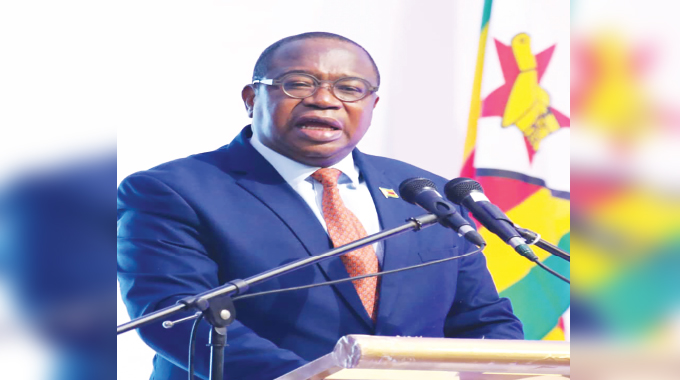
He stated that Zimbabwe’s economy is firmly on the path to sustainable recovery following last year’s drought-induced slowdown, with fresh projections indicating accelerated momentum driven by agriculture, mining, and manufacturing.
“Building on this foundation, economic growth for 2025 is now projected above the original projection of six percent to around 6,6 percent, with an expected nominal GDP of approximately US$52,3 billion,” said Ncube.
He attributed the upward revision to higher-than-anticipated output in agriculture, particularly tobacco, due to favourable climatic conditions, and mining sector growth spurred by strong commodity prices, especially gold.
Ncube said that this growth trajectory is supported by macroeconomic stability, with inflation having moderated significantly since the introduction of the Zimbabwe Gold (ZWG) currency. He noted that narrowing exchange rate gaps between formal and parallel markets, alongside prudent fiscal and monetary policies, have created an environment conducive to investment and growth.
He further highlighted that the recently concluded Economic Census by ZimStat revealed robust economic activity across the country.
“Notably, the Economic Census shows that the country’s Gross Domestic Product stood at US$45,7 billion in 2024, reflecting positive momentum in our national economy. It’s imperative that we sustain this growth momentum, while ensuring that the benefits of growth accrue and reach every citizen of Zimbabwe,” he said.
Contrary to past perceptions, Ncube said the manufacturing sector has re-emerged strongly, demonstrating significant potential.
“Contrary to earlier perceptions, the sector’s contribution has exceeded expectations, underscoring the tangible progress towards economic transformation that we are witnessing.
The growth in manufacturing is a clear testament to the effectiveness of our policies aimed at industrial revitalisation, beneficiation, and value-addition,” he said.
Industry and Commerce Minister, Nqobizitha Ndlovu, also praised the prevailing stability, describing it as a game-changer for both consumers and investors.
“In terms of what is happening to this economy, I think under the Second Republic we have had the longest stable spell that we have ever experienced,” he said.
Ndlovu noted that the stability of the ZiG currency is deepening trust in the economy.

“There are people who have told me they are looking for the ZiG because, for the first time, they know they can keep it for months and it will still have the same buying power — if not more,” he said.
He added that investor appetite has surged due to consistency in monetary and fiscal policy.
“We have seen high appetite for investment in the last 12 months. Of course, under the Second Republic we have recorded record investments in the manufacturing sector. Capacity utilisation will be a moving target because there is continuous expansion in capacity,” he said.
Similarly, Ncube emphasised that Zimbabwe’s development trajectory must remain inclusive, ensuring that no one and no place is left behind.
“Over the past years, underpinned by the National Development Strategy 1 (2021–2025), we have made strides towards revitalising our industrial base, promoting investment, enhancing ease of doing business, and reducing the cost of doing business,” he said.
He said that Zimbabwe will continue to leverage the African Continental Free Trade Area (AfCFTA), which offers access to a market of over 1,4 billion people with a combined nominal GDP of approximately US$3,4 trillion.
Calling for closer collaboration, Ncube urged development partners, industry leaders, academia, civil society, and all stakeholders to work together in designing and implementing policies that foster innovation, competitiveness, and economic diversification.
Ncube also revealed that the Government is conducting a comprehensive review of levies, fees, and charges to improve competitiveness.
“This includes systematically cutting levies, fees, and charges across all sectors to encourage efficiency, productivity, and growth.
The goal is to cut red tape, eliminate overlapping charges, and create a more enabling environment for investment and business expansion. To date, Government has streamlined levies, fees, and charges in the agriculture, tourism, and transport sectors.”
The conference, hosted for the first time in Bulawayo under the theme: “Macroeconomic and Sectoral Policies for Broad-based Economic Transformation”, underscored the central role of agriculture, mining, and manufacturing in Zimbabwe’s economic transformation.
Researchers, academics, corporates, think tanks, and development partners used the platform to engage in robust dialogue aimed at shaping Zimbabwe’s economic trajectory in line with Vision 2030.
This comes as the Government has mainstreamed knowledge management as a driver of informed policy dialogue and implementation, encouraging innovative thinking among researchers, policymakers, and private sector leaders.
The initiative promotes evidence-based research on economic and policy issues and creates platforms for young researchers, the diaspora, and private entities to share insights with policymakers.
Zedcon continues to serve as a vital platform for thought leadership, policy exchange, and recalibration of Zimbabwe’s development trajectory in pursuit of Vision 2030.


 Online Reporter