Vusumuzi Dube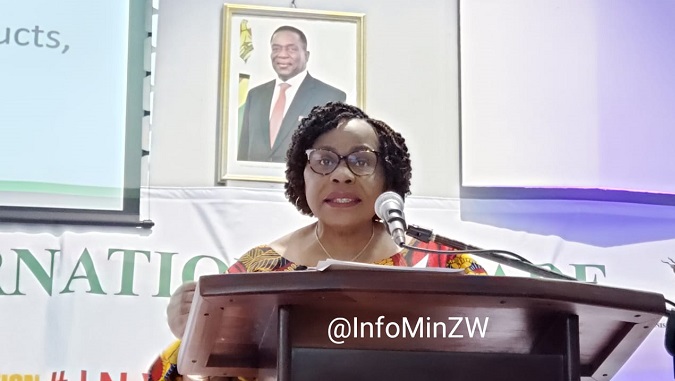
LAST week, South Africa hosted the high-level BRICS (Brazil, Russia, India, China and South Africa) international summit, where President Mnangagwa was represented by Vice-President Dr Constantino Chiwenga.
Zimbabwe has applied to join BRICS’ New Development Bank and has also expressed its intention to be part of the expanding bloc. Our Harare Bureau (SM) spoke to Information, Publicity and Broadcasting Services Minister Monica Mutsvangwa (MM) to get the nuts and bolts of Zimbabwe’s position on BRICS.
SM: Has Zimbabwe sent a formal request to join BRICS?
MM: The Second Republic of President Cde Dr E D Mnangagwa is desirous of joining the BRICS group of nations. Harare has also made formal overtures to join the New Development Bank of the BRICS.
The BRICS brings in a refreshing alternative and counterpoise to the Bretton Woods Institutions, which were set up to preserve Europe’s post-colonial stranglehold on African nations. In the same vein, the US hegemony ensured that Africa was marginalised from the global economy and ostracised from the international finance system.
President Mnangagwa was personally invited to the BRICS Summit. He sent his Vice-President, instead, as he was busy with the all-important national elections that coincided with the BRICS Summit.
Zimbabwe welcomes the announcement of the enlargement of the BRICS by the additional six countries of the UAE (United Arab Emirates), Saudi Arabia, Iran, Egypt, Ethiopia and Argentina. These are nations which have strong bonds with Zimbabwe. Their inclusion augers well for the eventual Harare membership.
SM: With the group accounting for almost one-third of worldwide economic activity, what does Zimbabwe stand to benefit if accepted into BRICS Plus?
MM: The most pressing area for Zimbabwe is the domain of global currency reform. Zimbabwe has been economically buffeted by more than two decades of a withering attack on its national currency. The pummelled Zimbabwe dollar was the weapon of choice as Washington and its US dollar dominant clique sought regime change through the horrendous inflation assault of the national currency.
To escape the inflation binge, Zimbabwe was forced to take temporary refuge in the Yankee currency in 2008. Final respite has come through the revert back to the future of gold as a backer of the national currency. The focus of the BRICS Plus on divesting from US dollar dependency, particularly in the settlement of cross-border trade, is important to Zimbabwe.
The BRICS Plus’ move on use of own currencies is a shot in the arm to the nascent steps by Zimbabwe to insulate itself from the ravages of a predatory US dollar. The global mathematics is right. Saudi Arabia, Russia and Iran account for nearly 80 percent of global oil supply.
On the other side, populous China and India are increasingly accounting for the bulk of global oil demand as their economies chug into middle to upper-income status.
This is at a time when America has become a net exporter of oil, hence a competitor to the traditional Middle East. This oil market development is undermining the 1971 Riyadh-Washington consensus on the petrodollar oil trade.
President Nixon dethroned the gold-backed British pound as the currency of settlement in international commerce.
Rome was not built in a day. And the weaponisation of the US dollar in the war with Russia has nudged a new impetus. Clearly, there is a BRICS Plus desire and the will to distance away from the petrodollar.
Zimbabwe cannot be in better company on this score.
The other promising area is the field of investment. Again, Zimbabwe has of necessity moved earlier and further to seek alternative and friendly capital long before the inception of BRICS.
Harare was banished from the US and European capital markets after its decisive land and resource restitution of 2009.
Desperate, it had to turn to Beijing for rescue. The Look East Policy was born long before it became fashionable for the world to track to China for investments. The New Development Bank enhances a capital market tradition which Zimbabwe has long attuned itself to.
Already, it is enjoying mouth-watering investment by Indian and Chinese billionaires. There is “Big Shot” Xiang Guangda of Tsingshan Holdings Group in carbon steel at Manhize. There is a clutch of deep-pocket players in the hard rock lithium sector and its allure of electric storage batteries for new electric energy vehicle mobility.
Indian billionaire Mr Ravi Jaipuriya of Varun Beverages has invested millions in the soft drinks market.
Even more funding beckons for the enabling infrastructure to support the burgeoning large-scale, global class mining and industrial investments. Needless to say, the BRICS Plus New Development Bank is a boon to Harare. The war in Ukraine has created a new urgency in global food security.
The long-neglected African savannahs, with their rewarding climate, offer a tantalising alternative source of food for the billions in Asia, as they become rich.
Again, Zimbabwe had a head start in procuring equipment from China, Brazil and India as it fought off sanctions as of the year 2000. Now, this trend is the new form as the Global South bands together. By dint of historical circumstances, Zimbabwe is fortuitously the leader of the pack. As the saying goes, what were once vices are now virtues.
SM: Having faced years of public policy-induced economic decline, worsened by Western sanctions, will the BRICS membership eliminate relations with the Western world?
MM: Zimbabwe believes in a global village. President Mnangagwa has a policy of friend to all and enemy to none. It is the West that walked out on Zimbabwe under post-imperial delusions of effecting regime change. That illusion has since proved to be folly. Harare is happy to engage and re-engage with all for mutual benefit.
Zimbabwe is fully apprised of the reality that the West has the deepest pool of investment funds and mature technologies. There is a compelling case of attracting competing and complementary investment capital regardless of geographical source.



 Online Reporter