Chronicle Editor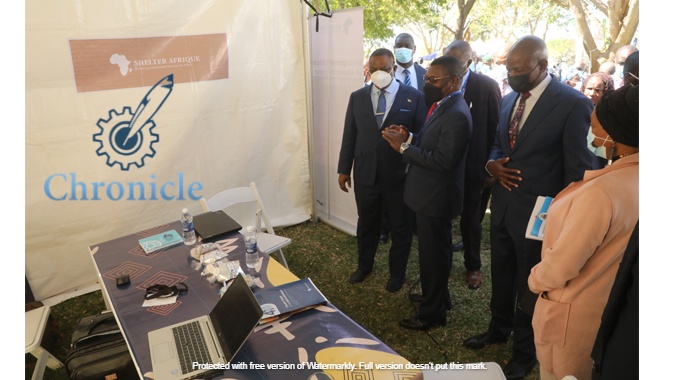
Prosper Ndlovu in Victoria Falls
ZIMBABWE’S rural transformation drive came under regional spotlight yesterday during the official opening of the regional Shelter Afrique Conference here where the country was lauded for taking steps towards fostering inclusive development and empowering ordinary people through the Government’s rural industrialisation agenda.
Vice-President, Dr Constantino Chiwenga, officially opened the 41st Shelter Afrique Annual General Meeting (AGM) and Symposium on behalf of President Mnangagwa, in which he also called for strengthening of institutional capacities towards bridging the development gap between rural and urban areas.
Guided by the Second Republic’s devolution focus, a key component of the National Development Strategy (NDS1), which seeks to ensure “no one and no place is left behind” in terms of development, the Government is facilitating several socio-economic projects in different parts of the country, which are aimed at assisting communities to generate own incomes and be self-sufficient.
The projects cover agricultural production, both animal and cropping, water, small to medium enterprise industry and commerce development, housing development, social amenities, road rehabilitation and construction, education and information communication technology, among others.
With such development focus, delegates noted that Zimbabwe is forging ahead with its drive to realise an upper middle-income economy vision by 2030, as well as contributing towards achievement of Africa’s Agenda 2063.
“We are challenged to have a stronger determination to redress that imbalance between the rural and the urban divide and turn urbanisation into an opportunity rather than a challenge,” said VP Chiwenga in his keynote address.
“Central governments alone will not solve the soaring demand for housing, especially in our urban areas,” he added.
“In the rural areas, it is not about homelessness, but about the quality of housing and basic social amenities that is of concern. Consequently, housing delivery requires concerted efforts from the private sector, civic society organisations, community based organisations, individual beneficiaries and multilateral agencies such as Shelter Afrique among an array of others.”
Urging adoption of harmonised approaches across the continent in an endeavour to reduce the housing backlog in Africa, Dr Chiwenga said the elephant in the room is how to leverage housing finance, especially.
“We have some robust mortgage infrastructure within our countries. However, robust as they are, they are not serving the intended purpose as envisioned,” he said.
“Mortgage penetration in Africa is very low. The appetite is very huge but the uptake leaves a lot to be desired. It is high time we undertook self-introspection in the way we execute our lending business. Rigidity will lead us into demise.
“But we should not seem like we are always pressing the self-destruction button as Africa as far as housing finance is concerned.”
In view of the financing bottlenecks such as collateral security, which the majority of citizenry lack, VP Chiwenga said available mortgage finance has tended to be more elitist, thereby exposing the majority of the populace who fall behind in terms of the economic and social strata.
Shelter Afrique managing director, Mr Kingsly Muwowo, said Zimbabwe’s steps towards developing modest housing and other community projects across the country were highly commendable and praised the Government for being a fully paid-up member.
“Zimbabwe is a special member of Shelter Afrique in terms of commitment. Out of 46 members you are among the only six who are paid-up.
“You are the only country with zero non-performing loans and that you should be proud of,” he said.
Because of the country’s commitment to national housing and social amenities development, Mr Muwowo said it was for this reason that Shelter Afrique has disbursed up to US$63 million to Zimbabwe through local banks in the form of lines of credit.
“That is modest funding but as we shape our strategy and accrue more capital we will do more and demonstrate the impact on you as a shareholder for which you rightly deserve,” said Mr Muwowo.
He said beneficiary institutions to Shelter Afrique financing in the last few years include CBZ, CABS and recently, BancABC, which got US$11 million funding to roll out housing projects in selected parts of the country.
Shelter Afrique board chair, Mr Ephraim Bichetero, also paid tribute to Zimbabwe’s development focus, in particular how the country has embraced the smart housing development strategy and efforts to contributing to uniting Africa.
With Zimbabwe’s involvement and other members, he said Shelter Afrique was working to strengthen institutional capacity in view of climate change threats to provision of affordable and sustainable housing for all.
In the same vein he said Shelter Afrique was exploring possibility of launching a green bond and pushing adoption of alternative housing design and development for sustainability purposes.
Outgoing AGM chairman and Cameroon Housing and Urban Development Minister, Courtes Celestine Ketcha, who delivered her remarks virtually, said Zimbabwe has demonstrated high level of commitment to supporting regional development and success of Shelter Afrique programmes.
She applauded Zimbabweans for being a hard-working population and called for greater unity across the region.
“When we unite as Shelter Afrique we can move forward and divided we fall,” she said.
In his remarks National Housing and Social Amenities Minister, Daniel Garwe, also stressed the need for modernisation of rural settlements as a strategy to reducing pressure on urban cities.
“We now need to reconsider working on various housing models for rural settlements, which meet the cultural and religious considerations, while at the same time enhancing climate proofing; while allowing the adoption of smart energy,” he said.
“Rural service centres should also be planned in such a way that they enhance economic activities and provide basic infrastructure to support such initiatives as we address the issue of rural to urban migration.
“We also need to relook at the waste management systems in rural areas and proffer innovations which uplift the living standards.”
By working closely with organisations such as Shelter Afrique, he said members have a lot to offer to the region and beyond.
“We may have challenges in achieving our potential, but by combining our ideas, enhancing dialogue, research and continuous learning, we will get there,” said Minister Garwe.
Earlier VP Chiwenga conducted a tour of exhibition stands on the sidelines of the conference. He was accompanied by Matabeleland North Provincial Affairs Minister of State, Richard Moyo, Minister Garwe, Shelter Afrique officials and senior Government officials.
Various organisations aligned with housing development and social amenities are exhibiting their products and services, among them are local authorities, Zesa, Zinara, building societies, and construction related service providers. The conference continues up Friday.



 Online Reporter