Moffat Mungazi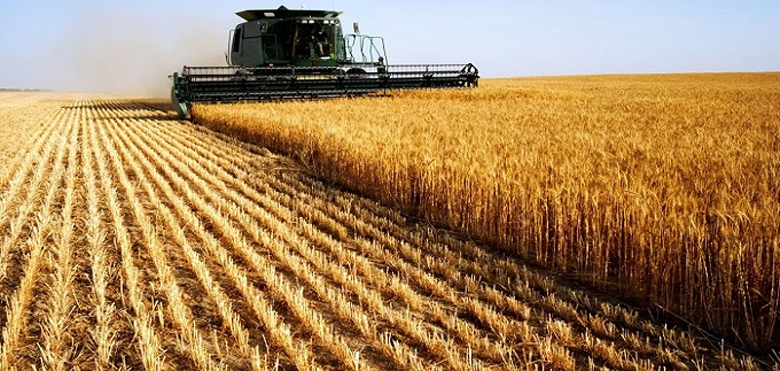
Richard Mponde
Zimpapers Politics Hub
AS early morning mists lift across the farming belts of Zimbabwe, tractors rumble to life and irrigation pivots spin across golden fields, signs that the 2025 winter wheat season is well underway.
Government commenced distribution of winter wheat inputs on May 1, amid assurances of enough inputs for the coming cropping season.
The plan for the Government is to produce 600 000 tonnes of wheat from 120 000 hectares this year.
Local annual demand stands at 360 000 tonnes.
But behind the hum of farming machinery and the determined footsteps of thousands of farmers lies a key catalyst, the disbursement of overdue payments for last season’s wheat deliveries by the Government.
This week, the Treasury released US$5 million and ZiG15 million to clear part of the outstanding payments owed to wheat farmers through the Grain Marketing Board (GMB).
This brings the total payouts for wheat deliveries to US$28 million and ZiG230 million, a substantial commitment that is already unlocking productivity and ensuring momentum is not lost as farmers return to their fields.
The move is more than just a financial transaction.
It reflects the Government’s determination under President Mnangagwa’s leadership to strengthen Zimbabwe’s food systems, enhance national food security, and transform the nation into an upper-middle-income economy by 2030 through the philosophy of Nyika inovakwa nevene vayo. Wheat is at the heart of Vision 2030.
The President’s Vision 2030 is premised on achieving an upper middle class economy marked by industrialisation, increased agricultural output, and self-sufficiency in food production.
Wheat, being a staple cereal for bread and other essential products, us at the centre of that vision.
Zimbabwe, once known as the breadbasket of Southern Africa, had seen its wheat production decline significantly over the years due to economic and climate-related pressures.
However, under the Second Republic, the narrative has changed.
The country achieved a record wheat harvest of over 375 000 tonnes in 2022, the highest since wheat farming began in Zimbabwe in 1964.
This bumper harvest came off the back of strategic investments in irrigation, power supply prioritisation, and farmer incentives.
In 2023, the country sustained that momentum, and this year, the Government is targeting 120 000 hectares of wheat matching last year’s footprint with hopes of exceeding output.
Removing bottlenecks, restoring confidence
The delay in farmer payments threatened to derail this season’s efforts. Many farmers rely on payments from previous harvests to finance inputs, land preparation, and irrigation.
Reports from farming communities had indicated growing concern as the planting window narrowed.
But with the Government stepping in decisively, confidence has been restored.
GMB CEO Dr Edson Badarai praised the treasury’s commitment.
“GMB greatly appreciates all the efforts being put in place by Treasury to mobilise resources as farmers prepare for the winter wheat cropping season,” Dr Badarai said.
He also highlighted the dedication of the country’s farming community
“We greatly appreciate the resilience and undoubted commitment of our farmers as the country drives towards a wheat-based food self-sufficiency,” he said.
In addition to financial support, authorities have ensured the deployment of adequate tillage equipment, while the Zimbabwe Electricity Supply Authority (ZESA) has been engaged to ring-fence power supply to irrigation schemes — a critical factor in winter wheat production.
Vision 2030: Agriculture as a pillar
Wheat production is not just a seasonal goal.
It is a strategic pillar of the National Development Strategy 1 (NDS1), which outlines steps toward achieving Vision 2030.
Under the NDS1, agriculture is seen as both a growth driver and a tool for inclusive development, absorbing thousands of smallholder and commercial farmers into national development.
In 2022, Zimbabwe became wheat self-sufficient for the first time in decades.
This was achieved through a combination of public-private partnerships, improved extension services, and targeted subsidies.
The Second Republic’s approach has included capacitating institutions such as the Agricultural Marketing Authority (AMA), ensuring availability of seed and fertiliser, and modernising infrastructure in key agricultural zones.]
Experts say the country’s break from dependency on imports is not only a boost to food security but also a relief to the foreign currency burden.
“Agricultural productivity, particularly in key crops like wheat, means fewer imports, more local value chains, and stronger rural economies,” said agriculture economist Simbarashe Mudzvova.
“Paying farmers on time is a critical step to maintaining this cycle of productivity.”



 Online Reporter