admin
admin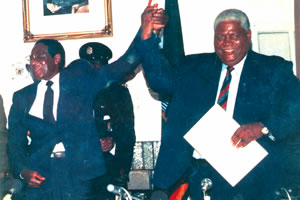
Queues eased at most banks in Harare yesterday as most people had accessed their cash.
Liquor outlets enjoyed brisk business as patrons took advantage of time off work to drink.
The situation was near normal at Mbare Musika that is usually characterised by congestion as people travel for the festive season.
But commuters complained of illegal fare increases by operators.
Mr Emmanuel Chinake, who was on his way to Mutare, said bus operators had increased the fare from US$5 up to US$20.
ALSO SEE
“There are fewer buses on the road due to a blitz by the police and this has fuelled the fare hikes,” said Mr Chinake.
Mbuya Nyamuzuwe was on her way to Mutoko, but had not found transport by midday.
“I have to travel today in order to avoid last-minute travelling because many people will be heading for their rural homes,” she said.
“However, I am optimistic that I will find transport by the end of the day.”
Zanu-PF National Chairman Cde Simon Khaya Moyo hailed the peace and unity that prevails in the country, describing it as a prerequisite for development.
“Unity is a requisite for peace and development. Without unity there is no peace, without peace there is no development, without development there is no prosperity,” he said.
Cde Khaya Moyo said Zimbabweans should cherish and celebrate Unity Day.
He said the day was meant to celebrate sacrifices made by fallen heroes, adding it was because of the prevailing unity that Zimbabweans managed to regain their land.
Cde Khaya Moyo said the people were now “on a thunderous march to totally own our God-given natural resources through indigenisation and economic empowerment”.
“As we were our own political liberators, so shall we be our own economic liberators. The Unity Accord is the key to this process and to our destiny,” he said.
MDC-T national organising secretary Nelson Chamisa said Unity Day should not be a day for the elite and political parties, but should be unity of the grassroots where all Zimbabweans agree on national issues.
He said unity should transcend all towns, cities, farming areas and communities, adding that once unity based on common interests was achieved, Zimbabwe would “begin to have mountains of development”.
Mr Chamisa said unity should cascade to churches, sports arenas, and all spheres of the national fabric.
Midlands State University head of the politics and public administration department Dr Mark Chingono said the Unity Day should be more comprehensive and should “transcend political parties”.
“It should be more than just a party issue,” he said. Dr Chingono said unity at grassroots levels was more important than that of the political elites.
Zanu-PF secretary for administration for Magamba Ward in Mabvuku, Cde Tendai Mutupanyama, was delighted that the majority now knew the significance of the Unity Day.
“We’re glad that many people now understand the significance of the Unity Day celebrations,” he said.
“Although there are no major activities taking place this year, we are advocating that the Unity Day Gala be held on December 22 next year.”
Cde Mutupanyama said there was more need for orientation of youths on the importance and significance of the Unity Day.
Zanu PF chairman for Takawira District in Mbare 3, Cde Zebron Muchenje, said the match between Zimbabwe and South Africa at Rufaro Stadium was important for the day.
“We had to cancel a challenge match between Mbare Select and Mabvuku Select in order to accommodate the Rufaro Stadium match,” said Cde Muchenje.
He said they expected more activities at next year’s celebrations in Harare’s oldest high-density suburb.
The Unity Accord was signed in 1987 by the liberation movements Zanu-PF and PF-Zapu.
It brought Zimbabweans together to focus on developing the country following years of disturbances in Matabeleland and the Midlands soon after independence.


 Online Reporter