Online Reporter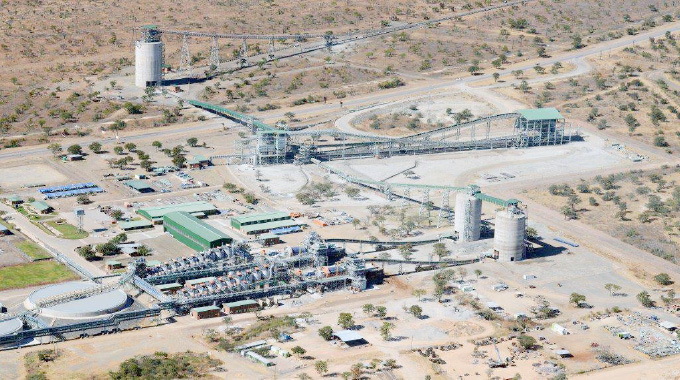
Tapiwanashe Mangwiro, Senior Business Reporter
ZIMBABWE’S lithium producers are ramping up investments in processing facilities as the country prepares to ban concentrate exports from January 2027, aiming to move from raw exports to beneficiated and value-added products.
According to the 2025 Mining Sector Report by stockbroking firm IH Securities, Zimbabwe’s lithium output is projected to rise from 2,47 million tonnes in 2024 to 3,26 million tonnes in 2025, driven by new entrants and expansion projects. At the same time, beneficiation requirements are tightening as authorities push miners to move up the value chain.
“Zimbabwe’s lithium sector is set for steady production growth through 2025–2027, transitioning from raw concentrate exports toward intermediate processing,” IH Securities noted. “With large, high-grade reserves and strong Chinese investment, the country is positioning itself as Africa’s lithium beneficiation hub.”
Several major players are leading the charge into downstream processing. Prospect Lithium Zimbabwe has commenced construction of a 50 000 tonne-per-year lithium sulphate plant, while Bikita Minerals is investing US$500 million in a sulphate facility and US$400 million in a smelter scheduled for commissioning in 2027. Additionally, Sandawana Mine is investing US$28 million in a concentrate processing plant expected to double output to 500 000 tonnes when fully commissioned in 2026.
IH Securities said these developments represent more than just fiscal projects; they signal a structural shift in the sector.
“The beneficiation tax introduced in 2025 is both a fiscal measure and an industrial policy tool,” the report highlighted. “It is designed to incentivise miners to invest in local processing and ensure greater value capture in-country.”
From this year, the Zimbabwe Revenue Authority (Zimra) has begun collecting a 5 percent levy on unbeneficiated lithium concentrates. Industry and government have agreed that lithium sulphate, rather than lithium carbonate, will serve as the minimum processing threshold. This measure comes as the Government prepares to enforce a ban on raw concentrate exports in January 2027 — a policy that could transform Zimbabwe’s role in global battery supply chains.
IH Securities cautioned that while the policy could boost industrialisation, execution risks remain. “Success hinges on the timely completion of processing plants and managing fiscal and infrastructure headwinds,” the firm stated. “Policy consistency will be critical if Zimbabwe is to realise its ambition of becoming a regional beneficiation hub.”
Globally, lithium demand continues to surge, fuelled by the rapid adoption of electric vehicles, renewable energy storage, and AI-powered data centres requiring reliable power backup. Electric vehicle sales topped four million units in the first quarter of 2025, up 35 percent year-on-year, according to the report. This trend is expected to underpin lithium demand for the rest of the decade.
“Despite current price weakness, structural demand growth ensures lithium remains a critical enabler of the energy transition,” IH Securities observed.
Zimbabwe holds 480 000 metric tonnes of known lithium reserves, the seventh largest globally, with geological surveys suggesting up to 80 percent of lithium-bearing pegmatites remain unexplored. The report notes that the country’s deposits, particularly at Bikita, are high quality, with some reaching concentrations of 6,5 percent lithium oxide. This quality advantage, coupled with strong backing from Chinese investors, could give Zimbabwe a competitive edge.
“Compared to 2017, Zimbabwe’s known lithium reserves have increased by a factor of 20.8,” IH Securities said. “This expansion highlights both the country’s potential and the urgency of developing processing capacity.”
The report warns that while momentum is strong, several hurdles could slow progress. Power shortages remain a pressing concern, with mining and heavy industry accounting for half of Zimbabwe’s electricity demand amid a 30 percent grid deficit. Foreign capital continues to drive projects, with domestic financing lagging. Zida figures show that mining attracted US$651 million in foreign investment in the first quarter of 2025, compared to just US$1,27 million in local contributions.
IH Securities noted, “Sustaining the growth trajectory will likely depend on continued policy support and infrastructure upgrades, particularly in power supply.”
Looking ahead, global analysts foresee a gradual tightening of the lithium market. Fast Markets projects that the current surplus will shrink from 154 000 tonnes in 2024 to 10 000 tonnes in 2025, before flipping into a deficit in 2026.
IH Securities concludes that this window presents Zimbabwe with an opportunity to solidify its role in global supply chains.
“The lithium paradox of strong demand and weak pricing may soon resolve,” the firm said. “Zimbabwe is well placed to benefit, provided it navigates implementation risks effectively.”