Online Reporter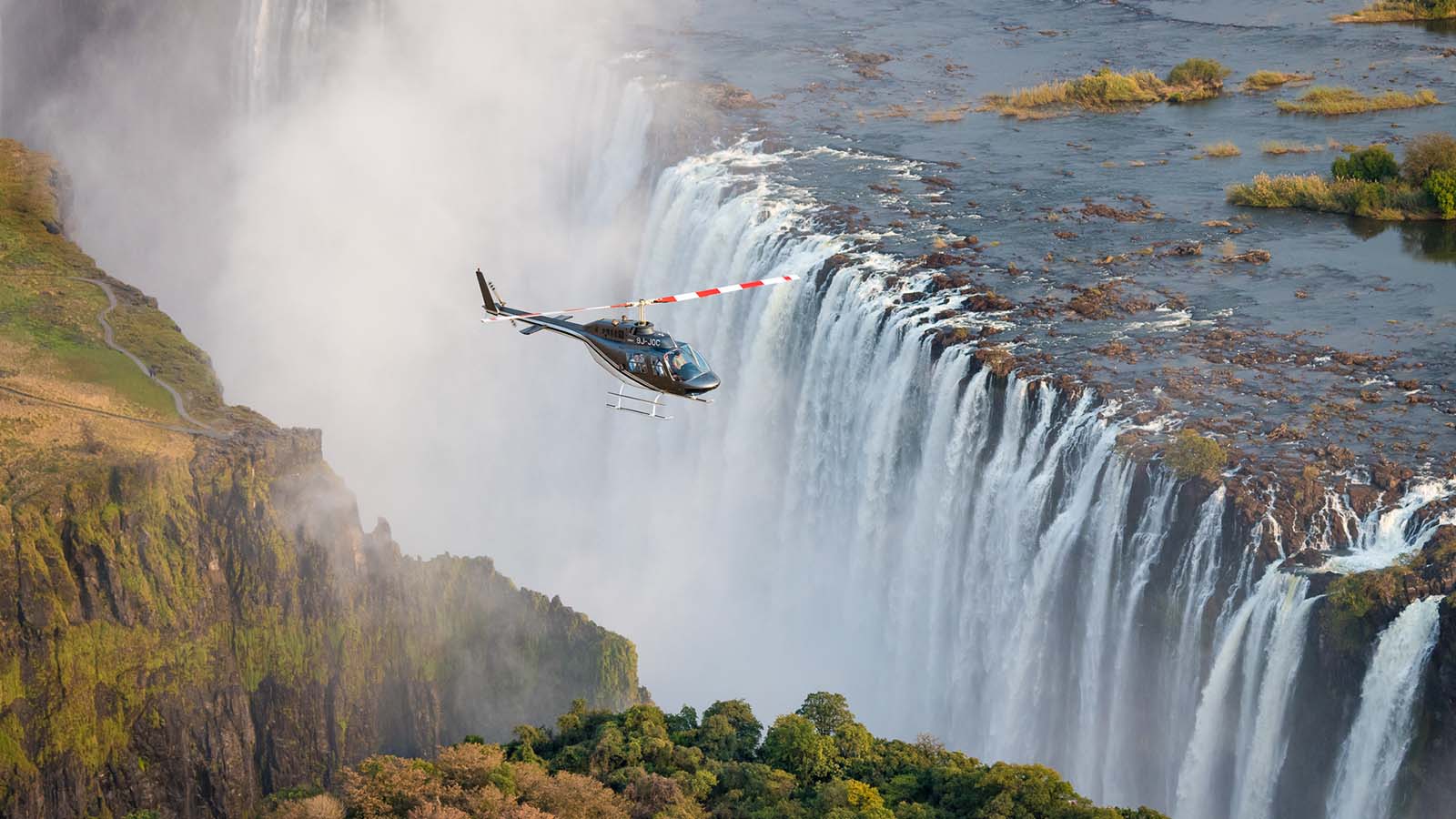
Charles Mavhunga
Tourism Branding
Zimbabwe’s fields, lodges and trade fairs are telling a clear story this year: that gains in tourism and rural women’s agriculture are evidence of a home-grown model of development, built on the country’s own terms. The numbers and programmes on the ground back this up and offer a useful case study for a framework gaining traction in African development scholarship: Decolonial Heritage Inquiry (DHI).Tourism: a sector finding its feet again. Zimbabwe’s tourism authorities have had reason to be upbeat this year.
First-quarter 2026 data from the Zimbabwe Tourism Authority show international arrivals climbing to roughly 384 500, an 11 percent rise on the same period last year, while tourism receipts grew 14percent to US$251 million. Investment in the sector surged more than fourfold, from about US$12.6 million to US$67.8 million, much of it linked to a drive to formalise previously unregistered operators.
Domestic travel: trips by Zimbabweans themselves jumped from 1.94 million to 2.62 million, a sign that local appetite for local destinations is growing alongside the international pull of Victoria Falls, Hwange National Park and the Zambezi Valley.
The destinations have not gone unnoticed abroad either: Zimbabwe was named Destination of the Year for Natural Wonders at ITB Berlin 2026 and was listed among Forbes’ top travel destinations in 2025.
Growth has come from unexpected corners too: Chinese and Hong Kong arrivals rose sharply, European numbers recovered strongly and Britain and Ireland posted particularly large gains.
Officials attribute this to improved air connectivity, more assertive destination marketing, and a sector-wide push to widen the tourism base beyond a handful of flagship attractions.
Agric4She: farming as heritage, not just a livelihood
Parallel to this tourism narrative is Agric4She, the agricultural empowerment programme spearheaded by First Lady Dr Auxillia Mnangagwa.
Far more than an input-distribution scheme, Agric4She weaves together strands the First Lady calls Pfumvudza4She, Livestock4She, Fisheries4She, Horticulture4She and Mechanisation4She, reaching women farmers across all ten provinces with seed, fertiliser, small livestock and, increasingly, machinery designed to ease physical labour.
Dr Mnangagwa has repeatedly urged a return to traditional grains such as sorghum, rapoko and millet, framing indigenous crops as both a climate-adaptation strategy and a form of cultural continuity.
This is precisely where the Decolonial Heritage Inquiry (DHI) framework becomes a useful lens, rather than a decorative one. DHI is organised around four principles, each of which maps onto what is visible in Agric4She’s practice. Community epistemic authority asks whose knowledge counts.
Agric4She field days routinely centre rural women themselves as the demonstrators of technique: grading tomatoes, drying produce, shelling groundnuts, rather than treating them as passive recipients of expert instruction from outside.
Vernacular theory concerns itself with locally generated concepts of value and progress, expressed in local language and idiom. The First Lady’s own exhortations, delivered substantially in Shona, and her promotion of traditional grains as both nutritionally and ecologically sound, exemplify a theory of agricultural progress built from within rather than imported wholesale.
Multi-sited archival practice insists that a nation’s record of its own development is not confined to a single ministry file or capital-city institution, but is scattered across village fields, cooperative ledgers, oral testimony and provincial showcases: precisely the terrain Agric4She’s travelling field days’ document as it moves from Mashonaland to Manicaland to the Midlands.
Reflexive accountability demands that we scrutinise both the strengths and limits of any programme. Agric4She, closely branded with the First Lady’s office, has successfully raised the profile of women in agriculture and mobilised resources at scale. At the same time, key questions remain: are inputs reaching the intended beneficiaries, and can gains withstand drought, economic shocks, and political shifts?
A shared thread, a shared success story
What links the tourism recovery and Agric4She is a single, unmistakable thread: Zimbabwe is telling its own development story, on its own terms, and the results speak for themselves.
This is growth measured not in distant boardrooms but in the felt experience of the fisher-folk of Honde Valley now selling into formal markets, the tomato and horticulture farmers of Bindura harvesting bumper crops with First Lady-supplied inputs, and the newly formalised lodge operators along the Zambezi drawing record numbers of visitors to Victoria Falls and Hwange.
It is a story of a nation reclaiming both its landscapes and its narrative: branding Destination Zimbabwe as one of the world’s premier natural-wonder destinations while, at the same time, branding Amai Mnangagwa’s tireless, hands-on leadership as the human face of rural transformation.
The raw numbers make the case unambiguously: arrivals up 11 percent, receipts up 14 percent to US$251 million, investment up an extraordinary 438 percent, domestic trips up by more than a third and thousands of women across every province reporting new income streams, new skills and new confidence through Agric4She.
Together, tourism’s rise and Agric4She’s reach from two halves of the same national achievement: a country turning its heritage, its land and its people’s labour into visible, measurable prosperity, and a First Lady whose personal, field-by-field commitment has become synonymous with that progress.
Charles Mavhunga, co-author of textbooks in Business Enterprising Skills and current Ph.D. candidate in Management at Bindura University, is the scholar behind the landmark publication on AMAZON: Mbira Virtuosos: Stories of Zimbabwean Mbira Legends. For inquiries, he can be contacted at [email protected] or 0772989816.