Online Reporter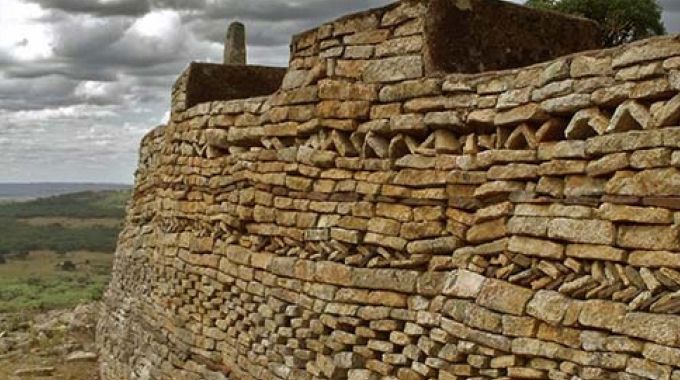
Nqobile Bhebhe, [email protected]
DHLODHLO RUINS have once again found themselves in the national gaze, identified as a place of extraordinary potential and one of the great yet under-appreciated treasures of Zimbabwe’s heritage tourism. A report presented to Parliament on Tuesday casts the ancient stone complex not as a forgotten footnote, but as a cultural landmark brimming with possibility — the kind of site that could draw history lovers, researchers and curious travellers from far beyond our borders if given the attention it deserves.
These observations come from the Report of the Joint Portfolio Committee on Tourism and Hospitality Industry and the Thematic Committee on Culture and Heritage, which examined the state of cultural and heritage sites and their role in growing Zimbabwe’s tourism sector. In the report, Dhlodhlo is positioned as a quietly significant piece of the country’s cultural map. Situated in Matabeleland South, about 135 kilometres from Bulawayo, on the way to Gweru near Shangani, the ruins are made up of dry stone walls, terraced platforms and the fading outlines of old daga structures.
They are unmistakably part of the Zimbabwe Culture tradition — the same architectural lineage that produced Great Zimbabwe, Khami and Naletale — and anyone who walks among its stones can feel that connection immediately.
“Dhlodhlo is one of Zimbabwe’s most significant stone-built monuments and forms part of the cultural landscape with its historical connection. The site has the potential to attract heritage tourists, scholars, and cultural enthusiasts from across the globe,” reads the report.
It is the kind of statement that resonates once you stand in the presence of the ruins, where centuries-old stonework still holds its form with quiet strength.
The Joint Committee believes that with the right investment and thoughtful positioning, Dhlodhlo could become a transformative heritage site.
“By leveraging its Unesco World Heritage Tentative List status and integrating it into cultural tourism circuits that link Great Zimbabwe, Khami, and Matopos, Dhlodhlo could become a cornerstone of Zimbabwe’s heritage tourism.”
That vision — of heritage sites being linked together into meaningful, accessible circuits — feels long overdue.
Zimbabwe’s cultural landscape is rich, but too often these historical gems have stood alone, their stories heard only by the handful of visitors who make the journey.
The report also highlights the importance of Khami Ruins, another architectural masterpiece and an official Unesco World Heritage Site.
“On the other end, Khami Ruins, a Unesco World Heritage Site, represents the architectural ingenuity and is one of the largest precolonial stone-built sites. Its terraced platforms, decorated walls, and unique stone masonry set it apart as a site of world heritage importance. With its proximity to Bulawayo and the Matobo Hills, Khami could be integrated into a regional heritage circuit, making it a prime destination for both domestic and international tourists.”
The message is clear: none of these sites should stand in isolation; they are part of a historic network that deserves to be experienced together.
Yet the report is also honest about the challenges. Despite their splendour, both Dhlodhlo and Khami remain underused and undervalued.
“Dhlodhlo and Khami Ruins possess a huge potential to be major tourist destination centres. In their current state, the two sites are endowed with huge potential, but they are a white elephant, with a huge potential to contribute to national development.”
It is a blunt assessment of how far we still have to go in turning these places into meaningful contributors to tourism and local economies.
There are, however, encouraging signs. The report notes fresh efforts to revive Dhlodhlo through private investment.
“The NMMZ reported that there was a potential to enter into an agreement with a private investor (GR Godard) for the preservation and management of Dhlodhlo Ruins, a situation the Joint Committee exalted as positive with a potential to revive the ruins.”
For a site that has long suffered from poor access, limited staffing and minimal promotion, such partnerships could finally bring the care and structure it needs.
The parliamentary inquiry was driven by the Government’s push to strengthen domestic tourism and highlight the value of cultural and heritage assets.
“The Joint Portfolio Committee on Tourism and Hospitality Industry and Thematic Committee on Culture and Heritage resolved to conduct an inquiry into the preservation and management of heritage and cultural sites, as they play a crucial role in driving the tourism sector. The inquiry was motivated by the government’s strategic quest to promote domestic tourism, paying close attention to the role that cultural and heritage sites can play to achieve the goal,” the report states.
Zimbabwe is, after all, blessed with an extraordinary spread of heritage — from ancient stone cities to liberation shrines. The country has 203 national monuments drawn from more than 50 000 recorded sites, with classifications ranging from archaeological to natural heritage. Four of these — Victoria Falls, Great Zimbabwe, Matopos and Khami — are already on the Unesco World Heritage List. Dhlodhlo, though lesser known, belongs to this same family of historically rich landscapes.
The report ends with a call for greater investment, improved preservation and stronger partnerships. It is a reminder that sites like Dhlodhlo are not just stones in the veld — they are part of Zimbabwe’s identity. With the right attention, they can tell our story to the world, generate pride at home, and play a meaningful role in the country’s cultural and economic future.
And perhaps, with the right care, Dhlodhlo Ruins will no longer be an “unpolished gem”, but a shining part of Zimbabwe’s heritage — a place where the past steps forward to meet the present.