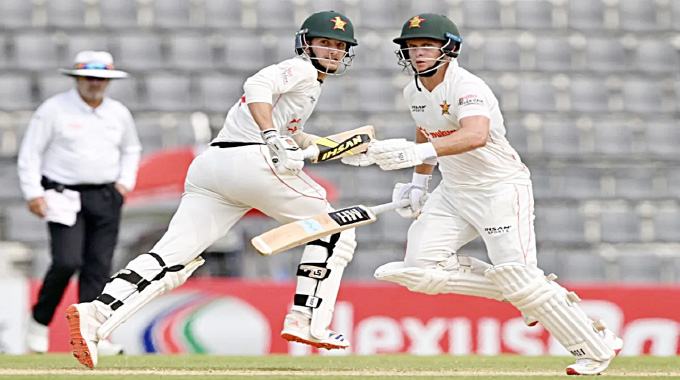
IT was impossible to ignore the jeers after Zimbabwe’s latest collapse in Bulawayo, where New Zealand inflicted a crushing innings-and-359-run defeat in the second Test.
The result leaves Zimbabwe staring down the barrel of six consecutive heavy defeats since their thrilling win over Bangladesh in Sylhet back in April.
The mockery came swiftly. Critics in the press and online once again questioned whether Zimbabwe belong in the five-day format. For many, the sight of another small cricketing nation humiliated only reinforced the belief that Test cricket should remain the preserve of the rich and powerful.
The timing was particularly cruel. Zimbabwe’s humiliation followed a gripping India – England series, hailed as the finest in two decades. That clash, hyped to the skies and backed by billion-dollar TV deals, sparked widespread celebration over the supposed health of Test cricket. The big powers, awash with cash and broadcast hype, are thriving.
But beneath that glittering surface, the picture is starkly different.
The uncomfortable truth is that cricket’s commercial greed has sabotaged the game for everyone else. Zimbabwe is the clearest example. Hosting a single Test costs the board around US$500 000. Their domestic TV rights generate just US$2.5 million annually — peanuts compared to the billions pocketed by India, England and Australia.
Despite those odds, Zimbabwe have staged seven Tests since Christmas — more than any other nation. By year’s end, they will have played 11, equalling Australia’s tally. It’s a remarkable commitment for a side not even included in the nine-team World Test Championship.
While peers such as Ireland and Afghanistan focus on shorter formats for survival, Zimbabwe continue to fight for relevance in the longest format.
“To play so many Tests shows positive intention on our part to grow Test cricket,” said Zimbabwe Cricket chair, Tavengwa Mukuhlani. “It shows we’re investing money because Test cricket is expensive. Some of the attacks and criticisms the team has faced have been very unfair.”
Much of this persistence is driven by Mukuhlani himself. As an ICC board director, he sits on a working group led by New Zealander Roger Twose, tasked with shaping the future of Test cricket. Their mandate includes exploring a two-division system, potentially with promotion and relegation to keep smaller nations involved.
Unsurprisingly, the smaller boards support the plan. The bigger ones are less enthusiastic. England chair Richard Thompson has already voiced concern, fearing the major nations might be separated. Yet bilateral tours outside the league can still be arranged, making that argument flimsy.
The real stumbling block is money. The proposed Test Match Fundc — where the Big Three would help bankroll struggling nations — appears to have stalled. Without it, the gulf will only widen. As the West Indies showed when they staged a loss-making three-Test series against Australia, the financial model is broken.
Without investment and a fairer share of cricket’s wealth, the format risks withering everywhere outside the golden triangle. The top may continue to gorge on endless India-England-Australia contests, but saturation will eventually kill the magic.
And when that happens, Test cricket itself will be the casualty.
— Forbes.com / Sports Reporter