Online Reporter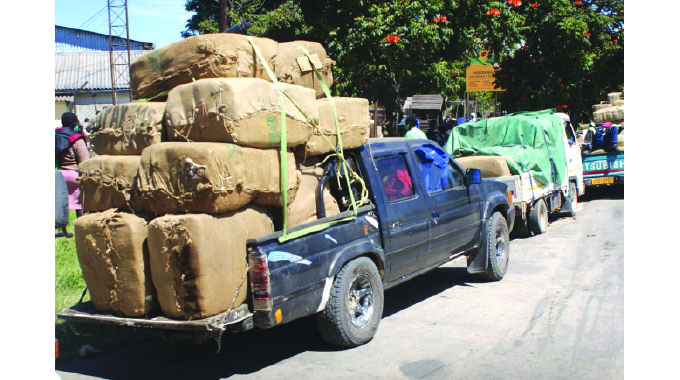
Theseus Shambare
ZIMBABWE’S tobacco industry is preparing for the official launch of the 2026 marketing season this week, with farmers, contractors and stakeholders gearing for what promises to be a record-setting year in production and sales.
The season opens under the framework of the Tobacco Value Chain Transformation Plan 2 (TVCTP 2), a five-year programme running from 2026 to 2030.
The plan aims to modernise the sector, improve production practices and align tobacco farming with the country’s National Development Strategy 2 (NDS 2) and Vision 2030.
Speaking ahead of the launch on Monday, Tobacco Industry and Marketing Board (TIMB) chief executive officer Mr Emmanuel Matsvaire, said the board is fully prepared to support farmers and contractors during the season.
“We are ready to ensure that growers can freely bring their crops for sale, and that all auction floors and selling points are operational and compliant with banking, ICT, and health standards,” he said.
A major highlight this year is the expansion of TIMB’s biometric grower management system, introduced in 2025 to uniquely identify farmers and streamline contracting processes.
TIMB’s Head of ICT, Mr Edson Nhemachena, said over 147 000 growers have already been enrolled, with facial recognition technology being introduced to accommodate farmers whose fingerprints have been worn by years of manual work.
“This digital system ensures accurate grower records, prevents account misuse and lays the foundation for future contracting and debt management,” he said.
To make tobacco sales more accessible, the board has also set up five decentralised selling centres across the country, reducing travel distances for growers, lowering costs and supporting rural economic inclusion.
Officials say the move is part of broader reforms aimed at improving efficiency while empowering smallholder farmers.
Quality remains a critical focus for the 2026 season. Growers are being encouraged to follow recommended agricultural and curing practices to meet international market standards.
Zimbabwe is projected to produce around 400 million kilogrammes of tobacco, and high-quality crops are expected to differentiate the country in a globally competitive market.
“As production volumes rise, quality will be the strongest differentiator,” Mr Matsvaire said.
TIMB will continue to work closely with farmers and contractors to ensure that the industry remains competitive, sustainable and beneficial to rural communities.
The 2026 tobacco marketing season officially opens on Wednesday with renewed optimism for farmers, contractors and stakeholders as Zimbabwe’s golden leaf prepares to make its mark on regional and global markets.