malvernmugadzikwa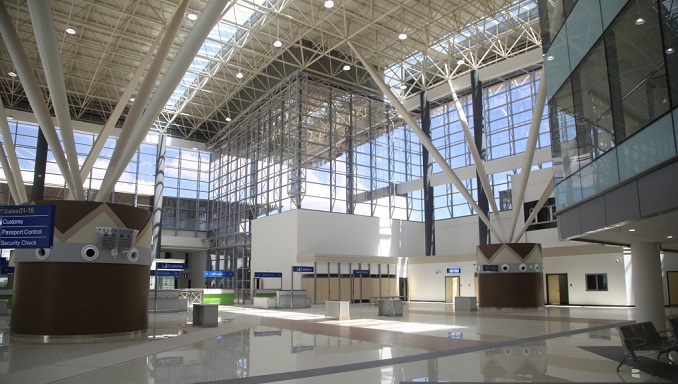
Tawanda Musarurwa
ECONOMIC analysts maintain that there is a correlation between increased investment in infrastructure and economic growth and development.
The Government’s Vision 2030 – to attain an upper middle-income economy status by the year 2030 – entails increasing the country’s gross national income (GNI) per capita per annum to between US$3 896 and US$12 055.
Simply put, an upper middle income economy translates to an improvement in the lives of ordinary citizens, especially with regard to the purchasing power of their salaries, what they eat, service delivery and quality of healthcare and education, among other factors.
To the extent that GNI is the total amount of money earned by a country’s people and businesses, increasing employment and economic activities are two important elements in achieving the upper middle-income economy status.
The International Monetary Fund (IMF) – in its October 2020 Fiscal Monitor – estimated that increasing public investment by 1 percent of gross domestic product (GDP) could boost GDP by 2,7 percent, private investment by 10 percent and employment by 1,2 percent after two years.
It is this economic assumption that is guiding Zimbabwe’s current infrastructure drive as outlined in the National Development Strategy 1 2021-2025 (NDS1).
Targets
Under the NDS1, some major infrastructure targets for the five-year period to 2025 include: the construction of additional 280km of electricity transmission and distribution infrastructure; increasing access to potable water from 77,3 percent to at least 78,3 percent and water storage capacity from the current 15,423×10⁶ mega litres to 16,979×10⁶ mega litres.
The Government also targeted to expand access to improved sanitation facilities from 70,22 percent to 77,32 percent in both urban and rural areas; to increase the number of kilometres of road network that meet Southern Africa Transport and Communications Commission (SATCC) standards from 5 percent to 10 percent, and number of kilometres in good condition from 14 702km to 24 500km, as well as to increase the internet penetration rate from 59,1 percent to 75,42 percent, and mobile penetration rate to 100 percent.

Upper middle-income economies are characterised by robust infrastructure investment.
Economist and lecturer in the department of economics at the University of Zimbabwe Professor Albert Makochekanwa said increasing infrastructure can help elevate the country’s economic status.
“There is a very strong positive relationship or correlation between state of infrastructure and economic development. The causality can be from either side.
“But, for developing countries like Zimbabwe, the one from infrastructure to economic development is what will make the country leapfrog from a developing country to a middle income or developed country,” he said.
There is evidence that poor economic infrastructure can be a significant stumbling block for the effective operations of businesses, raising unit production costs and making local players uncompetitive, compared to their regional peers for example.
For instance, the ‘Promoting SMEs Competitiveness in Zimbabwe Report 2023’ – which was carried out by International Trade Centre in collaboration with the National Competitiveness Commission – highlighted poor infrastructure as one of the biggest challenges faced by small businesses in the country.
“Deteriorating transport infrastructure and the high costs of logistics affect the timeliness of delivery for SMEs, as survey results showed,” reads part of the report.
“Priority should be given to improving the transport sector, thereby addressing logistics bottlenecks and ensuring reliable infrastructure, especially in rural areas.
“This will also go a long way in developing stronger value chains.”

The African Development Bank (AfBD), in its Zimbabwe Infrastructure Report 2019, identified four broad infrastructure areas that will bring require intervention to drive the country’s economic growth.
These include: information and communication technology (ICT), transport, water supply and sanitation, and electricity.
During the first half of last year, two key national projects (in the transport and energy areas) were completed.
The commissioning of the Hwange Thermal Power Station’s new Units 7 and 8 has added 600 megawatts (MW) to Zimbabwe’s energy output, alleviating erstwhile power shortages and establishing a platform for greater economic development.
And work has since commenced on the refurbishment of Hwange’s Units 1 to 6, which have a capacity to produce 920MW.
As a factor of production, electricity is not easily substitutable.
There is no route to economic growth and development without greater energy consumption.
Also commissioned last year was the new international terminal of the Robert Gabriel Mugabe International Airport (the first phase of the expansion project), which modernised the airport and boosted its passenger handling capacity from 1,3 million to 6,7 million passengers a year.

The Government has an appreciation that transport infrastructure plays a considerable role in the socio-economic development of the country.
There has also been significant progress in the road rehabilitation programme, with the first phase of the rehabilitation of the of 582,4-kilometre Harare-Beitbridge highway nearing completion.
The Harare-Beitbridge highway is vital for the economy insofar as it facilitates trade.
It is also significant for the broader continental economy, as the stretch is part of the North-South Corridor that connects Cape Town in the south and Cairo in the north.
The modernisation of the Harare-Beitbridge road has been included in COMESA-ECA-SADC Tripartite and the African Union Programme for Regional Corridor Development.

With Zimbabwe being a signatory to the Africa Continental Free Trade Area (AfCFTA), which came into effect in January 2021, the modernised highway will help the country effectively tap into the integrated African market of over 1,2 billion people that has a GDP of US$2,5 trillion.
Other key road infrastructure projects that were scheduled to commence this year, include the upgrading and rehabilitation of the Harare-Chirundu road (which has since commenced), and the Beitbridge-Victoria Falls road.
Another key development in the transport infrastructure space is the ongoing Mbudzi interchange project along the Harare-Masvingo highway, which will ease traffic congestion at intersection of three major roads – High Glen, Simon Mazorodze and Chitungwiza.
Closely linked to the enhancement of the country’s road infrastructure is the modernisation of ports of entry in line with the goal of making Zimbabwe the transport hub of SADC.
A notable development in this regard is the Beitbridge Border Post, which has been modernised to the tune of US$300 million.

Similar initiatives are being extended to the country’s other ports of entry, namely, Chirundu, Forbes and Plumtree.
“To benefit from the new trade opportunities offered by the AfCFTA, it is vital to optimise border management, collaborate with regional institutions to minimise delays and digitise certain aspects of trade logistics,” says the International Trade Centre.
The country has announced plans to roll out a digital border management system.
“The Online Border Management System entails the full computerisation of the immigration processes, which comprise the e-visa, exit and entry management and e-permits,” chief director of immigration Ms Respect Gono told The Sunday Mail.
According to the AfDB’s 2019 Zimbabwe Infrastructure Report, the country required about US$34 billion (at 2017 constant prices) for its infrastructure rehabilitation and development programme for the four main priority areas – transport, energy, water and sanitation, and ICTs – in the decade to 2030.
In terms of a breakdown of that figures, the transport sector requires the biggest chunk at US$28,56 billion, followed by water and sanitation at US$3,67 billion, and power at US$1,14 billion.
The communications sector requires funding to the tune of US$412 million.
The AfDB said the US$34 billion figures does not include US$43 million, which is required for routine road maintenance over that same period.
Funding for big infrastructure projects
The Government is a critical financier of public works through the Consolidated Revenue Fund.
But, the funding of critical infrastructure projects should be achieved without exceeding the allowable budget deficit of 2 percent of GDP that Zimbabwe has set for itself (which is below the global benchmark of 3 percent).
Given the scope of the infrastructure projects that require financing and the timelines that are in place, the Government has also been looking at other options.
According to the 2024 National Budget, the pipeline external loan financing for 2024 was estimated at US$330, with the country in on-going loan negotiations with the Broughton Capital Group (BCG) for a US$100 million facility for trade-related infrastructure development, and Dinosaur Merchant Bank for a US$125 million facility for infrastructure development.
The country was also in negotiations with ABSA, Standard Bank Limited Zimbabwe and Standard Bank Limited South Africa for the US$105 million Zimbabwe Healthcare Facilities Programme for the construction of healthcare centre and district hospitals.

Finance, Economic Development and Investment Promotion Minister Professor Mthuli Ncube also said Government was negotiating for new financing and lines of credit for the local banks and institutions with BADEA (Arab Bank for Economic Development in Africa), IFAD (International Fund for Agricultural Development) and OFID (OPEC Fund for International Development), as well as “exploring innovative ways of mobilising resources for infrastructure development through the ringfencing arrangement of US dollar cash flow streams”.
While public spending and external loans are vital financing tools for critical infrastructure projects, they can only go so far due to limited fiscal space and risks around heavy indebtedness, respectively.
Observers say local institutional investors such as pension funds can play big role in financing important infrastructure projects.
Investment consultant Mr Gandy Gandidzanwa says investing in infrastructure can help pension funds meet their need for positive yields.
“Infrastructure, as an asset class, has both the capital growth and income generation attributes – the right combination for long term investing,” he said.
“Only very few other asset classes have those characteristics in combination – certainly not listed equities or conventional bonds. The growth is also in real terms.”
The Government has long appreciated the role played by local institutional investors in financing important projects.
In 2022, Treasury accorded prescribed asset status on 13 projects valued at US$664 million.
According to the country’s prescribed assets framework, local institutional investors such as pension funds and insurers are required by law to invest some of their monies into projects with prescribed asset status, thereby providing a channel for directing long-term funds into development.
Mr Gandidzanwa says Zimbabwe’s pension funds can do more to contribute the economy.
“As of December 31, 2022, our pension fund assets as a percentage of GDP was 10 percent.
“This is much lower than that of South Africa at 83,82 percent and the world average of 30,50 percent.”
Another funding option is for the Government to tap into diaspora remittances.
Zimbabwe’s diaspora remittances are in excess of US$1 billion annually, accounting for approximately 16 percent of total foreign exchange receipts.
In its inputs into the 2024 National Budget last November, business representative body, the Zimbabwe National Chamber of Commerce (ZNCC) suggested the creation of a diaspora bond to channel remittances towards infrastructure projects.
“Given the background of record receipts in diaspora remittances and the lack of external budget support, it will be prudent for the Government to introduce a diaspora bond in an effort to harness financing for mega infrastructural projects such as roads,” said the ZNCC.

Notwithstanding the huge critical infrastructure projects that are ongoing, numerous smaller projects are being implemented at the same time.
According to a Compendium of Projects implemented by the Second Republic (2018 to 2022), which was presented to Cabinet in March 2023, 6 869 projects had been undertaken across the country.
The projects varied in scope, from community-based empowerment and strategic projects to provincial and national ones.
Of the total, 4 984 had been completed, translating to a 72 percent completion rate.
Some of these projects are being funded under the devolution programme to ensure inclusive development, with 5 percent of the national budget being allocated to local authorities each year.
Both big and small, completed and ongoing infrastructure development projects converge in the wider goal of accomplishing an upper middle-income economy status by 2030.


 Online Reporter