admin
admin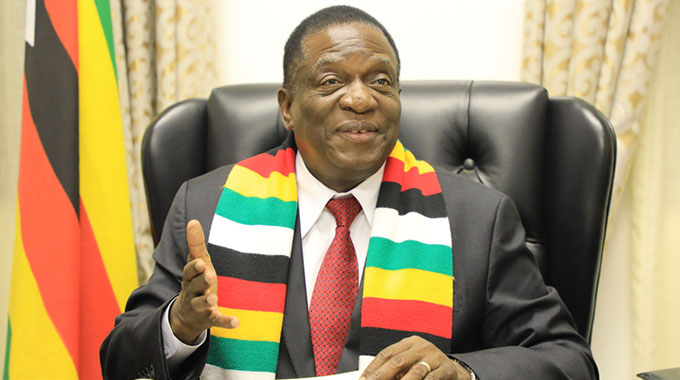
Professor Never Matata
My narrative on Zimbabwe after visiting the country for the first time in 21 years cannot be complete without me interrogating the all-important re-engagement between Zimbabwe, and the Commonwealth and Britain on one side.
Like I said in my two articles before, I had last visited Zimbabwe on the stroke of their Land Reform Programme and the rest I heard about the country was a frenzy from mainly western media that sought to paint Zimbabwe as a pariah state. That narrative still pops up here and there in the international media today.
After the visit last year, my conscience is very clear that Zimbabwe was right in taking the land from the few white commercial farmers who had used colonial structures to grab it.
The farmers were mainly of the origin from Britain and other western countries.
The redistribution was an important redress of a huge historical pro-western land tenure system perpetrated by colonialism. The land question was the major reason Zimbabweans went to war and won, against Britain.
Now I visited Zimbabwe late last year, when President Emmerson Mnangagwa had gone great lengths to re-engage with the international community and one of the bodies he had targeted is the Commonwealth.
There, he has genuinely done everything required to re-join.
Britain and its allies must not take advantage of President Mnangagwa’s good will re-engagement gesture and see him as desperate to re-join Commonwealth. NO! When push comes to shove, Zimbabwe has many other options, wide open.
So Britain must not use its influence to negotiate in bad faith, in fact, they must be grateful that President Mnangagwa’s good nature believes his county must belong to the international community.
The British Government must throw away their ego and colonial hangover and then treat Zimbabwe’s quest to re-join the Commonwealth as genuine internationalism, without strings attached.
For the avoidance of doubt, Commonwealth is a grouping of 54 countries, mainly former British colonies working together for prosperity, democracy and peace. On paper members have equal rights, the game seems different on the ground.
I was very hurt, when I was in Zimbabwe and President Mnangagwa, who had done everything to re-engage with the Commonwealth, discovered that one of the key Commonwealth members Britain, was actually playing a backdoor heinous role, organising teachers to revolt. So what game is that? I found the British re-engaging in bad faith.
I started having questions and it became apparently clear that the British Government will try to use its role as the former colonial master and its huge financial muscle to abuse Zimbabwe’s good gesture to re-join the grouping.
All member states of the Commonwealth should understand that Zimbabwe is coming on to the table with simply an obligation of internationalism and not a subservient member of the British.
A lot of things have happened since Zimbabwe left Commonwealth and its politics has changed a lot.
Zimbabwe should refuse to be arm-twisted into conditional joining of the Commonwealth, once that happens then it means the British still maintain its colonial status.
Britain recently pulled out of the European Union sighting national interest and it must know that many countries also have national interest and they might come a time when Zimbabwe will say, we have done enough to re-join Commonwealth but the demands are too much and we are stopping.
President Mnangagwa is a veteran politician, more experienced than Boris Johnson. He has seen it all, from guerrilla tactics to facing the hangman’s noose and he knows when to stop.
Should Britain influence the Commonwealth secretariat to make outrageous demands, President Mnangagwa should refuse.
There are things like the land reform and demands that promote the opposition and remove Zanu PF out of power.
These should not be entertained. When such things are demanded, then Zimbabwe can do without the Commonwealth.
Zimbabwe must see benefits of joining the Commonwealth but the sad part of it all is that while Zimbabwe has started a genuine re-engagement The British are indicating right while turning left.
What was the reason of the British, rallying teachers to demonstrate against Government it is genuinely re-engaging with? What was the reason for sponsoring a revolt on a Government that has shown willingness to re-join your major organisation? Instead of wasting time, the British Government must declare that they do not want Zimbabwe to re-join the Commonwealth than throw spanners in the process.
But to the best of my knowledge ,Zimbabwe will bring a lot of value to the Commonwealth. Zimbabwe will bring the actual and genuine Pan African feeling to the Commonwealth or any organisation for that matter.
But Zimbabwe will see no value in Commonwealth if it makes demands that are incompatible with Zimbabwe’s thinking and belief system.
The Commonwealth becomes useless to Zimbabwe when a key player like Britain continues to play dirty politics.
Britain must come clean and stop playing double standards. Zimbabwe is genuinely seeking to re-join the Commonwealth and it must be accorded that chance on fair treatment.
Otherwise, like I have said in my previous two articles, Zimbabwe can do better spending its efforts working on a deal with the BRICS, (Brazil, Russia, India, China, South Africa) than have its time wasted at the Commonwealth where Britain is playing dirty tricks.
If Britain can organise a revolt of teachers, whose numbers constitute the majority of the civil service in Zimbabwe, it means London has a bad intention to paralyse the Government of Zimbabwe.
How then does Britain expect to relate with Zimbabwe in the Commonwealth? Will Commonwealth not be a trap for Zimbabwe’s Zanu PF Government? Will Britain not use its hegemony on Commonwealth to fix Zimbabwe? Will Britain not use Commonwealth to effect regime change in Zimbabwe?
Everything at the moment points to a Britain which has not forgiven Zimbabwe for the land reform.
Everything points to a Britain which still internationalises its bilateral conflict with Zimbabwe. Britain must come clean or Zimbabwe should consider avoiding the Commonwealth.
Zimbabwe does not need second recolonisation and the Commonwealth might just provide Britain with that platform to effect regime change of Zimbabwe.
Never Matata is a Tanzanian Professor of African Politics and International Relations. Here he writes in his personal capacity



 Online Reporter