admin
admin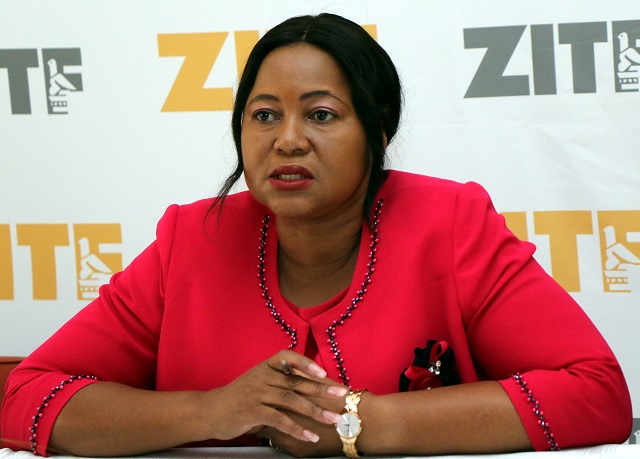
Oliver Kazunga, Senior Business Reporter
THE 59th edition of the Zimbabwe International Trade Fair (ZITF) ended on Saturday with exhibitors occupying all the 47 576 square metres of the available space, representing a 40 percent improvement from last year’s closing total of 43 595 square metres.
ZITF Company chairperson, Ms Ruth Ncube, said this year’s trade fair was characterised by high quality exhibits and high level business networking.
“The exhibition occupies 47 576 square metres, which translates to 100 percent occupancy level this year and this space occupancy level is approximately 40 percent higher than last year, which closed on 43 595 square metres,” she said.
Ms Ncube said feedback from participants across the board was that ZITF 2018 was a value adding show that continues to offer opportunities for business growth and relationship building. She said this year’s fair was buoyed by the ushering in of the new dispensation and the positive economic outlook.
“The exhibition provided a shop window for both local and international participants to see first-hand information that Zimbabwe is open for business,” she said.
President Emmerson Mnangagwa has since November last year declared that Zimbabwe was open to do business with investors from across the globe.
Within the last five months, the country has approved about $10 billion worth of foreign direct investment compared to an average of $400 million Zimbabwe was recording in the past three years. This year’s trade fair saw 18 foreign nations including France, Germany, China, Cyprus, India, Indonesia, the United Arab Emirates, Zambia, Botswana, and South Africa being represented compared to 13 last year.
United Arab Emirates made its maiden appearance at ZITF with exhibits from producers of energy products and consumer goods. Ms Ncube said the international exhibits cut through a number of sectors including, education, mining, aviation, transport, food, clothing and textiles, packaging materials, event management, and cultural exchange programmes.
“We had a total of 753 exhibitors; of these 68 were foreign. This compares favourably to last year’s closing total of 706. Direct exhibitors were 467 and of this figure 23 were foreign.
“Indirect exhibitors were 286; (241 are local, while 45 are foreign),” she said.
The exhibition recorded 274 new exhibitors (42 foreigners and 232 local). And of the new exhibitors figure, this year’s trade fair recorded 108 direct exhibitors and 166 indirect exhibitors.
“With regards to local participation, 46 percent of exhibitors came from Harare while 29 percent came from Bulawayo and the remainder from other cities,” said Ms Ncube.
She said exhibitor profile was quite varied with a range of products and services including agricultural implements and equipment, automotive products building and construction, civic representation, clothing and textiles as well as education and training.
Ms Ncube said preliminary survey results show that most of the exhibitors achieved their business objectives set for ZITF 2018 and would likely be back again next year.
“A total of 92 percent of exhibitors met with their target customers while 85 percent received prospects for future sales.
“The exhibitors also indicated that they met the relevant target buyer groups and conducted a fair amount of business, even amongst themselves,” she said.
Concurrent networking events that occurred during the show were also well attended, said Ms Ncube and in particular, the ZITF International Business Conference continued to break its own record with 800 delegates taking part at this year’s forum.
In his address at the International Business Conference, Vice President Dr Constantino Chiwenga noted that success of the re-industrialisation agenda requires the competitiveness of local industries in the regional and international markets.
The Institute of Chartered Accountants of Zimbabwe also hosted their conference in celebration of their centenary with focus being on the importance of the accounting profession in maintaining and strengthening the Zimbabwean financial system.
@okazunga


 Online Reporter