Online Reporter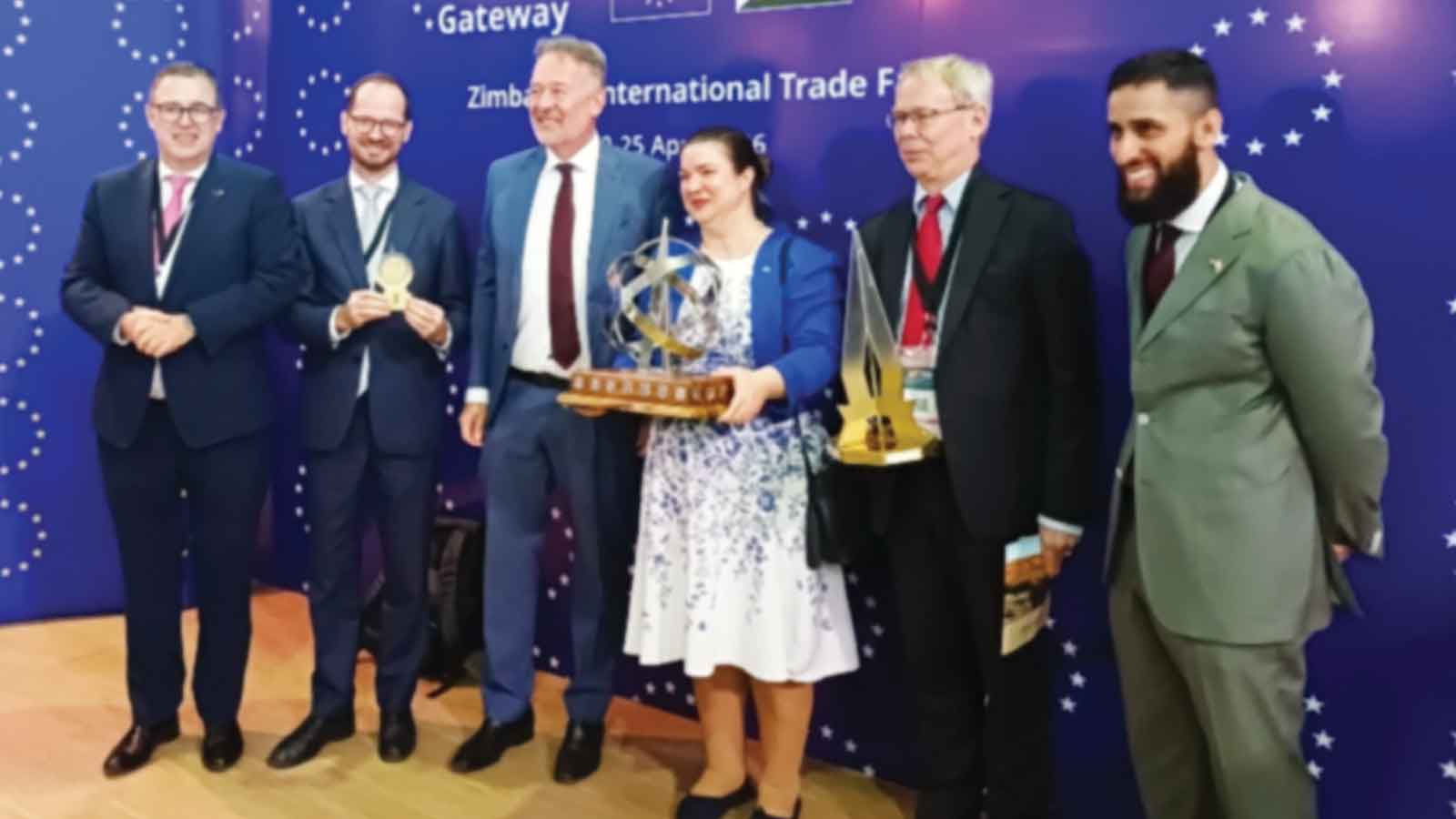
THE strong presence of foreign exhibitors at the just-ended Zimbabwe International Trade Fair 2026 proves that President Mnangagwa’s Engagement and Re-engagement policy is yielding tangible economic dividends, with officials pointing to increased international participation and growing deal flow as evidence of renewed investor confidence.
The premier trade showcase has evolved into a high-stakes arena for global commerce, where the intersection of diplomacy and industry is fuelling a significant shift in Zimbabwe’s economic trajectory.
Held under the theme “Connected Economies, Competitive Industries”, this year’s edition of the premier trade showcase drew 49 foreign exhibitors from 31 countries, a notable increase from 28 countries last year.
That uptake in international representation, coupled with over US$600 million worth of business transactions and leads generated during the exhibition, signal a shift in perception about Zimbabwe’s economic prospects, particularly among global investors seeking new frontiers in Africa.
The figures, while preliminary, challenge the long-held criticism that the ZITF is merely a networking platform with limited tangible outcomes. Instead, the event appears to be evolving into a serious deal-making hub aligned with Zimbabwe’s broader economic diplomacy agenda.
Industry and Commerce Minister Nqobizitha Mangaliso Ndlovu said early indicators show that the exhibition is increasingly delivering measurable results.
“Preliminary analysis indicates over US$600 million worth of business transactions, confirmed orders and leads were generated during the show.
In addition to direct transactions, several Memoranda of Understanding (MoUs) were facilitated in priority areas such as manufacturing and technology,” he said.
“Curated business-to-business (B2B) sessions generated high-value leads that are expected to translate into firm commitments as follow-through and due diligence processes conclude,” added Minister Ndlovu, underscoring the importance of structured engagements in driving investment outcomes.
Analysts say such developments reflect the gradual impact of President Mnangagwa’s engagement and re-engagement policy, introduced at the onset of the Second Republic.
Built around the mantra that Zimbabwe is “a friend to all and an enemy to none”, the policy seeks to rebuild diplomatic and economic ties that had frayed over the past two decades, while positioning the country as an attractive and predictable investment destination.
At its core, the policy emphasises openness, cooperation and economic pragmatism, encapsulated in the oft-repeated phrase that “Zimbabwe is open for business.”
The increasing diversity of foreign exhibitors at ZITF 2026 suggests that message is beginning to resonate beyond rhetoric.
Foreign Affairs and International Trade Minister Professor Amon Murwira reinforced this position during the ZITF Diplomats Forum, where he outlined the philosophical underpinnings of Zimbabwe’s foreign policy.
“Our policy is very clear — we are a friend to all and an enemy to none.
“That is not a slogan, it is a constitutional position. We do not pursue conflict; we pursue cooperation,” said Prof Murwira.
He explained that Zimbabwe’s approach to international relations is anchored on principles of peace, production and trade, arguing that economic prosperity is unattainable without stability and constructive global engagement.
“If a country is an economy and a society, it must first be peaceful. Secondly, it must be productive.
“Thirdly, it must trade peacefully with others. That is the foundation of a prosperous nation,” he said.
Prof Murwira added that the country’s “Open for Business” stance is not merely a branding exercise, but a deliberate strategy aimed at fostering interconnected economies through diplomacy and trade facilitation.
“You cannot have connected economies with closed doors. There must be openness, there must be a handshake.
“Trade is the basis for peace — if you do not trade, the alternative is conflict, and we reject that,” he said.
The linkage between policy and outcomes is perhaps most evident in the composition of exhibitors at ZITF 2026, where companies from across Africa, Asia and Europe showcased products, technologies and investment proposals.
This growing international footprint aligns with Zimbabwe’s efforts to integrate more fully into regional and global value chains, particularly under frameworks such as the African Continental Free Trade Area (AfCFTA).
ZITF Company board chairman Dr Busisa Moyo highlighted the strategic importance of fostering cross-border trade linkages and leveraging Zimbabwe’s industrial potential.
“In this regard, at ZITF, we hope to foster borderless regional market trades or trade across regional markets to take advantage of an integrated supply chain and international niche products that we produce in Zimbabwe to connect to markets, to connect to suppliers of technology that could improve what we do in Zimbabwe,” said Dr Moyo.
His remarks underscore a broader shift in Zimbabwe’s economic strategy — from exporting raw materials towards building competitive, value-added industries capable of participating in global supply chains.
Prof Murwira echoed this sentiment, noting that the country is actively repositioning itself as an industrial economy rather than a primary commodity exporter.
“We can no longer export raw materials in their basic form. We are promoting beneficiation and value addition so that our industries become globally competitive and contribute meaningfully to economic growth,” he said.
The emphasis on industrialisation, innovation and trade diplomacy was also reflected in the structure of ZITF 2026, which featured a range of high-level engagements including business conferences, youth entrepreneurship forums and closed-door meetings between Government officials and industry leaders.
These platforms not only facilitated dialogue but also helped align investment opportunities with national development priorities.
Minister Ndlovu noted that the fair demonstrated its convening power at the highest level, bringing together key decision-makers from both the public and private sectors.
“ZITF 2026 demonstrated its convening power at the highest level, while key decision-makers actively participated across platforms, including a closed-door business breakfast engagement involving senior Government leadership and captains of industry,” he said.
He added that strong participation from development organisations and business member associations enhanced the quality of engagements and ensured that discussions were outcome-oriented.
“Partnerships with business member organisations and development organisations strengthened the technical depth, attendance quality, and outcomes focus of the programme,” he said.
The increased involvement of young entrepreneurs, particularly through platforms such as the Youth in Business Conference, also points to a deliberate effort to broaden participation in economic development and nurture the next generation of business leaders.
Yet, while the gains are notable, experts caution that sustaining investor confidence will depend on the country’s ability to translate commitments into concrete projects.
Issues such as policy consistency, ease of doing business and infrastructure development remain critical factors in determining whether Zimbabwe can fully capitalise on the momentum generated by events like ZITF.
Nonetheless, the 2026 edition has provided a compelling case study of how strategic policy direction, when combined with targeted platforms for engagement, can begin to reshape international perceptions.
The surge in foreign participation, coupled with significant deal flow, suggests that Zimbabwe’s re-engagement efforts are gaining traction, even as the country continues to navigate a complex global economic landscape.
As Zimbabwe pushes towards its Vision 2030 goals, the ZITF is increasingly serving not just as a showcase of products and services, but as a barometer of the country’s integration into the global economy.
The growing presence of foreign exhibitors stands as a visible endorsement of the country’s renewed openness — and a signal that, for many investors, Zimbabwe is once again a market worth watching.
The 2026 edition has proven that when a country is peaceful and productive, the world will not only watch — it will invest.