Online Reporter
Edgar Vhera
Specialist Writer – Agribusiness
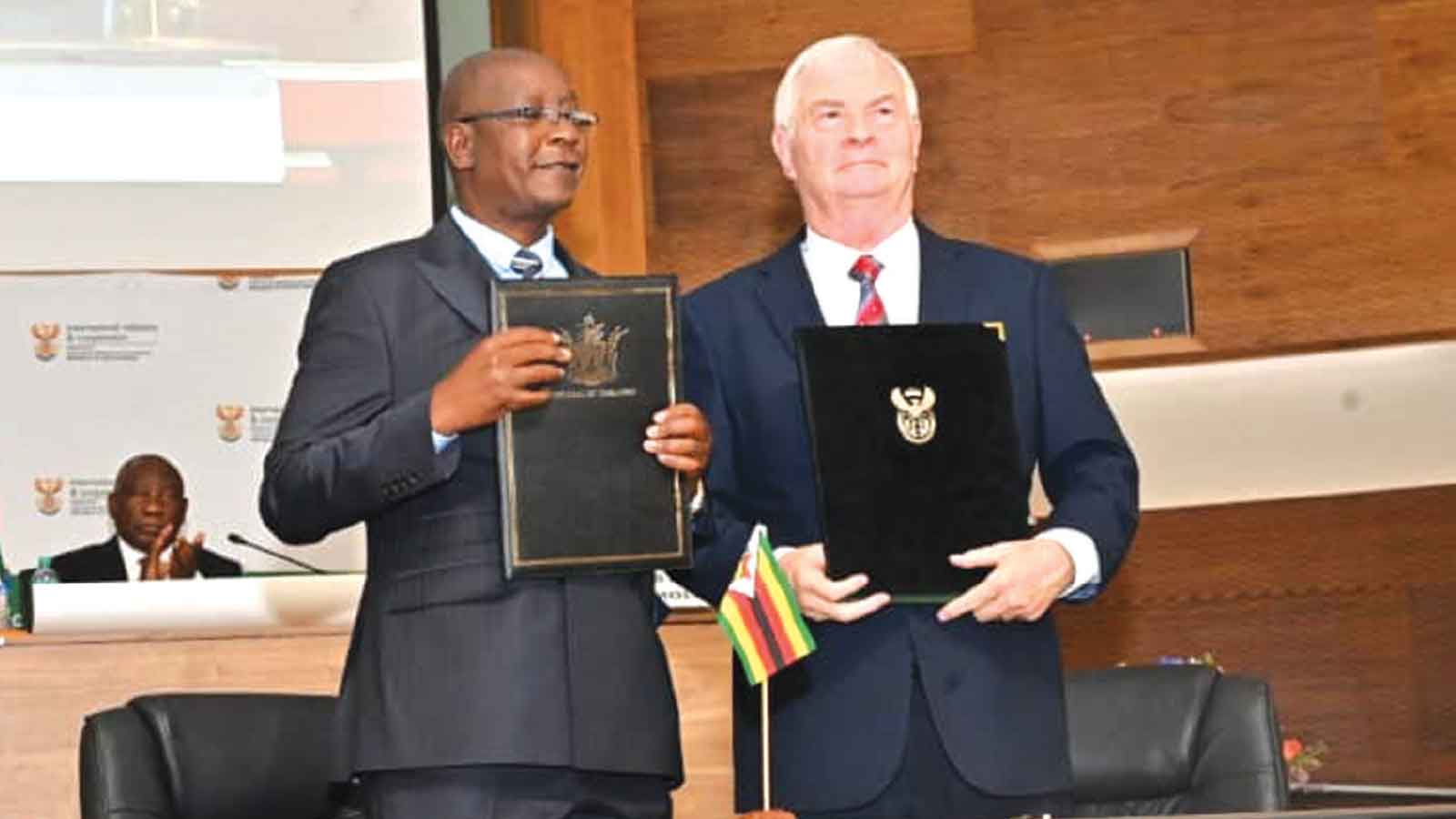
THE Zimbabwe Mercantile Exchange (ZMX) and the Saint Petersburg International Mercantile Exchange (SPIMEX) have signed a Memorandum of Understanding (MOU) aimed at strengthening commodity market cooperation between Zimbabwe and the Russian Federation.
The signing ceremony, which took place in Harare on Monday, comes against the backdrop of an 80 percent increase in Zimbabwe’s exports to Russia from US$1,3 million in 2024 to US$2,4 million last year.
The signing of this strategic cooperation agreement marks an important step in strengthening collaboration between the commodity exchange markets of Zimbabwe and the Russian Federation.
Agriculture, Mechanisation and Water Resources Development business development, markets and trade chief director, Mr Clement Bwenje, represented by acting director, Mrs Rejoice Pazvakavambwa, said Government recognised that modern agricultural systems required modern markets.
“The transformation of agriculture cannot be achieved through increased production alone – it must be supported by robust market institutions, transparent price discovery mechanisms, efficient trading platforms and strong regulatory frameworks that inspire confidence among producers, traders, processors and investors.
“Today’s ceremony marks an important milestone in Zimbabwe’s agricultural transformational journey and demonstrates our country’s commitment to strengthening strategic international partnerships that contribute towards the development of efficient, transparent and globally competitive commodity markets,” he said.
ZMX continues to support the Government’s broad agenda of creating a market-driven, productive and resilient agricultural sector, through its structured trading platforms, warehouse receipt systems and market information services.
“The partnership we are celebrating today between ZMX and SPIMEX represents a significant opportunity for Zimbabwe to deepen its engagement with global commodity markets and to leverage international expertise and experience in commodity exchange development from the world’s leading commodity exchange market,” he said.
ZMX chief executive, Mr Collen Tapfumaneyi, said the partnership presented an opportunity to facilitate a practical two-way commodity trade between the countries’ respective exchanges.
“The current forecasts of an El Niño-induced drought underscore the importance of establishing resilient and diversified supply chains that can respond quickly whenever seasonal production falls short of national requirements,” he said.
“Within this context, the collaboration between ZMX and SPIMEX provides an important platform for facilitating the efficient procurement of strategic commodities such as maize, wheat and fertiliser whenever required, using transparent, market-based mechanisms that complement Government’s food security strategy.”
The partnership creates opportunities for Zimbabwe to expand exports of products and has a competitive advantage, especially for tobacco, cotton, sugar and horticultural products.
AMA chief executive, Ms Alice Mapfiza, said the MOU presented opportunities for institutional cooperation, capacity building, market intelligence sharing, technological advancement and the development of new commodity market instruments.
“We believe the experiences and expertise of SPIMEX, as one of the world’s leading commodity exchanges, will provide valuable insights that will contribute to the continued evolution of Zimbabwe’s commodity markets,” she said.
SPIMEX managing director, Mr Samir Dadashov, said they agreed to a win-win situation, leveraging on their vast trade exchange experience over the years.
Meanwhile, statistics from the Zimbabwe National Statistics Agency (Zimstat) show that Russia was among the country’s top 20 export destinations last year.
Statistics from the International Trade Centre (ITC) managed Trade Map online database show that tobacco and manufactured tobacco substitutes, products, whether or not containing nicotine, were the main product group category, earning the country US$2, 27 million, followed by works of art, collectors’ pieces and antiques on US$83 000.
Trade Map data also showed that the country imported goods worth US$42 million from Russia, with fertiliser leading imports of US$35 million, followed by cereals on US$5 million.
As a result of the country’s increasing wheat production over the years, Zimbabwe’s imports of the cereal and meslin products have declined by 61 percent to US$5,2 million last year from US$13,4 million in 2023.