Moffat Mungazi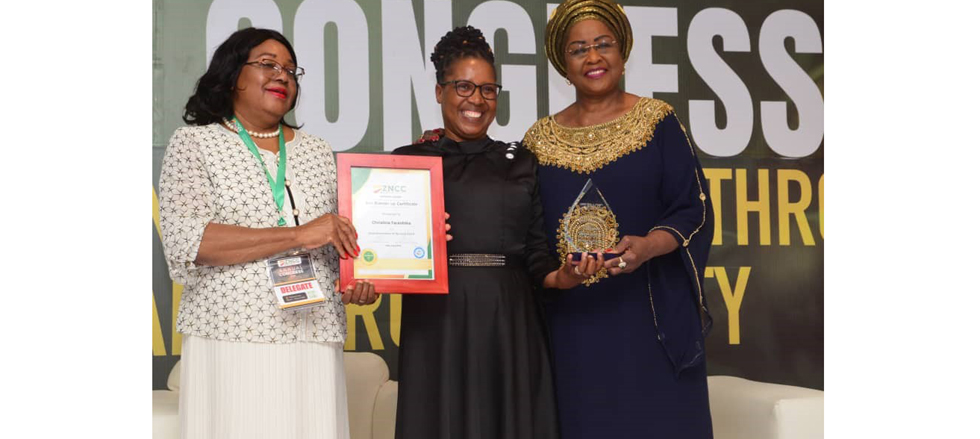
Lloyd Makonya
Correspondent
WHEN most people think of Zimbabwe’s business success stories, they picture glass towers in Harare or bustling offices in Bulawayo and Mutare.
But deep in the heart of Buhera, far from the glare of city lights, a quiet revolution is taking place led by a determined woman and an unwavering belief in rural potential.
Mrs Christina Taranhike, the powerhouse behind the fast-growing Integral Kumusha brand, is proving that you don’t need to be in the capital to make an impact you just need vision, grit, and community at heart.
Her project is more than a business, it is a living, breathing model of how agriculture, tourism, and social empowerment can thrive in harmony with the land.
Taranhike, is not only transforming the entrepreneurial landscape, but also redefining the potential of Zimbabwe’s rural economy.
And now, the nation is taking notice.
Her remarkable journey of resilience and innovation was recently recognised on a national stage.
At the Zimbabwe National Chamber of Commerce (ZNCC) Annual Congress held in Victoria Falls last Friday, Mrs Taranhike was named Businesswoman of the year in the prestigious category of Enterprise Demonstrating Outstanding Leadership, Innovation and Job Creation.
Held under the theme: “Unlocking Business Potential Through Policy, Partnership and Productivity”, the congress brought together Zimbabwean entrepreneurs, policymakers, and regional guests to celebrate excellence in business.
Mrs Taranhike’s award signals more than personal triumph, but a powerful testament to the potential that lies within Zimbabwe’s rural spaces when innovation meets determination.
Operating from the Taranhike family homestead in Buhera, the project is a thriving model of regenerative agriculture, rural agro-tourism, and community upliftment.
It integrates environmentally sustainable farming with cultural heritage, wellness, and education serving as a blueprint for how rural enterprises can be profitable, inclusive, and resilient.
Speaking shortly after receiving the award, Mrs Taranhike expressed her gratitude and optimism saying: “This recognition is an encouragement to keep pushing boundaries. Integral Kumusha is more than farming, it is about dignity, innovation, and community transformation. I am also deeply grateful to my husband, Dr Daud Taranhike, for his unwavering support.”
Earlier this year in May, the project caught national attention when First Lady, Dr Auxillia Mnangagwa, launched the Agri4She initiative at the Taranhike homestead.
She lauded the site as “a model rural home” that could inspire a transformation in Zimbabwe’s rural landscape.
The Agri4She concept promotes women’s empowerment through agriculture and the selection of Integral Kumusha as its launchpad underlines the project’s national relevance.
Dr Mnangagwa commended the Taranhikes for “practising agriculture with purpose, foresight, and a deep love for community,” and noted the homestead as “a beacon of what’s possible when policy meets grassroots action.”
Beyond agriculture, Integral Kumusha is blossoming into a rural agro-tourism hub offering immersive visitor experiences around farming, traditional cuisine, heritage conservation, and wellness.
Tourists and local visitors alike are introduced to regenerative farming methods, indigenous knowledge systems, and eco-friendly practices that reflect the harmony between land and people.
What sets the project apart is its community-centred approach. Local women and youth have been trained in sustainable farming, food processing, crafts, and hospitality services.
By fostering skills development and creating employment opportunities in Buhera, Mrs Taranhike is actively reversing rural-to-urban migration trends and showing that prosperity can be homegrown.
Moreover, the project aligns seamlessly with Zimbabwe’s broader development goals around rural industrialisation, green economy transitions, and youth empowerment.
Mrs Taranhike’s Integral Kumusha is more than a success story, it is a movement. It challenges the long-held assumption that rural areas are zones of poverty and stagnation.
Instead, it showcases the rural landscape as a wellspring of opportunity, innovation, and sustainable growth.
As Zimbabwe continues to explore new frontiers in tourism, agriculture, and enterprise, projects like Integral Kumusha shine a light on what is possible when grassroots ambition meets strategic vision.
Buhera may have once been considered a remote and arid landscape known for droughts, but thanks to visionaries like Mrs Taranhike, it now stands at the centre of Zimbabwe’s emerging rural renaissance.



 Online Reporter