Chronicle Editor
Patrick Chitumba, [email protected]
A TOTAL of 45 irrigation schemes are operational in the Midlands province out of 61 with the Government focused on rehabilitating the 16 non-functioning ones to enhance climate resilience while ensuring sustainable food production.
Provincial irrigation engineer, Shingi Zano, said this during a recent stakeholder engagement meeting to raise awareness about the Irrigable Areas (Control) Regulations, 2021, also known as Statutory Instrument 38 of 2021, organised by the Centre for Conflict Management and Transformation (CCMT).
The workshop sought to clarify the roles and responsibilities of irrigation managers from the Agricultural and Rural Development Authority (Arda) and Agritex officers at irrigation schemes.
Eng Zano said the rehabilitation of remaining irrigation schemes was critical as Zimbabwe builds its capacity to improve food and nutrition security outside of reliance on the increasingly unpredictable rain-fed seasons.
“We have 45 functioning irrigation schemes out of 61 in the Midlands province as we work towards rehabilitation of the remaining non-functioning ones,” he said.
Official reports suggest that at least 19 000ha have been put under irrigation in the province as the Second Republic moves to protect the country’s agriculture sector from the effects of climate change.
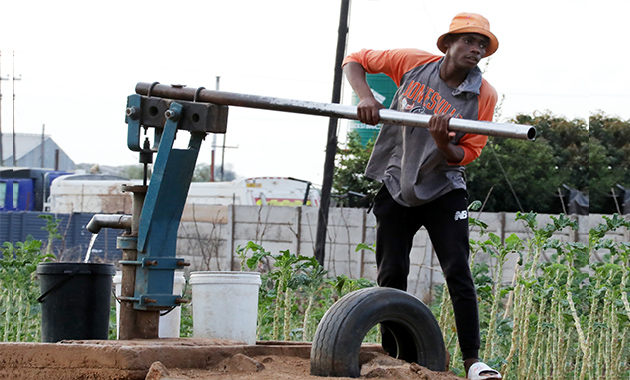
Communal farmers are reaping significant benefits from the new approach, as they can now cultivate crops year-round, leading to increased earnings and improved living standards.
This is in keeping with the countrywide efforts in expanding irrigation coverage, with operational schemes currently spanning 58 percent of the targeted 350 000ha by next year.
Zvishavane District, for instance, has 336ha, Shurugwi 524ha, Mberengwa 431ha, Mvuma 374ha, Gweru 1 432ha, Gokwe North and South 302ha.
“Notable irrigation schemes are Chemahororo Irrigation Scheme 10ha, Chaora 180ha, Mabwematema 640ha, Nyaje 10ha, Milsonia 20ha, Igogo Takawira 54ha, Sengwa 50ha, and Vukuzenzele 60ha, Bannockburn 93ha, Biri Old 38ha, Chamakudo 208ha, Mambanjeni 85ha, and Mbembeswane 1(90 ha),” he said.
Addressing the same workshop, Midlands provincial agronomist, Mr Innocent Dzuke, said irrigation schemes play a pivotal role for community food security.
“Irrigation supplements water to crops for improved crop production and productivity. This improves source of income, which is vital for rural development and food security and nutrition,” he said.
However, Mr Dzuke said the governance issue is a challenge faced by most irrigation schemes resulting in conflicts, among farmers in irrigation schemes.
“That has resulted in low crop production and productivity. Conflicts have risen among farmers in the scheme because farmers are not aware of the SI 38 of 2021,” he said.
“Hence, the workshop is of paramount importance so as to have a common understanding among stakeholders and also to make an awareness to farmers in the irrigation schemes for adoption by farmers for improved crop production and productivity.”



 Online Reporter