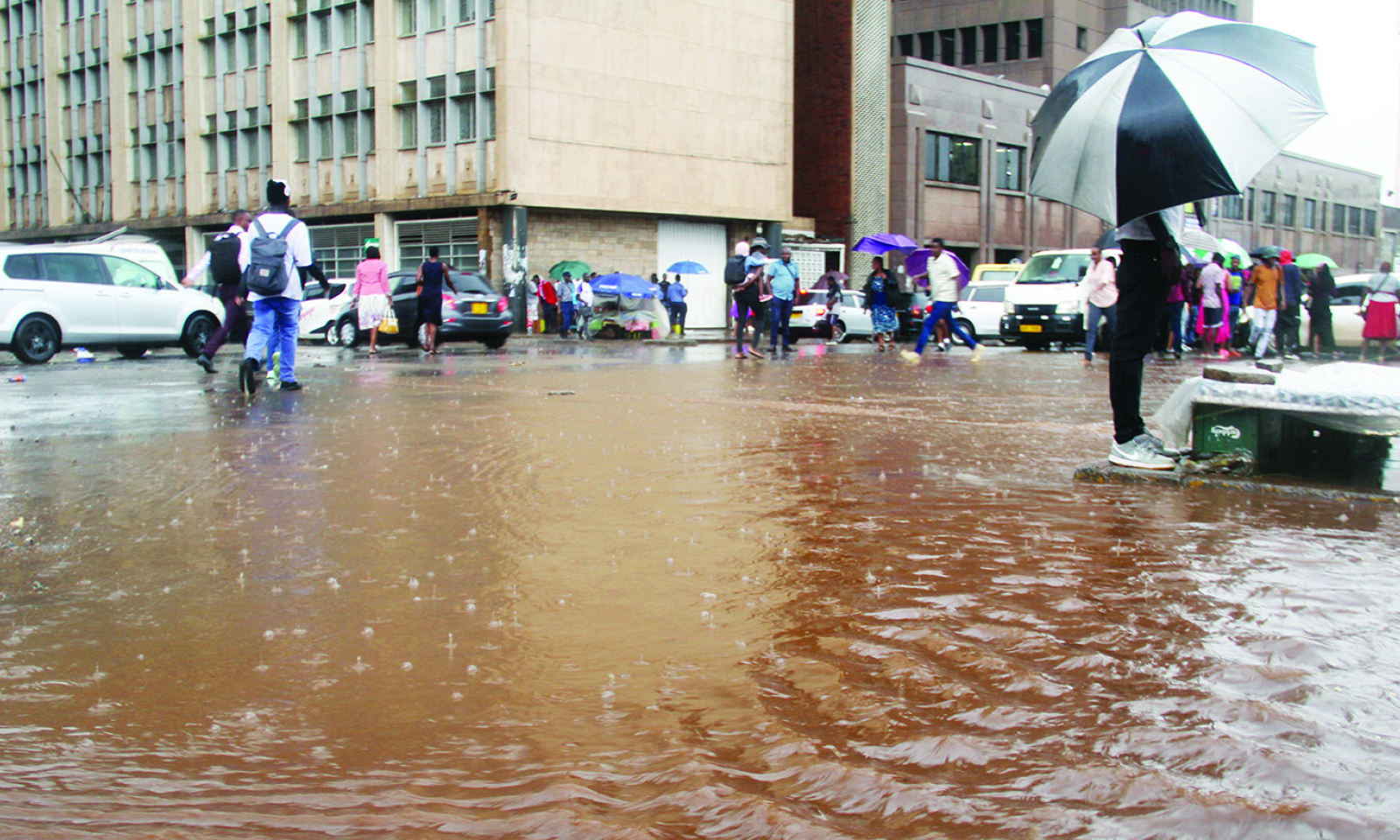
THE current wet spell has brought Harare’s central business district to its knees via a familiar and entirely predictable enemy -flooding caused by the rains.
What should be a welcome relief from the heat has instead become a trigger for chaos—flooded streets, submerged pavements, stranded commuters, and businesses forced to shut their doors as water gushes into shop entrances.
However, the tragedy is not the rain itself. The tragedy is that Harare is drowning in problems of its own making.
The flooding of the CBD after even moderate rainfall has become so routine that many residents now treat it as an unavoidable part of urban life. Actually, some inventive men are now waiting at the notorious points with trolleys which they use to help pedestrians cross the flooded streets for a fee.
Sadly, this is not a natural disaster. It is a man‑made failure, a direct consequence of chronic littering, blocked drainage systems, and the unchecked spread of illegal street vending that has turned pavements into dumping grounds and storm drains into rubbish pits.
The city is not being overwhelmed by nature; it is being overwhelmed largely by neglect and indiscipline by the illegal street vendors.
As we approached the rain season in October last year, Harare City Council and its partners, cleared most of the storm water drains in the CBD with ‘mountains’ of litter emerging from the exercise.
At that stage a problem had been solved.
Unfortunately, the illegal vendors remained in their positions and continued littering and dumping their litter in the stormwater drains.
Just over a month later, the streets are flooding because of the littering done since the last clearing exercise.
When the rains come, this waste is swept straight into the drainage system. Storm drains that should channel water away from the streets are instead clogged with debris. The result is inevitable: water has nowhere to go, so it rises. The CBD becomes a shallow lake, and the city’s infrastructure—some already fragile—buckles under the pressure.
Walk through the CBD on any given day and the evidence is everywhere. Plastic bottles, food containers, cardboard, and discarded packaging line the streets. Piles of waste accumulate at street corners, often within metres of empty municipal bins.
The problem is not a lack of knowledge—everyone knows littering is wrong. The problem is a culture of impunity. People litter because they know nothing will happen to them.
To be clear, the issue is not the existence of vendors. Street vending is a legitimate economic activity that sustains thousands of families. The issue is the lawlessness surrounding it.
Many vendors dump waste directly into drains or leave it piled beside their makeshift stalls. Fruit peels, plastic bags, Styrofoam containers, and rotten produce accumulate throughout the day.
When the rains come, all of it is flushed into the drainage network.
It is no coincidence that the worst flooding occurs in areas with the highest concentration of illegal vending—Copa Cabana, Charge Office, Gulf, and the area around Market Square. These are the same areas where pavements have been turned into open-air markets and where the city’s waste management systems have effectively failed.
Solving this crisis requires a multi‑layered approach, involving many of Harare’s stakeholders who all know what needs to be done to stop the flooding on the CBD streets.