Online Reporter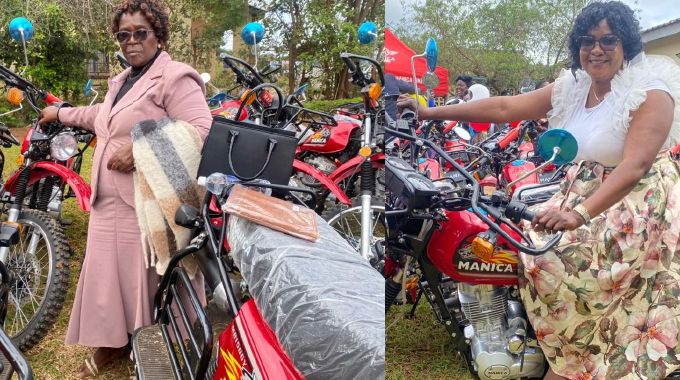
Nothando Zondo, [email protected]
ZIMBABWE’S 46th anniversary of independence offers a timely moment to take stock of the country’s journey in advancing women’s rights and empowerment, and to reflect on how far the nation has travelled in reshaping the lives and opportunities of women and girls.
Since the adoption of the 2013 Constitution, Government has steadily strengthened the legal and institutional foundations that promote gender equality. The Constitution enshrines the principles of non discrimination and equal opportunity, while institutions such as the Zimbabwe Gender Commission play a vital role in oversight and accountability, ensuring that these guarantees are translated into lived realities.
According to UN Women, around 66,7 percent of the legal frameworks required to promote and enforce gender equality are now in place, signalling consistent progress and growing alignment with international standards. This momentum has been driven in part by strong collaboration between Government and development partners.
Working alongside line ministries, UN Women has supported the implementation of the National Gender Policy (2025), helped mainstream gender considerations in more than 100 institutions, and trained over 500 public officials in gender responsive planning and budgeting. These initiatives have strengthened institutional capacity and reinforced gender equality as a core development priority.
Economic empowerment stands out as a powerful bridge between independence and national development. Women play a central role in Zimbabwe’s productive sectors, particularly agriculture, where they make up approximately 42 percent of the labour force. For many women, empowerment initiatives offer more than short term financial support — they open pathways to sustainable livelihoods, autonomy and long term economic independence.
These efforts are reinforced by programmes such as the Women Development Fund, administered by the Ministry of Women Affairs, Community, Small and Medium Enterprises Development, and financing facilities provided through SMEDCO. Together, these initiatives combine access to loans with training and business development support, equipping women with practical tools to grow resilient enterprises.
Prior to independence in 1980, Zimbabwean women faced profound barriers to essential services, particularly in rural communities. Limited access to healthcare, including contraception, and the absence of legal protections for reproductive rights contributed to high maternal mortality rates and restricted family planning choices.
Since independence, meaningful progress has been recorded. Government led initiatives have expanded access to family planning services, improved the availability of contraceptives, and strengthened policies that support women’s reproductive health. These efforts have been accompanied by public awareness campaigns that have increased knowledge and understanding of maternal health and family planning.
For Mrs Privilege Zondo, these changes sharply underline the contrast between past and present. Born into a family of nine children, she vividly recalls the hardships that defined her upbringing.
“I was born into a family of nine children and my father was the only one working. He was a carpenter and we lived from hand to mouth. Some of my siblings ended up not completing their studies due to lack of funds. I believe that had my mother managed to get contraceptives and kept our family small, we wouldn’t have had such a difficult childhood,” said Mrs Zondo.
Zimbabwe has also made notable strides in improving girls’ education and health outcomes. The adolescent birth rate declined from 107,9 per 1 000 girls in 2017 to 86,8 per 1 000 in 2021, reflecting improved access to education and reproductive health services — both critical to human capital development and long term national growth.
Government has intensified efforts to address gender based violence and harmful practices. A landmark 2016 Constitutional Court ruling set 18 as the minimum age for marriage, outlawing child marriage and establishing stronger legal protections for girls.
That commitment was reaffirmed in November 2021, when President Mnangagwa signed the High Level Political Compact on Ending Gender Based Violence and Harmful Practices, supported by the United Nations and the European union under the Spotlight Initiative. The compact represents a coordinated, government wide effort to accelerate prevention, strengthen accountability and mobilise resources, while aligning national action with regional and global frameworks.
Further progress followed with the enactment of the Marriages Act [Chapter 5:17] (2022), which harmonised marriage laws and firmly set 18 as the legal age of marriage and consent for both girls and boys, without exception.
Additional support is provided through the National Gender Based Violence Strategy (2023–2030) and partnerships such as the Spotlight Initiative, now Sustaining the Gains. Working with United Nations agencies, these programmes strengthen institutions, expand survivor support services and promote behavioural change at the community level.
Before independence, girls’ access to secondary education was severely limited, with many channelled into domestic science under discriminatory policies. Today, expanded educational opportunities and progressive policies — including re entry programmes for teenage mothers — have enabled more girls to pursue diverse academic disciplines and career paths.
Science teacher Miss Precious Sithole expressed appreciation for these opportunities.
“I’m grateful that I was born post independence and I can choose which career I want to take up unlike before independence where girls were limited. Now, I teach sciences, which were deemed too difficult for women,” said Miss Sithole.
Land ownership, once largely beyond women’s reach, has also improved. Post independence land policies have promoted women’s rights to access and own land, particularly through resettlement programmes, although challenges remain in fully realising these rights across all communities.
Under the Second Republic, efforts to empower women have intensified further. The Zanu PF Women’s League Presidential Empowerment Fund allocated US$3 million for empowerment projects across all 10 provinces, while the Women’s Microfinance Bank continues to extend financial support to female entrepreneurs. Women are also increasingly encouraged to participate in traditionally male dominated sectors such as mining.
Miss Ashley Nkala, a miner from Umzingwane District, praised these initiatives.
“Through women empowerment initiatives, I now have my own mine and I can sustain myself and my family. I am grateful to the government that I have also benefited from its women empowerment initiatives,” said Ms Nkala.
Beyond the economy, organisations such as the Women in Politics Support Unit are equipping women with skills to actively participate in governance and leadership.
For Zimbabwe, the empowerment of women and girls is more than a social objective — it is a cornerstone of sustainable national development. As the country advances towards Vision 2030, the true measure of independence will be reflected not only in policy commitments, but in the everyday realities of women and girls whose voices, opportunities and potential must be fully realised.
Councillor Silibaziso Nkala highlighted the growing presence of women in leadership spaces.
“As a female councillor, I’m thrilled that the government is not leaving us behind and women are taking their rightful place in politics. Post independence, there’s been a significant shift – we’re no longer just voters, but leaders, decision makers, and change agents. It’s empowering to see more women breaking barriers and inspiring others to do the same,” said Clr Nkala.
These developments align closely with President Mnangagwa’s vision of inclusivity and empowerment, captured in the mantra of leaving no one and no place behind. Complementing these efforts is the work of First Lady Dr Auxillia Mnangagwa through her Angel of Hope Foundation. Other programmes, including Agric4She, which focuses on agriculture, have made meaningful contributions to women’s empowerment through vocational training, health awareness and cultural preservation, particularly among rural and marginalised communities.
The advances made in healthcare, gender equality, education, economic empowerment and political participation collectively underscore a broad national commitment to uplifting women. As Zimbabwe continues to build its future, women’s empowerment remains central to sustainable development — a clear reminder that when women thrive, the nation prospers.