Online Reporter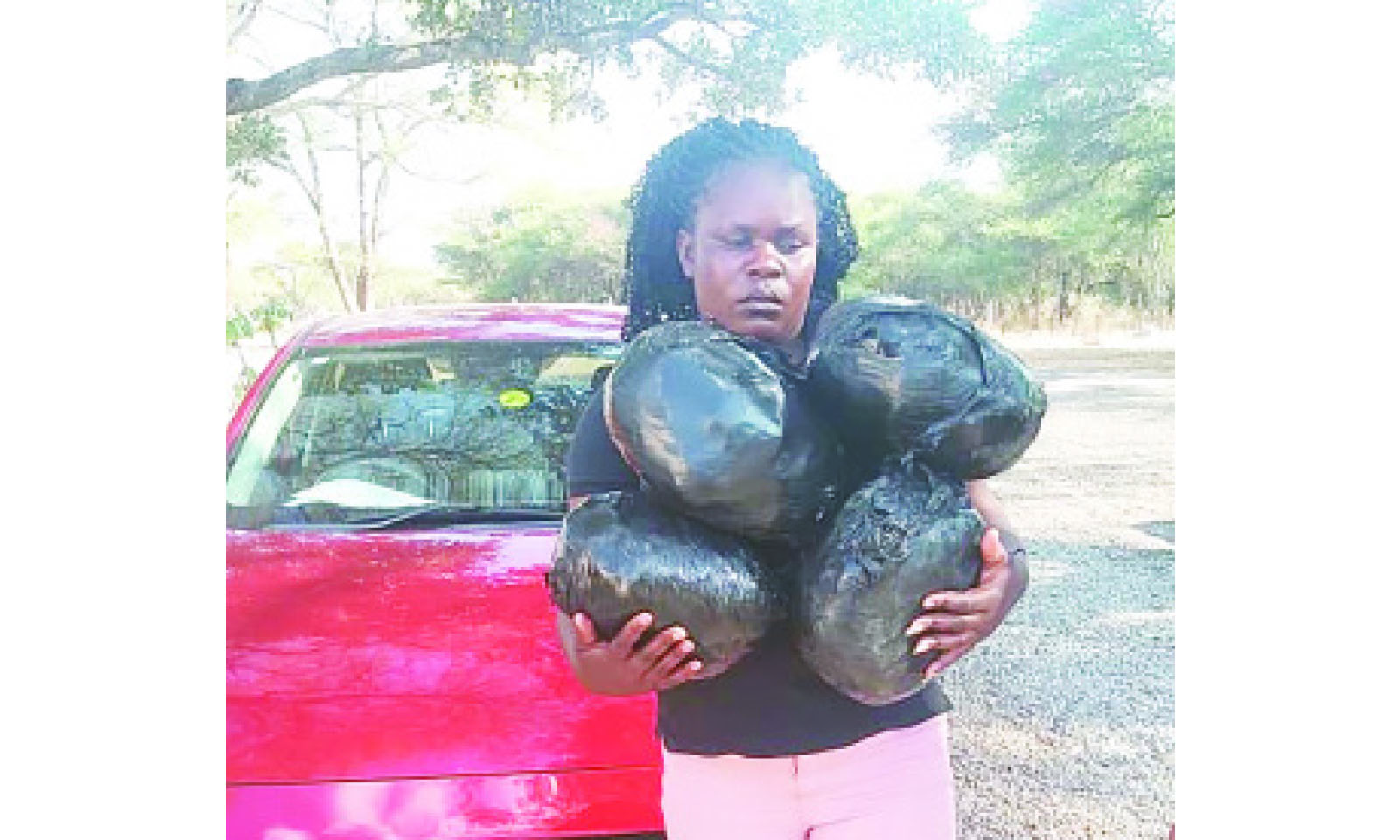
Emmanuel Kafe and Nokuthula Dube
Check Point Desk
Once considered a male-dominated sphere, the underworld of narcotics is now being shaped, in part, by some women—caught between desperation, exploitation and survival.
Women are increasingly getting involved in the narcotics trade—from street-level dealing to cross-border smuggling.
A review of open-source data and police press statements by Check Point, from January 2024 through mid-2025 reveals a rise in female arrests.
From cannabis and crystal meth to illicit pharmaceuticals, the data has challenged old assumptions about the country’s underworld drug economy.
Rising trend
From the city streets of Harare to rural outposts like Nyatsime and Chinhoyi, the number of women arrested in connection with narcotics—ranging from cannabis and crystal meth to unregistered pharmaceutical concoctions—has steadily risen.
The year 2024 marked a pivotal shift. In January that year, Norah Makwavarara, a woman with a documented history of drug dealing, was arrested in Harare for possession of crystal meth.
Just days later, another woman—known only as Tobeka—was convicted after being caught smuggling cocaine into Zimbabwe via Robert Gabriel Mugabe International Airport, concealed in textbooks brought from Colombia.
Her case suggested more than mere local entanglement; it hinted at the dangerous international networks now employing Zimbabwean women as couriers.
What followed was a series of arrests, building a picture of women increasingly caught in the grip of an illicit trade once dominated by men.
In April 2024, multiple arrests in Glen View, Harare, Rujeko in Masvingo, and New Lobengula in Bulawayo, further revealed the widening net.
Caroline Muingayi and Sarah Gomwe were found in possession of over 700 grammes of cannabis, while Melani Gutsire—arrested again a year later in a large Broncleer bust—was nabbed with unregistered pharmaceutical products.
By early 2025, the trend had grown more entrenched.
In just one week in January, five women were arrested for crimes ranging from possession of methamphetamine and cocaine to hoarding banned skin creams and cough syrups.
Among them, Sheena Mugwagwa of Mutare was found with 50 grammes of crystal meth and quantities of Broncleer syrup—an increasingly common substance of misuse among youth in the country.
In Mbare, the densely populated township often cited as a hotspot for illicit drug activity, Elizabeth Masando, Sandra Tirivangani and Perpetua Madamombe were separately apprehended in February 2025 for trafficking everything from skunky dagga to unregistered cough syrups like Ardco-Salterpyn.
Their arrests came just days apart, reflecting a localised concentration of female-driven drug trade activity.
The situation came to a head in March 2025, when eight women—Brenda Sango, Rumbidzai Chinyamakobvu, Melany Gutsire and others—were arrested in Harare’s Braeside suburb as recipients of a massive shipment of unregistered medicines.
Over 1 000 boxes of Broncleer, Benylin, and other psychoactive syrups were intercepted en route from Bulawayo to Chinhoyi.
This multi-tonne bust not only illustrated the scale of operations now involving women, but also confirmed a worrying organisational sophistication.
Even rural and peri-urban areas were not spared.
In February, Moleen Mazani, a 24-year-old woman from Njikiza in Chitungwiza, was arrested for cultivating dagga at her homestead.
Around the same time, Yeukai Sandra Bangajena was caught in Banket with a trove of unregistered medicines and cosmetics, part of a murky, often-overlapping economy of illicit health and beauty products.
Early this month, Memory Mukwasani was arrested for unlawful possession of dagga after collecting the contraband from a foreign cross-border bus that was intercepted in Highlands, Harare. The bus crew was offloading groceries into a DAF truck when officers recovered 59.5 kilogrammes of dagga, wrapped in yellow plastic, from the vehicles.
Push factors
Experts point to a convergence of economic desperation, unemployment and social disenfranchisement as the primary drivers pushing women into the drug trade.
The allure of quick cash—no matter how perilous—can be hard to resist.
There is also growing concern that some women are being manipulated or coerced into roles within drug syndicates.
The US Department of State’s 2024 Trafficking in Persons Report for Zimbabwe notes that women are sometimes lured under false pretence of domestic work or travel, only to be co-opted into drug courier work.
Social commentator Mr Dudzai Marembedze said even as arrests rise, public discourse remains mixed.
“On one hand, there is growing outrage over the impact of drugs on families, youth and public health.
“On the other, a quiet empathy emerges for women whose involvement in the drug trade seems born not of malice, but of misfortune,” he said.
He said many of the women arrested are in their late 20s to early 40s, an age bracket often associated with primary care-giving responsibilities.
Prevalence
Meanwhile, drugs like crystal meth—locally known as mutoriro—and unregistered pharmaceutical products remain pervasive.
Easy to smuggle, inexpensive to acquire, and highly addictive, these substances continue to ravage communities.
Unlike high-profile cases involving international smuggling, most of the women arrested appear to be small-scale players—street-level dealers or couriers.
Convictions are becoming more common.
Elizabeth Marikafu, for instance, was sentenced to eight years in prison for dealing in dangerous drugs in April this year.
The justice system’s response is clear: involvement in the drug trade, regardless of gender, will be met with stiff penalties.
Surge in drug related crimes
Zimbabwe has recorded a surge in drug-related crimes during the first quarter of 2025, according to the latest report from the Zimbabwe National Statistics Agency (Zimstat).
Police registered 7 254 offences involving controlled psychoactive substances or other drugs between January and March, translating to a rate of 47,8 crimes per 100 000 people.
Of these, 2 748 cases involved unlawful acts with controlled drugs or precursors, while 4 428 were linked to the illegal handling of alcohol, tobacco, or other controlled substances. The surge in drug offences contributed to an overall 33,7 percent increase in total recorded crimes compared to the previous quarter.
Men accounted for the majority of those charged with drug-related crimes, with 6 223 males and 1 176 females facing charges.
Authorities speak
The scale and frequency of these arrests reveal a dual reality: a growing prevalence of illicit drug use in Zimbabwe and a more determined law enforcement response.
Alarmingly, children as young as 10 are now being exposed to drugs, prompting authorities to adopt a combination of public “naming and shaming,” increased surveillance, and legislative reforms aimed at tackling the problem.
Law enforcement officials have acknowledged the shifting face of drug crime.
National police spokesperson Commissioner Paul Nyathi said while the police have yet to identify specific reasons for the rising involvement of women in drug offenses, a comprehensive national study is needed to understand this changing dynamic.
“Anyone may be inclined to commit a crime if the opportunity arises. This principle guides the Zimbabwe Republic Police in arresting individuals involved in criminal activities,” Commissioner Nyathi explained.
“However, a national study is necessary to determine why women are increasingly engaged in drug peddling.”
The police have consistently called for greater community vigilance and have praised the public for providing crucial information that has led to the arrest of numerous female suspects.
The Government, recognising the scale of the problem, has established an Inter-Ministerial Committee on Drug and Substance Abuse and is moving to create a specialised national agency to coordinate the fight against narcotics.