Online Reporter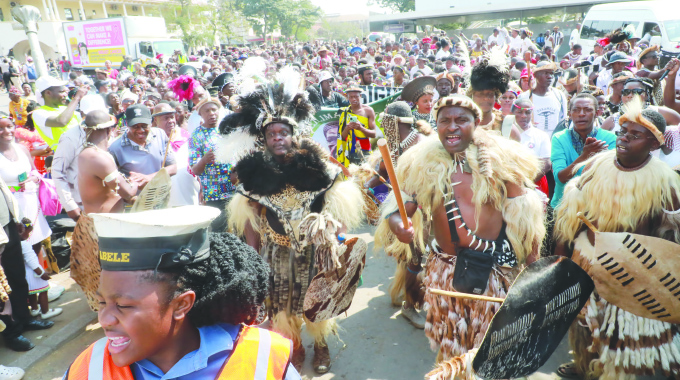
Lawson Mabhena
ZIMBABWE’S vibrant cultural tapestry — woven from diverse languages, spiritual rituals, living oral traditions, and storied historical sites — serves as a powerful wellspring of resistance against coloniality.
Here, heritage pulses beyond stone monuments and ancient artefacts, living instead in the collective memories, values and evolving identities that bind communities together.
Heritage is not just a tool for resistance; it is the foundation for building a future rooted in dignity, diversity and self-determination. Yet, a growing movement rooted in Zimbabwean heritage offers a powerful pathway to resist and transform colonial residues.
This is because coloniality attacks the same trinity of dignity, diversity and self-determination.
Colonialism distorted Zimbabwean history, often portraying indigenous cultures as primitive or static. Decoloniality involves reclaiming and re-narrating history from the perspective of Zimbabweans themselves.
It refers to the process of undoing colonial ways of thinking, knowing and governing that persist even after political independence. This includes renaming places, reviving traditional ceremonies, and promoting local languages in education and media.
Contributing to a debate on decoloniality in 2021, Catherine Walsh, co-author of the book, On Decoloniality, said:
“So, if we say that coloniality began in Abya Yala and then travelled the globe, it gave origin to a kind of what we might term Western modernity and to Western rationality, and to patterns of power that are constitutive of the ongoing systemic structures of racism, of capitalism, of heteropatriarchy, of Christianity, of anthropocentricism, of expropriation and dispossession — all intertwined.”
She later explained that “decoloniality is a kind of posture and attitude and an action.”
By deepening engagement with indigenous philosophies like Nyika inovakwa nevene vayo/Ilizwe lakhiwa ngabaninilo (a country is built by its own people), President Mnangagwa is moving beyond tokenism to transformative pedagogy. A posture, attitude, and an action, all wrapped in one powerful philosophy.
This powerful decolonial statement challenges the colonial legacy of dependency and external validation by asserting the agency, responsibility, and ownership of Zimbabweans in shaping their own future.
Colonial systems were built on the idea that Africans needed to be governed, educated, and developed by outsiders. This philosophy flips that narrative by affirming that Zimbabweans are the rightful architects of their nation.
The 25th anniversary of the King Mzilikazi Commemoration, held under the theme “Siqoqa Isizwe Ngamasiko” (We strengthen the nation through culture), is a profound example of how heritage and cultural philosophy can actively resist coloniality in Zimbabwe.
Colonial narratives often erased or distorted African leadership histories. By celebrating King Mzilikazi, a unifier and founder of the Matabele Kingdom, the commemoration reclaims a powerful indigenous legacy.
It reminds Zimbabweans that leadership and governance existed long before colonial rule and that African systems of diplomacy, military strategy, and cultural integration were sophisticated and effective.
Honouring King Mzilikazi’s legacy challenges colonial portrayals of African societies as chaotic or primitive.
The event brought together Ndebele, Shona, Kalanga, Sotho, Venda, Ndau, Tonga and others, showing that heritage can be a unifying force. This directly counters colonial strategies of divide and rule, which fragmented African societies along ethnic lines.
The theme “Siqoqa Isizwe Ngamasiko” emphasises that culture is the glue of nationhood, not a relic of the past. Culture fosters inter-ethnic solidarity grounded in a shared history and inclusive nation-building that values all cultural contributions.
The King Mzilikazi Commemoration is more than a cultural event — it is a decolonial act of resistance and restoration that philosophically aligns with Nyika inovakwa nevene vayo/Ilizwe lakhiwa ngabaninilo.
The country is built by its own people because nation-building is a shared responsibility across generations and communities. Cultural diversity is a strength, not a threat. And heritage is a source of pride, not something to be erased or hidden.
To effectively use heritage in the fight against coloniality, Zimbabwe must empower heritage knowledge keepers (elders, spiritual leaders, and cultural practitioners) to contribute to education and policy.
Recent studies advocate for community-centred heritage management, where local populations are actively involved in decision-making and interpretation of cultural sites. This approach recognises that heritage is a living, dynamic interaction between people, place and memory. By valuing oral histories, spiritual connections, and indigenous practices, Zimbabwe can reclaim its heritage from colonial frameworks.
Government must support and encourage more community initiatives, such as the King Mzilikazi Commemoration, as part of the decoloniality posture, attitude and action plan. This is a conscious, sustained effort to dismantle colonial legacies in thought, practice and institutions, while affirming indigenous knowledge, identity and sovereignty.
We must all embrace Zimbabwean languages, traditions and spiritual systems as sources of wisdom and identity. By embracing their heritage — not as a relic of the past but as a living source of wisdom — Zimbabweans can forge an education system, cultural identity and governance model that truly reflects its true owners, vene vayo/abaninilo.
Decoloniality is not a one-time event; it’s a lifelong commitment to reclaiming identity, restoring dignity, and rebuilding Zimbabwe from within. It’s a long journey of rediscovery and reclamation.
By aligning posture, attitude and action, Zimbabweans can create a society that honours its past, empowers its present, and shapes its future on its own terms.