

 Londile Moyo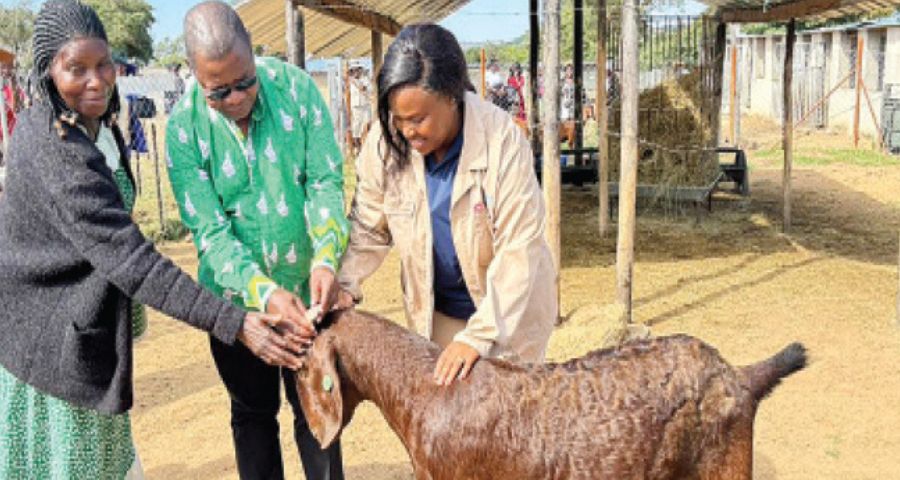
Tanaka Nkala, [email protected]
Out in Umzingwane District’s Ward 20, where the land still tells its own stories and progress often arrives quietly, one family is changing the conversation around small-scale farming. What began as a simple idea has steadily taken root, growing into something far bigger than anyone first imagined. It is a reminder that with vision, patience and belief, rural spaces can become centres of growth rather than places people leave behind.
The Mazila family, who are based in South Africa, started with nothing more than a piece of land back home in Umzingwane, a plot many would have overlooked or dismissed as too small to matter.
Today, that same land has been reshaped into a productive space brimming with purpose, making use of agricultural opportunities that had long gone unused, and showing just how much potential exists when land is worked with intention.
According to Mazila Holdings Project Manager Mrs Nontokozo Mabhena, the journey only began two years ago, and it started humbly, with just 13 Brahman goats.
“I never knew I had a passion for breeding goats until we started the project. These are not just any goats, but pure breeds that we imported from South Africa,” she said.
From those early beginnings, the project has steadily gained momentum. The herd has grown and diversified and now includes 65 Kalahari goats, 21 Matabele goats and nine Boer goats, along with several crossbreeds — each number representing learning, persistence and steady progress.
The family did not stop there. Understanding the risks of relying on a single stream of income, they expanded into poultry production as well, carefully building a complementary side of the enterprise.
Today, chickens roam the homestead too, with breeds such as Buff Orpington, Brahma, Ayam Cemani and Rhode Island Red adding another layer to the venture, strengthening both income and sustainability.
Mrs Mabhena is quick to point out that the project was never meant to benefit the Mazila family alone. From the beginning, it was designed to uplift the broader community.
“With the help of the community, we will be able to grow this project and create employment, especially for the youth, so that they can learn and benefit,” she said.
When locals were invited to tour the homestead, many of them, women, spoke openly about what the project represented. To them, it was proof that farming should no longer be seen as something to merely survive on, but as a business that can grow, create income and restore pride.
Officiating at the tour on Sunday, Permanent Secretary in the Ministry of Lands, Agriculture, Fisheries, Water and Rural Development Professor Obert Jiri urged farmers to take lessons from what they were seeing.
“What we are witnessing here is that farming does not require vast tracts of land. Even with a small piece of land, one can produce high-value outputs and make a profit,” he said.
Prof Jiri applauded the Mazila family for choosing to intensify rather than expand blindly, focusing on quality, planning and value.
“Agricultural intensification is key if we are to transform farming into a viable business at all levels,” he said.
Still, the journey is far from complete. The Mazila family say limited land remains their biggest challenge, and they are appealing to Government for support that would allow them to grow further.
They believe that with access to more land, they could scale up production, create more jobs and contribute even more meaningfully to the local economy — turning one family’s vision into a shared pathway for opportunity in Umzingwane.


 Online Reporter