

 Londile Moyo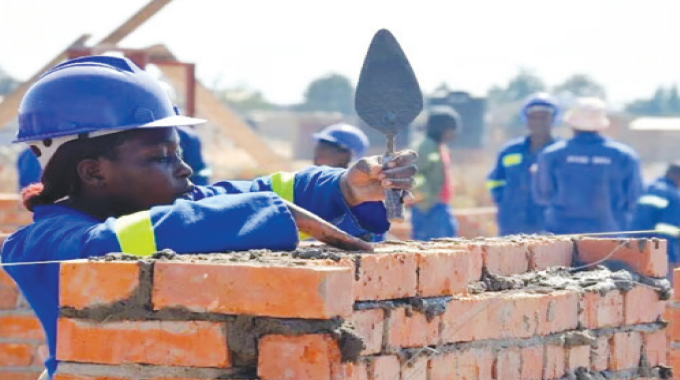
Getrude Chigerwe, Features Correspondent
ON Saturday, Zimbabwe marked 46 years of Independence under the theme “Unity and Development Towards Vision 2030,” signalling a national shift from political liberation to broad-based economic transformation.
For many young women, independence now means access to jobs, capital, and previously restricted industries, as well as the agency to shape their own economic futures.
When Zimbabwe gained Independence in April 1980, the promise was equality and opportunity. Decades later, that promise is increasingly measured through women’s economic participation and empowerment.
Women now make up a significant share of Zimbabwe’s workforce. The Global Economy estimates the female labour- force participation rate at about 59,6 percent, yet much of this participation remains concentrated in informal and low-income sectors.
This is where the meaning of Independence begins to shift. For young women entering the workforce today, independence is not just about participation; it is about progression, ownership, and influence.
The rise of foreign direct investment, particularly in mining, construction, and manufacturing, has opened new doors, creating employment pathways that were once difficult for young women to enter.
For many, these opportunities offer first-time formal employment, skills transfer and technical exposure, and entry points into male-dominated industries.
Ms Diana Chimedza, employed at a plasticware manufacturing company, said Government initiatives aimed at attracting investment and supporting industry helped her secure her first job.
“This is my first formal job, and it means I can earn a living and plan for my future,” she said. “I am thankful that Government programmes are creating spaces for young women like me to enter the industry. Having my own income has given me financial independence, and as a woman, that changes everything.”
While debates around labour practices continue, many young women are increasingly leveraging these roles as stepping stones into entrepreneurship and leadership.
Perhaps the most visible shift is happening on Zimbabwe’s roads. Women are becoming active participants in infrastructure rehabilitation, particularly in road construction and maintenance, an area long dominated by men.
Historically, women accounted for just 6,3 percent of formal employment in construction, but Zimbabwe construction studies published in 2022 suggest this has risen to around 9 percent.
While still modest, the increase signals a meaningful shift. Across the country, young women are being trained in bricklaying, plumbing, and electrical work. Community projects, such as those in Hopley, have trained at least 50 young women in construction-related skills under the UNFPA, Lafarge and Harare City Joint Programme on Adolescent and Youth Development (JPAYD).
One of the women now working on construction projects says the opportunity reflects how the meaning of Independence is changing on the ground.
“For years, we were told that construction is a man’s job, but Government programmes have opened doors for us to train and work,” she said.
“I am grateful for the chance to earn an income in a sector that used to exclude women. To me, this is what independence should look like: equal opportunity, and it speaks directly to SDG 5 on gender equality as Zimbabwe moves towards the 2030 Agenda.”
Women are also participating in road maintenance, road marking, and rehabilitation projects. These roles are not symbolic. Women are earning incomes, gaining technical expertise, and establishing construction businesses.
More importantly, their involvement can reshape infrastructure itself. As primary users of public services, travelling for markets, healthcare, and household needs, women bring lived experience to the way roads and systems are designed and built.
Access to finance remains one of the biggest barriers to women’s economic empowerment. Ecobank has reported that, across Africa, women-led businesses face an estimated US$42 billion financing gap.
Programmes such as the Ecobank Ellevate Programme aim to help close that gap by offering tailored loans for women-led businesses, business training, and mentorship, as well as networking and market-access opportunities.
In Zimbabwe, this translates into women scaling small and medium enterprises, entering trade networks, and building more sustainable enterprises. For many young women, financial inclusion is one of the clearest expressions of independence: “the ability to start, sustain, and grow a business”.
Beyond private-sector products, the Government has also rolled out initiatives meant to bridge financing gaps that have historically locked women out of capital, including gender-sensitive loans and women-focused empowerment funds.
Complementing access to credit are capacity-building programmes that equip female entrepreneurs with practical financial management skills, record-keeping, and market readiness.
Platforms such as Concord Young Women in Business, alongside other interventions supported through the Ministry of Women Affairs, Community, Small and Medium Enterprises Development, are helping to professionalise women-owned enterprises so that they can qualify for funding, compete and grow.
The Government’s development agenda increasingly positions women and youths as central to economic growth. Policies such as the National Youth Empowerment Strategy (2026-2030) prioritise skills development and vocational training, improved access to finance for young entrepreneurs, innovation and digital inclusion, and stronger participation in national development processes.
These efforts align with Vision 2030, which aims to transform Zimbabwe into an upper-middle-income economy. With over 60 percent of the population under the age of 35, youths, especially young women, are critical to achieving this national ambition.
Across sectors, a pattern is emerging. Young women are entering construction sites and infrastructure projects, finding opportunities in industrial firms, building businesses through targeted financial programmes, and leveraging policy frameworks designed to support them.
As Zimbabwe celebrates 46 years of Independence, the real story lies not just in remembrance but in transformation. The shift from political freedom to economic empowerment is underway, and young women are at its centre.
The task ahead is to ensure that development is inclusive, opportunity translates into equity, and Independence is measured not only by national progress, but by who gets to participate in it.
For Zimbabwe’s young women, Independence is no longer just a legacy of the past; it is something they are building, brick by brick, road by road, and business by business.


 Online Reporter