admin
admin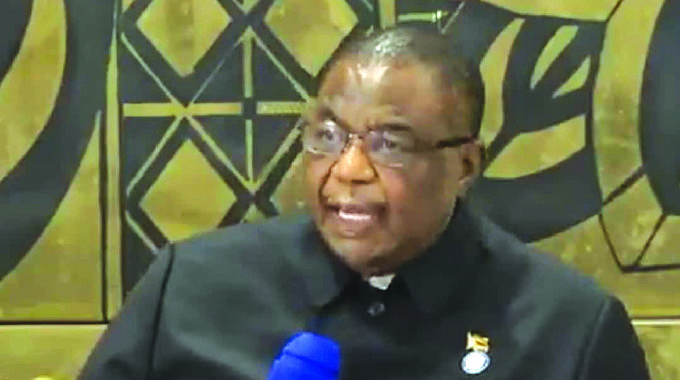
Mukudzei Chingwere recently in LOMÉ, Togo
AFRICAN health ministers attending last week’s 72nd session of the World Health Organisation regional committee for Africa held in Togo adopted a new eight-year strategy to transform health security and emergency responses.
Aimed at reducing the socio-economic impacts of public health emergencies, ministers and other stakeholders attending the meeting endorsed the Regional Strategy for Health Security and Emergencies 2022–2030.
The conference is held annually to aggregate and coordinates a consented global response to health challenges facing the world.
This year’s meeting came at a time when Zimbabwe’s healthcare is being revamped to align with Vision 2030 of an upper middle-income society as enunciated by President Mnangagwa.
Vice President and Minister of Health of Health and Child Care Dr Constantino Chiwenga led Zimbabwe’s delegation at the meeting and implored authorities under the ambit of the WHO to strive to avoid the recurrence of the Covid-19 calamity.
He said the Covid-19 experience that befell the world with its devastating effects was a sad chapter in the history of global public health and urged authorities to take measures to avoid the recurrence of such a calamity.
“What happened with Covid-19 was a bad surprise which we would not want a repeat of,” said VP Chiwenga. “When the Covid-19 came people least expected it and no one was prepared for it, therefore, it caught everyone by surprise.
“This is now what we are now trying to avoid and try to strategise and see how we, together as Africa, can fight such diseases when they do come.
“We are having so many diseases. For instance, people have forgotten that we still have HIV/AIDS because we are now only thinking of Covid-19, we are no longer thinking of other diseases. Now we have monkeypox coming up. We have got other diseases coming up so we have to prepare ourselves and not to depend on other countries.”
Although Zimbabwe has not been affected as yet by monkeypox, Government is taking a proactive role – just as it did with Covid-19, in a bid to protect the people.
Issues discussed at the indaba included the resurgence of polio on the continent, health security and emergencies, and management of environmental determinants of health.
Adoption of the regional strategy to address severe non-communicable diseases at first-level referral health facilities, such as clinics, was a prerequisite for attaining universal health coverage anchored on ensuring low-income earners are guaranteed these services.
The agreed and recommended elements to improve the regional health systems are already being implemented in Zimbabwe as part of its quest to attain best international practices, hence the need to encourage regional peers to do the same.
The experiences of diseases like Covid-19, showed that no one country can claim to be safe when others are still in the woods as infections can be imported.
WHO Regional Director for Africa Dr Matshidiso Moeti reiterated VP Chiwenga’s call and supported the agreed strategy.
“This strategy is the fruit of extensive consultations with African health ministries and a range of other institutions, technical actors, and partners across the continent.
“With their ongoing support and collaboration, it can help ensure that Africa is at the forefront of protecting the world against future pandemics,” said Dr Moeti.
“Covid-19 is a wake-up call for the African region to prioritise building resilient health systems capable of providing quality healthcare while coping with public health emergencies.
“There is a growing recognition of the mounting threat public health emergencies pose to global economies and societies, underlining the need for a One-Health approach and investing in prevention and preparedness. By investing now, we can prevent an economic and social meltdown in the future.”


 Online Reporter