Chronicle Editor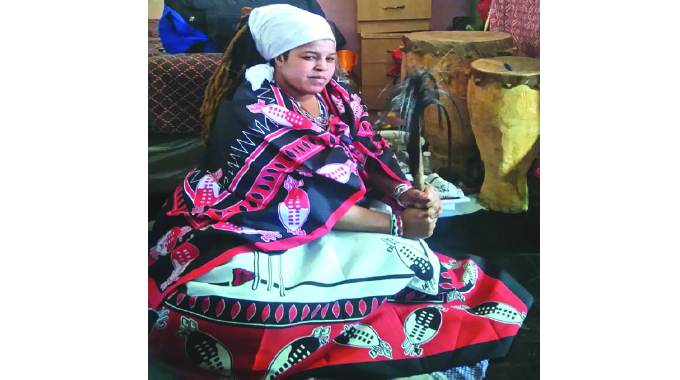
Bongani Ndlovu, Chronicle Reporter
OF all the mind-boggling African rituals that women have and continue going through is the belief that when they are young, sweeping their breasts with a reed broom (umthanyelo) prevents the onset of puberty.
The chief reason is that the young girl’s breasts would have started developing too early and their elders believe that the process will reverse this process.
It seems that the practice has been thriving since time immemorial with some of those who have experienced the practice speaking about it.
The ritual they say is performed in the morning by an elder of the family and in different settings.
It can be a grandmother, aunt or even the sister of the said girl.
The reed broom is kept behind the kitchen door and some who experienced this say they were left traumatised for life while others say they will continue the practice on their daughters.
Comedian Ms Nomsa Muleya said in her Venda culture it was either her grandmother or aunt who was tasked with the process.
“In our culture, the person who does this is either your aunt or grandmother.
I remember I developed breasts when I was in Grade Seven and bawathanyela ahamba.
They started growing again when I was in Form Two or Three there about,” said Ms Muleya.
She said she would gladly make her daughter go through the process if she develops breasts early.
“I wouldn’t say I was traumatised because that’s how we were raised.
It’s in our culture and everyone knew that at one point of your life, you might go through the process and we’d discuss these issues as peers,” said Ms Muleya.
Ms Thando Mlobane who grew up in Mpopoma suburb said at around 11 years of age, she was told that her breasts were too large for her age.
“I was told that my breasts were too big for my age.
I was in Grade Five or Six I can’t remember.
So, my grandmother said kumele kabuyele, so that engangisindi.”
Ms Mlobane said thereafter in the morning before she went to school, her grandmother took the broom, and told her to unbutton her uniform so that she could sweep them.
She said this was a traumatising experience.
“It was one of the most uncomfortable experiences I’ve ever had.
It made me lose confidence because I felt like I am that girl with big breasts,” said Ms Mlobane.
She however said she did not immediately notice the difference but believes her breasts stopped developing when she was 13.
Ms Mlobane said she will however not do the same to her daughter if she has one in the future.
“I wouldn’t want to thanyela her but what I know now is that I have to cut down on foods high in cholesterol.
I now know that these are the ones that provoke hormones,” said Ms Mlobane.
Traditional healers weighed in and said this ritual was a necessity for all young girls to prevent them from falling pregnant at a young age.
Gogo Thandiwe Mabhena, a traditional healer from Pumula South in Bulawayo said only those who are not sexually active can perform the ritual.
“Umntwana uyabesakhula, kumbe kuma Grade Six kumbe Seven, uthole eselempumela zamabele.
Okwenza bethanyelwe, yikuthi besasebancane, kakafiki emnyakeni yokubhoboka, lapha ngikhuluma ngezinto zokungena kwabomama esikhathini.
Kwenziwa ngoba, kuvikela ukuthi engabanjwi ngabafana esasemncane (The child will be in Grade Six or Grade Seven and then she starts developing breasts.
At that stage, the ritual must be done because she is still young and has not reached the age of puberty.
This is to prevent her from attracting the attention of older boys and that can lead to abuse or pregnancy),” said Gogo Mabhena.
She said the person who is supposed to do that ritual is a girl or woman who hasn’t been sexually active.
“It could be her younger sister, cousin or grandmother who is no longer sexually active.
If this ritual is done by someone who is sexually active, it does not work,” said Gogo Mabhena.
Another traditional healer from Bulawayo, Dr David Mhabhinyana Ngwenya said it was important for the girl’s grandmother to perform the ritual to curb witchcraft.
Dr Ngwenya, however, said the practice like many traditions was declining due to the influence of other religions.
He said the use of the reed broom was symbolic as it is used to sweep dirt.
— Follow on Twitter @bonganinkunzi



 Online Reporter