admin
adminKizito Sikuka Correspondent
The historic launch of the largest integrated market covering 26 countries in Eastern and Southern Africa is a bold move by Africa to reform internal trade.
The current economic landscape is structured in such a way that African countries, who possess the bulk of natural resources, trade more with the outside world than among themselves.
This trade imbalance is caused by various factors, including poor infrastructure built during the colonial era to disallow any smooth movement of goods, services and people between African countries, as well as the imposing of non-tariff barriers between African countries.
Another major factor is the lack of a vibrant industrialised sector that weans Africa from being a source of cheap raw materials for other countries in the west.
The long-awaited launch of an enlarged market in Africa is expected to change the economic landscape by boosting intra-regional trade in Africa and deepening regional integration through improved infrastructure development, investment flows and enhanced competition.
Commonly known as the Tripartite Free Trade Area (TFTA), the integrated market comprising the Common Market for Eastern and Southern Africa (COMESA), the East African Community (EAC) and the Southern African Development Community (SADC) was launched on 10 June in Sharm El Sheik, Egypt.
The TFTA creates a combined population of some 600 million people covering half of the member states of the African Union (AU) and a gross domestic product (GDP) of about US$1 trillion.
The enlarged market aims to promote the smooth movement of goods and services across borders, as well as allowing member countries to harmonise regional trade policies to promote equal competition.
The harmonisation of trade policies, and removal of non-tariff barriers and other trade barriers such as huge export and import fees should enable countries to increase their earnings, penetrate new markets and contribute towards their national development.
According to a communiqué released soon after the launch, the three regional economic communities pledged to prioritise industrial and infrastructure development to ensure that the tripartite arrangement is a great success.
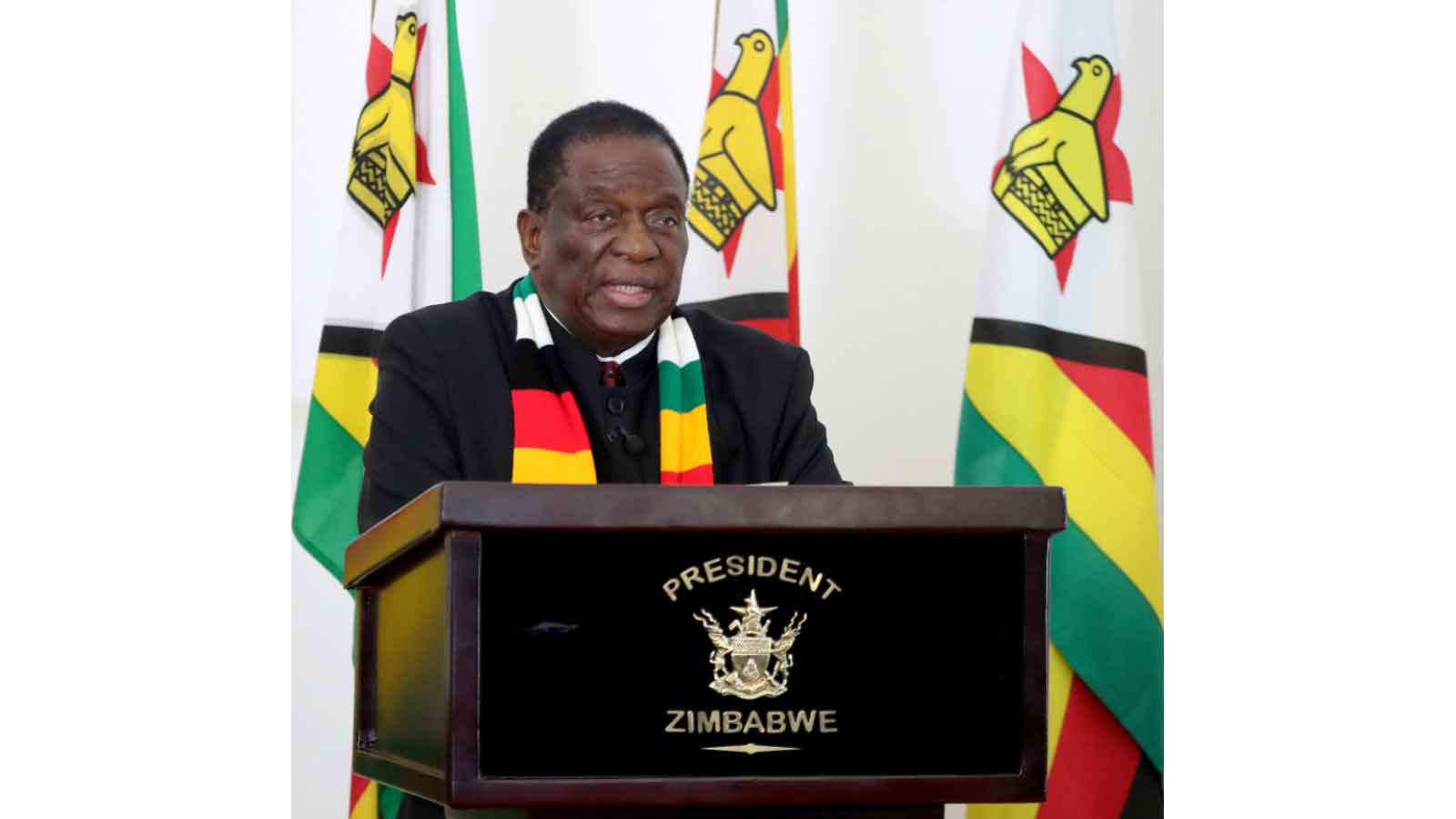
Speaking at the launch of the “Grand” FTA, the chairperson of the AU, President Mugabe of Zimbabwe, said Africa had come a long way and it was now time for the continent to take its rightful position on the international scene.
However, for this to happen, countries should intensify efforts to improve other enablers for socio-economic development such as industrialisation, infrastructure and energy development.
“Our shared experiences have demonstrated that competitive production of goods and services for an FTA that delivers jobs, economic growth and prosperity cannot be achieved without enabling infrastructure, energy and industrialization,” said President Mugabe, who is also the outgoing COMESA-EAC-SADC chair.
“We need to pursue robust industrialisation policies and create jobs for our people and curb the migration that has seen our men, women and children die in their thousands in the Mediterranean Sea as they search for jobs.”
The new COMESA-EAC-SADC chair, Ethiopian Prime Minister Hailemariam Desalegn, concurred and urged countries to ensure a quick and speedy implementation of all integration programmes, as well as speedy completion of negotiations in the tripartite arrangement.
Negotiations for the TFTA have been conducted in three different phases — preparatory phase, phase one and phase two.
The preparatory phase mainly covered the exchange of all relevant information including tariffs; including applied national tariffs as well as trade data and measures.
Phase one of negotiations covered core FTA issues of tariff liberalisation, customs procedures and simplification of customs documentation, transit procedures, among other issues.
Facilitating movement of business persons within the region was negotiated in parallel with the first phase.
The last stage of negotiations, which is phase two, deals with trade in services and trade related issues including intellectual property rights and trade development, cooperation in trade and development and competitiveness.
Negotiations are still to be finalised on some of the issues.
At the third Tripartite Summit held in Egypt to launch the “Grand” FTA, a total of 15 countries signed the agreement.
These are Angola, Burundi, Comoros, the Democratic Republic of Congo, Djibouti, Egypt, Kenya, Malawi, Namibia, Rwanda, Seychelles, Sudan, the United Republic of Tanzania, Uganda and Zimbabwe.
Swaziland became the 16th country on 15 June to sign the agreement, meaning that eight of the 15 SADC member-states have signed the agreement. — Sardc.net


 Online Reporter