

 admin
admin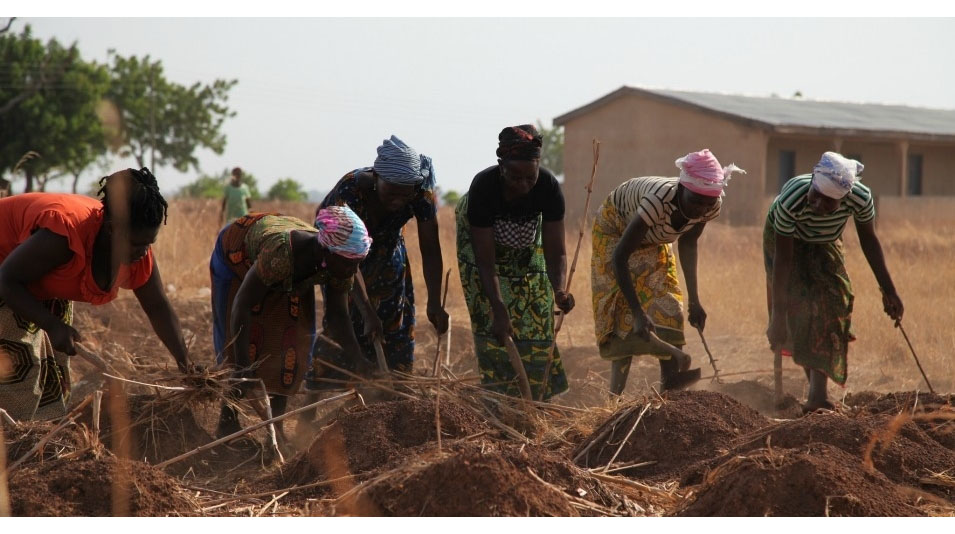
Ruth Butaumocho-African Agenda
Three women sit huddled under a makeshift factory at Masarakufa Business Centre in Mudzi, just a spitting distance from the local school.
Industrious as they are, they take turns to cut and carve fashion for an assortment of home- made leather shoes.
Not even the scorching sun that permeated through the roof of the makeshift structure, could deter the three members of Classic Footwear Club who appeared driven by the ancient rhythm of life to prosper. A target was supposed to be caught.
This is their routine, religiously.
The leader of the group, Ms Jane Chisina said they needed to finish the order, which was due to be delivered the following day.
Ms Chisina said considering that they travel 15 km every day from their homesteads, they have resolved to work beyond the normal operational hours to achieve their set target.
Earlier in the day, The Herald team had interacted with yet another group of women at Mudzi Business Centre, who manufacture cosmetics and flour from baobab powder.
The group, made up of women mainly single mothers manufacture lotions, face creams, nutritional drinks as well as home detergents using barks of trees and finely prepared powder from various wild fruits.
One of the women, Ms Queen Pound, bemoaned lack of markets and called on both the Government and the private sector to assist them in securing markets for their products, so that they could remain viable.
Still smarting from the effects of Covid-19, the women were trying to regroup and eke a living, but they admitted that it was not easy.
Memories of the Covid-19 period and what they went through may be fading, but they concede that the pandemic altered the community’s consumption and buying patterns. Scarred by the experience of food scarcity and other basics, the groups said community was now more concerned about putting food on the table, paying fees for their children and saving for possible health-related problems, than buying clothes, let alone shoes.
Having survived near death in the Covid-19 pandemic era, some of the villagers feel they should embark on a spending spree, buying food in celebration of their preserved lives in such a calamity, but clothing was not on the list of their priorities.
Such caution has put a dent on Ms Chisina and Ms Pound’s business, where they have been eking their living from.
Yes, the Women’s Month came to an end last week, but that does not warrant the relegation of women’s issues to the periphery and neither should the end of the month signal an end in addressing problems bedevilling the female populace, not only in Zimbabwe, but across the continent.
Although African women have long been regarded as the backbone of African societies, by and large gender parity is still a lofty dream across the continent.
While governments across the continent recognise the need to give women equal access to opportunities and services, and to this end have adopted gender policies like the AU Protocol on Women’s Rights, also known as the Maputo Protocol, alongside initiatives like the African Women’s Decade, to create an environment that enables the empowerment of women, Sub-Saharan Africa still has the lowest proportion of countries with gender parity, according to the United Nations Children’s Fund (UNICEF). Women continue to be relegated to the periphery owing to certain traditions and societal attitudes in most African cultures, which continue to discriminate them in a number of areas.
Thousands of women in rural areas across Africa and beyond continue to face a myriad of challenges that impedes on their development and efforts to do better.
With the world battling a myriad of challenges, there is already fear that progress that had been made by rural women and girls may be eroded, as Governments and other stakeholders divert attention and resources elsewhere.
The effects of Covid-19, climate change, global economic recession and social vices such as the surge in teenage pregnancy, drug abuse and other social upheavals are sadly impacting negatively in the lives of rural women and girls, a situation that calls for timely intervention by all stakeholders.
Inadequate resources and general instability exacerbate discrimination against rural women and girls, exposing them to heightened risks of gender-based violence, crime and abuse.
And it is not just limited to the direct impacts of war and other social related challenges, but women are 8.4 times more likely to be food insecure than men, and the disparity is increasing as the globe battles to wade off the impact of climate change.
Those often most impacted by these crises are the poorest rural communities where women still bear the heaviest brunt of poverty and hunger. As the global community scrambles to react to these emergencies, investing in rural women and girls may slip down the list of priorities.
But as we go from crisis to crisis, focusing on short-term responses, we risk losing sight of the bigger picture, which is the well-being of women in their diverse circumstance. It would be sad and unfortunate to continue relegating the problems of women, on the notion that generic solutions to challenges will be adequate without looking at gender dynamics, which continues to put women at a disadvantage.
Applying wholesome solutions to everyone, without looking at how women and girls will benefit from these has been albatross to their development, which probably explains they continue to trail behind in politics, the economy and in a number of areas.
The world is slowly gaining ground in the Fourth Industrial Revolution, where technology is now being used anywhere, but the reports on the ground show that women are trailing behind internet usage and have naturally been overshadowed in the digital economy.
The majority of women, mainly in rural areas still do not have access to finance, markets and other empowerment initiatives, which are necessary to improve their livelihoods.
It is therefore important to remember women in marginalised communities throughout the year because they still bear the brunt of hunger, poverty and all forms of challenges.
In the case of Ms Chisina and Ms Pound, they bemoan lack of markets for their products, which in the long run will stall their attempts to shed off poverty.
The two said although they had been trained by several empowerment organisations on financial literacy, value addition and market linkages, they continue to struggle to sell their products.
Lack of internet connectivity, cost of data, high transportation costs and lack of proper paperwork such as company registration certificates, tax clearance certificates and other necessary compliance documentation such as the Procurement Regulatory Authority of Zimbabwe credentials, disqualifies them from being considered to do business with big supermarkets and other players.
“We all want to be empowered, but we have since realised that empowerment remains a dream,” says Ms Chisina.
Ms Chisina’s call to be empowered resonates with tenets of the Africa’s Agenda 2063, which advocates for “an Africa, whose development is people-driven, relying on the potential of African people, especially its women and youth, and caring for children”.
This calls for the empowerment of African women in all spheres, with equal social, political and economic rights.
Across Africa, pockets of developments have been made towards the promotion of women’s aspirations and these should be consolidated to give women more leverage to excel in various fields.
Because of the work load they process on a daily basis, aspirations of the rural women should also be considered because they bear the brunt of poverty and shortages in all form.
By harnessing their local knowledge and skills, food and nutrition security for the majority of rural women can be improved, poverty can be eradicated and rural communities can become resilient to climate change, as well as other crises. Yes, the month of March has come and gone, but the problems that women face still linger on.
It is actually a misnomer to confine women’s celebrations in just one calendar month, but they should go beyond a full year because of their unparalleled and unrecorded feat in many areas.
Feedback:[email protected]



 Online Reporter