admin
admin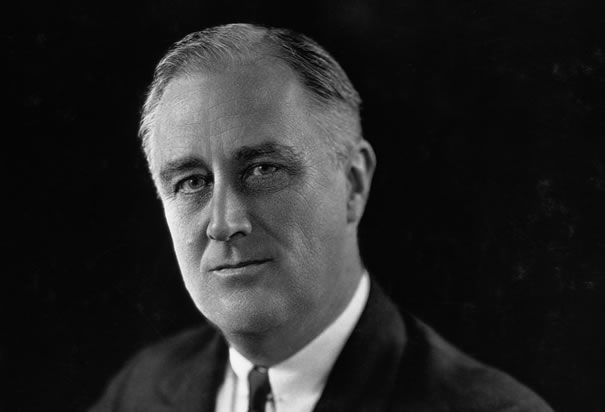
Garikai Chengu Correspondent
This week marks the tragic anniversary of President Franklin Delano Roosevelt’s signing of Executive Order 9066, which led to 100 000 Japanese-Americans being forced into concentration camps, on US soil during World War II.
America has a long history of oppressing its own citizens who originate from nations that Washington is at war with.
Modern wartime xenophobic crackdowns have targeted Russian-Americans throughout the Cold War, Vietnamese Americans during the Vietnam war and Japanese Americans after Pearl Harbour. Today, American Muslims during the ongoing war on terror are experiencing unprecedented levels of oppression from the state.
Perhaps, one of the twentieth century’s most profound political weapons was the concentration camp, which was invented by the same civilised Westerners that were using that very weapon to spread civilisation.
Soon after Pearl Harbour, President Roosevelt signed Proclamation 2525, which authorised government raids on Japanese American homes and resulted in the internment of Japanese-Americans in several concentration camps.
Lt. Gen. John L. Dewitt, who ran the internment camps, justified the internment of Japanese Americans before the House Naval Affairs Subcommittee on April 13, 1943:
“A Jap’s a Jap. I don’t want any of them here. It makes no difference whether he is an American citizen, he is still a Japanese. We must worry about the Japanese all the time until he is wiped off the map.”
Japanese Americans held in the concentration camps were used as a cheap labour force to make goods for the US military and they were subject to torture or “enhanced interrogation” as the government calls it nowadays. Internment clearly had nothing to do with public safety, and everything to do with drumming up racist pro-war hysteria.
In American film and media, the widespread image of the Japanese as sub-human created an emotional context which formed a justification for the nuclear bombings in Hiroshima and Nagasaki that instantly slaughtered 140 000 innocent people. Two days after the bombing of Nagasaki, President Truman stated: “The only language they seem to understand is the one we have been using to bombard them. When you have to deal with a beast you have to treat him like a beast.”
As the US government continued to churn-out anti-Japanese propaganda depicting the enemy as sub-human, a faux-official document called the “Jap hunting license” appeared in America that sanctioned the hunting of “Japs”, despite the fact that over a quarter of a million Americans were of Japanese origin at the time.
Decades later the American community with the largest year-on-year increases in hate crimes shifted from Japanese-Americans to the Vietnamese-American community. Much like American Sikhs in America today who are often mistaken for Muslims and subject to alarming rates of hate crimes, Asian Americans, during the Vietnam war, be they Vietnamese or not, faced hostility. As far as the United States military was concerned, it didn’t matter if you were Vietnamese or Cambodian, Chinese or Laotian, you were a “gook,” and therefore, sub-human.
In 1967, Martin Luther King Jr, recognised that America’s war in Vietnam affected Vietnamese-Americans at home and in his landmark speech “Beyond Vietnam,” he said that “bombs abroad explode at home.” King called the US government the “the greatest purveyor of violence in the world today.”
Ever since the first Asians arrived on US soil, there has been anti-Asian racism. In fact, for over 200 years Asian Americans have been systematically denied equal rights, subjected to harassment and state surveillance and had their rights revoked and were imprisoned for no justifiable reason.
In America today, Muslims are disproportionally the victims of terrorism and hate crimes. The war on terror has not only targeted Muslims overseas, it has also led to the ongoing oppression of the Muslim community in America.
Muslim-Americans increasingly feel as though they are living in a totalitarian police state with worsening harassment, profiling and surveillance by the state. Researcher Arun Kundnani has shown how the FBI has 1 counter-terrorism spy for every 94 Muslims in the US, which, approaches totalitarian East Germany’s infamous spy agency Stasi’s ratio of 1 spy for every 66 citizens.
Muslim-Americans are not only facing increasing oppression from the state, they are also facing growing prejudice from citizens in the US, as hate crimes and civil liberty violations against Muslims continue to rise. A recent Pew Forum Poll established that Muslims are by far the most disliked minority in America. According to FBI statistics, anti-Muslim hate crimes soared by an astounding 50 percent last year. Muslims constitute one percent of the US population, but they are thirteen percent of the victims of religious-based hate crimes. Clearly, Muslims at home and abroad are disproportionately the victims of terrorism. Politicians deliberately spread Islamophobia in order to justify escalating wars abroad and a growing surveillance state at home.
Islamophobia and xenophobia now seem as American as cherry pie. Intolerance of Muslims is often inverted, depicting Muslim customs as an insult to Western customs.
American cinema and music have always been an effective means of whipping up xenophobic wartime sentiment. The American-Arab Anti-Discrimination Committee has reported a spike in Islamophobia and hate crimes since the release of the highest grossing war film of all time, American Sniper, culminating in the recent slaying of three young Muslims in North Carolina who were shot in the head execution style.
“Ragheads”, “Japs” and”gooks”, the language of Hollywood and the US military has always relied on dehumanizing people that the nation is at war with.
In America today the names Apache, Comanche, Lakota, Cheyenne, Kiowa and Chinook, are not only Native American tribes but also US military helicopters. The famous Black Hawk helicopter is named after a leader of the Sauk tribe.
Then of course there is the Tomahawk cruise missile and the Grey Eagle, one of President Obama’s most used weapons, a drone named after an Indian chief.
The language of the US military reflects a rather macabre practice of naming its weapons after populations that it has wiped out.
From the outset, the unity of American society was built on xenophobia and an irrational fear of other cultures and foreigners. The nation has always had to fear something in order to unite against that fear. History has shown that when the fear dissipates, the reason for unity dissipates as well.
American xenophobia operates in the service of American militarism and American militarism abroad in turn ratchets up xenophobia against minorities home.
It began when the settler pioneers feared native Americans and united against them by slaughtering millions in order to quell that fear. As settlers began to unite around a common identity they feared the British Monarchy and rebelled against it. Americans then fought against Mexico, France and various other countries for land. Five hundred documented revolts on slave ships and the fact that plantation owners were greatly outnumbered by slaves cemented the role of fear that perpetuated slavery for centuries. With greater fear comes greater violence and with greater violence comes a greater need to justify that violence by ratcheting up the fear.
At the turn of the twentieth century America feared Germany’s increasing power and united in a fight against it. The second world war then added the Italians and Japanese to the growing list of “feared peoples”.
Then came the Red Scare, which was an anti Russia propaganda campaign that saw Russian-Americans fall victim to a wave of xenophobic panic. After the Russian Revolution, the American government began to fear that the US was in danger of its own communist revolution and cracked down on political and labour organisations. In the coming years the Communists provided the fear that fuelled xenophobia through the end of the Cold War.
Garikai Chengu is a scholar at Harvard University. Contact him on [email protected]



 Online Reporter