admin
admin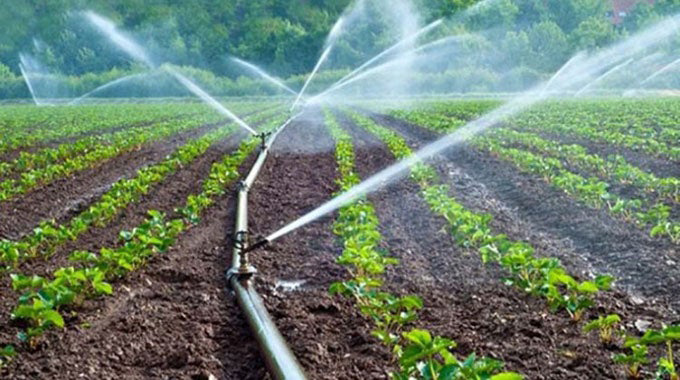
Herald Reporter
The Vision 2030 Accelerator Model launched by President Mnangagwa at Bubi-Lupane on Saturday last week is a game changer that will result in the Agricultural and Rural Development Authority (ARDA) producing at least 117 000 tonnes of maize countrywide worth US$21 million per each harvest.
The model will also result in a potential wheat harvest of 130 000 tonnes valued at US$46 million.
The model is expected to uplift rural development, as ARDA optimally utilises at least 26 000 hectares under irrigation schemes.
Under the model, employment will be created for local communities providing labour to the irrigation schemes that are dotted around the country.
Villagers will be roped in as shareholders in the schemes and ARDA is expected to pay a dividend on profit to approximately 55 000 families and direct beneficiaries, with an estimated assistance to one million indirect beneficiaries.
The model will guarantee food, feed and fibre security for rural communities.
“Cereal production from these rural irrigation schemes can contribute to annual food security for up to one million Zimbabweans or supply two month’s supply for the nation’s starch food requirements,” the buoyant new ARDA chief executive officer Mr Tinotenda Mhiko said yesterday.
“The business model reduces the burden of continuously funding rural agriculture from the fiscus. There will be optimised sweating of infrastructure like pivots, tractors and pumps.”
President Mnangagwa launched the model at the 180-hectare Bubi-Lupane Irrigation Scheme in Matabeleland North province, which is already implementing it.
The irrigation scheme is expected to harvest an average of five tonnes per hectare, giving a total output of 900 tonnes valued at $60 million. There are 90 direct beneficiaries at the irrigation scheme who will be paid out a net profit of $39,9 million, giving testimony to the success of the implementation of the business case model.
“The 90 beneficiaries are currently employed by the scheme and are paid a monthly wage,” said Mr Mhiko. “There are 450 indirect beneficiaries on this scheme.
“We created employment for the scheme beneficiaries and local community members who are not beneficiaries. We will have two crops under production per annum.”
In the near future and as part of the Vision 2030 Accelerator Model, ARDA will construct decentralised micro-processing hubs, with feed-stock produced at the irrigation schemes.
This will be part of the on-site value addition that the authority expects to implement throughout the country.
“Job and employment creation will be decentralised and dove-tailing with the Government’s devolution goals,” said Mr Mhiko. “Provincial GDP’s will be increased through rural industrialisation, and there will be deployment of technology.”
The Vision 2030 Accelerator Model was conceptualised by the youthful Mr Mhiko following his recent appointment.
The new management identified problems that hindered progress, including poor scheme governance, lack of viability and sustainability, lack of scheme business case and individual plot management system which resulted in poor yields. Segregated crop programmes reduced economies of scale for marketing and bankability.
There was also deterioration of infrastructure, poor debt management and poor accountability for amenities and ARDA’s system could not be mechanised.
In terms of machinery, there was poor accountability for repairs and maintenance, with the authority’s system crashing every two to three years. Approximately 13 000 hectares out of the 26 000 total was under irrigation schemes. To improve all this, the new ARDA management adopted a resident scheme business manager model and scheme business case.
The authority is now providing resident technical expertise and has introduced a block cropping system. Mechanisation has also been introduced and implementable on the block cropping system, and there is now uniform cropping programmes, which improved economies of scale. ARDA projects are now being made bankable and insurable.



 Online Reporter