Online Reporter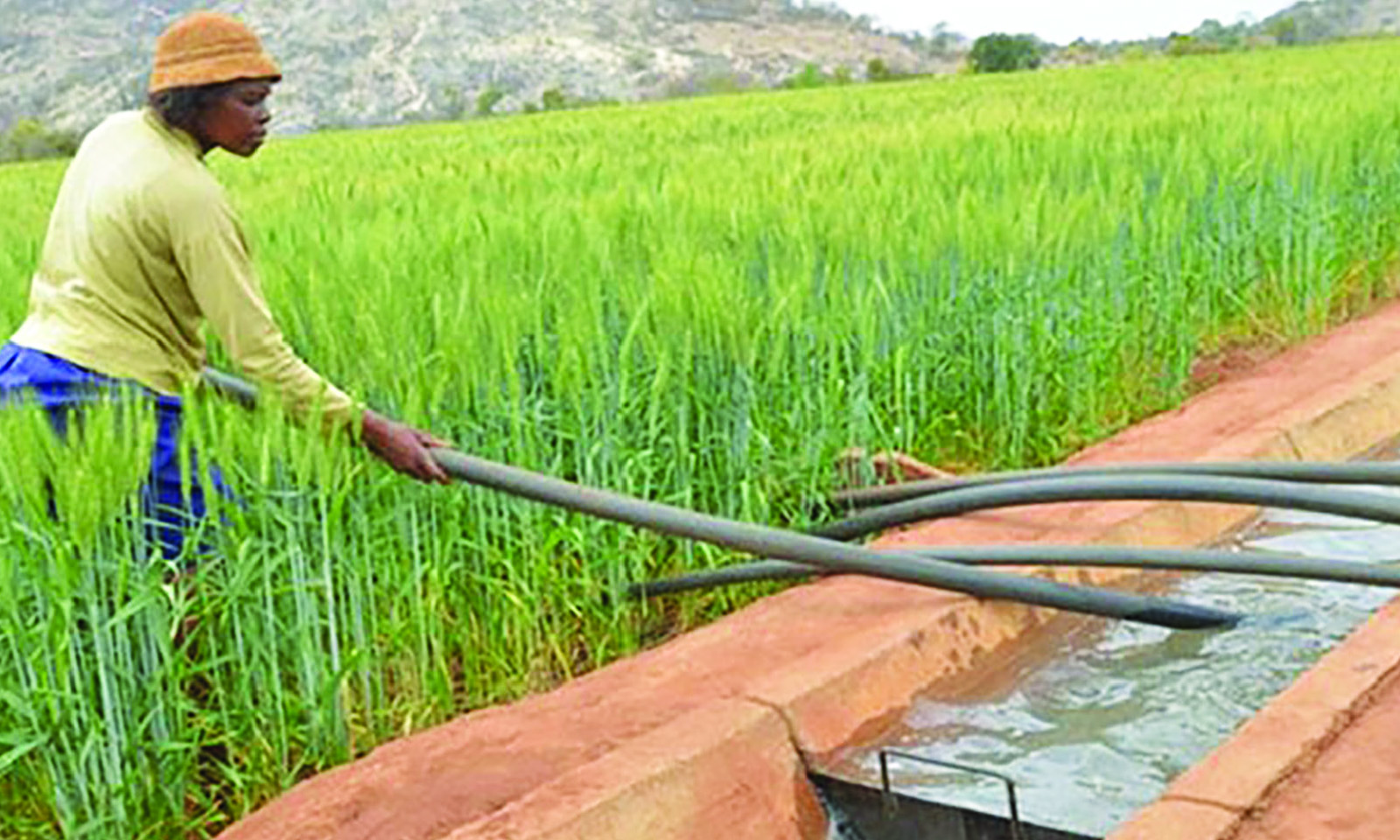
Agriculture Reporter
The area under irrigation has increased by 47 percent from 150 000 in 2020 to 220 000 hectares this summer cropping season.
Lands, Agriculture, Fisheries, Water and Rural Development permanent secretary, Professor Obert Jiri, recently said the country’s Accelerated Irrigation Rehabilitation Plan was driving the country’s food and nutrition security initiative.
“To date 220 000ha of the targeted 350 000ha of land have been put under irrigation for summer crops.
“This will mitigate the risk of mid-season drought and ensure food security everywhere, every day,” he said.
Zimbabwe requires 350 000ha of irrigated land to produce about 1,8 million tonnes of grain and attain food self-sufficiency.
Last year, the Government signed irrigation development investment agreements with private players to upscale programmes to climate-proof national food security against unpredictable weather patterns that cause agricultural production and supply disruptions.
Irrigation farming allows all year artificial methods to water crops, instead of relying solely on natural rainfall.
These irrigation investments are set to transform Zimbabwe into a weather-independent food hub.
The Government has led the country to adopt a new ethos and philosophy: ‘a dam as an economy’ to accelerate economic development.
The dam as an economic philosophy has expanded the project scope to include dam construction, irrigation development, hydroelectricity generation, potable water and fisheries development as fundamental project tenets to accelerate rural development for the attainment of Vision 2030, aiming to elevate and improve livelihoods while leaving no one and no place behind.
The dam projects are expected to expand the country’s irrigated land to approximately 496 000 hectares, guaranteeing national food security and resilience against climate change.
Zimbabwe has not been spared from the negative impacts El Niño droughts and this calls for targeted interventions to ensure the country and Africa at large become food secure once again.
Stakeholders have been challenged to think outside the box to de-risk the nation from the vagaries of climate change.
Similarly, stakeholders and communities alike should accelerate the implementation and adoption of mechanisms to climate-proof the agriculture sector, beginning at the household level.
The country secured over US$227 million in two investment deals for irrigation projects at the Zimbabwe Irrigation Investment Conference.
Another US$1.5 billion in funding was secured to develop major dam projects such as Musami Dam and the completion of the Gwayi-Shangani pipeline, among several other key infrastructure projects.