

 admin
admin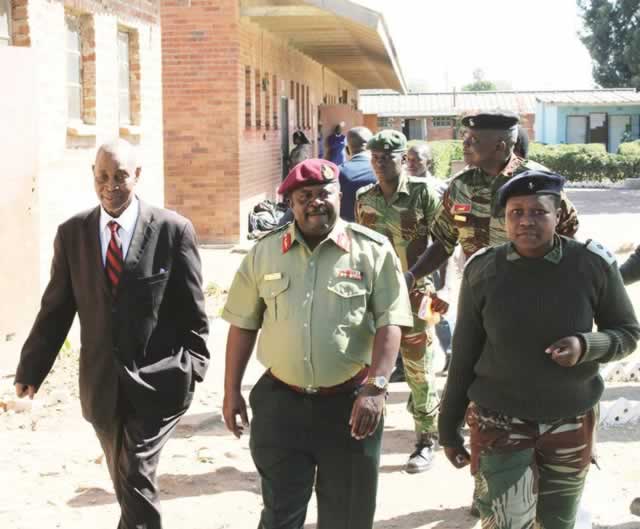

Nqobile Tshili Chronicle Correspondent
ZIMBABWE National Army (ZNA) schools are overwhelmed with applications from civilians wishing to enrol their children as staff at the institutions do not go on strike, a senior official said yesterday.
Speaking after a board meeting at Imbizo Barracks yesterday, ZNA Schools Welfare Trust vice chairman, Major General Douglas Nyikayaramba said parents have turned to army schools after realising their commitment to the country’s education.
“We don’t go on strike. This has led to us being inundated with applications from people with children who aren’t even in the army,” said Maj Gen Nyikayaramba.
“They understand that we’re providing a national service as the military. We’re providing security and a conducive environment for development. Part of that development is education because an educated nation is a developed country.”
He challenged professionals to make sacrifices for national development instead of prioritising high salaries.
“We should provide a service to humanity. We should be empathic and ask ourselves what if we were the ones in those situations?” he said.
Maj Gen Nyikayaramba said the military-run schools were working with the Ministry of Primary and Secondary Education for the development of science subjects in schools.
“Children whose parents are in the army make up only one third of the enrolment at our schools. We want to create a link between our schools and communities. We’re working on how to best access government funds that were donated by Unicef on development of science teachers,” said Maj Gen Nyikayaramba.
He said as part of promoting the development of sciences in the region, the army was building an Advanced Level classroom block at Induna High School in Imbizo Barracks.
Maj Gen Nyikayaramba said he was impressed with the pass rates within the army run schools saying they were in the top ten in districts the army operates from.
He, however, said more needed to be done.
“The general performance of our schools needs to be improved. This includes infrastructure, learning environment facilities, text book, access to resources,” he said.
Maj Gen Nyikayaramba said ZNA Schools Welfare Trust board members were working on a master-plan to improve both infrastructure and levels of education in their schools.
The chairman of the ZNA Schools Welfare Trust Sikhanyiso Ndlovu called on private companies to support their initiative of improving the country’s education by injecting funds into the army-run schools.
“We call on the corporate world to chip in and support our schools,” said Ndlovu.
He said work was already underway in the ZNA schools but financial challenges could stall the progress that has already been made.
ZNA runs 18 schools in the country — 12 primary and 6 secondary.


 Bongani Ndlovu
 Online Reporter