Chronicle Editor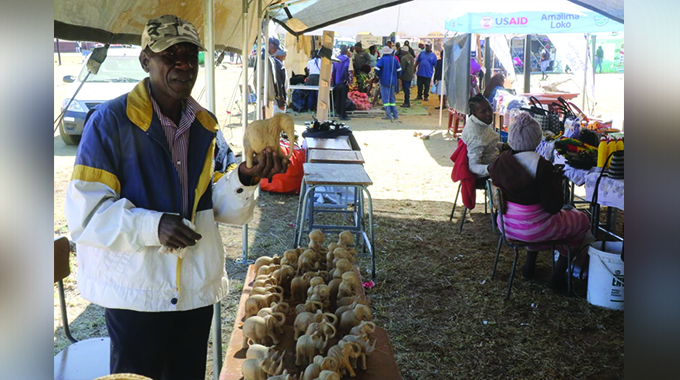
Sikhulekelani Moyo, [email protected]
MATABELELAND North’s artistic spirit is undeniable. A recent business expo in Lupane overflowed with stunning displays of baskets, mats, sculptures and intricate woodwork — a testament to the province’s rich cultural heritage and skilled artisans. But a shadow hangs over this beautiful scene — a lack of access to markets.
For these talented craftspeople, particularly those from rural areas, the story is a familiar one. Their creations, often crafted from the province’s abundant natural resources like wood and timber, rarely reach a wider audience. Local buyers often offer meagre prices, forcing some to resort to barter trade just to make ends meet.
The frustration is palpable. Imagine the sculptor, painstakingly carving an intricate animal figure, only to find limited local interest. The basket weaver, pouring her skill and cultural knowledge into each design, is unable to share her work with a broader audience. There’s a yearning for more.
Tourists, with their appreciation for unique hand-crafted items, represent a glimmer of hope. But even then, challenges remain. Certification and training are crucial to access export markets, opening doors to a world of possibilities.
“As women who operate in rural areas, we struggle to access better markets. Sometimes we sell to locals at a very unsustainable price but mostly we do barter trade where I can say give me maize meal, then I give you a basket,” said Miss Nompilo Ncube who produces baskets and related products in Jotsholo.
“This has hindered growth for our businesses and we call upon the Government to assist us so that we can be able to properly sell our products.”
Miss Ncube expressed gratitude to the organisers, thrilled that their products were being purchased at the expo. According to her, this not only provided a much-needed income boost but also offered an invaluable opportunity to showcase their talent to a wider audience.
Mr Mubalekelwa Ncube, a skilled wood sculptor, echoed the need for market access. He spoke of the frustration of middlemen who exploit their work. These individuals purchase the crafts at low prices, then resell them for a significant profit in tourist hubs like Victoria Falls, leaving the artisans with a meagre share.
“We appeal to the Government to organise a marketplace for us along Falls Road where tourists pass by. Our products are being bought mainly by tourists, not locals and having access to them can improve our income,” said Mr Ncube from Menyezwa in Ward 14. Mr Sfiso Msizi, another artisan, highlighted the roadblocks on the path to wider recognition.
While the expo provided a valuable platform, he stressed the need for certification and other official documentation to truly access different markets. However, the cost of obtaining these credentials remains a hurdle, creating a catch-22 situation for these aspiring entrepreneurs.
“We appeal for help as we wish to sell our products to the export market. We really make good products but we are not recognised because we fail to reach out to potential customers mainly because of registrations and certification,” he said.
Mr Msizi, who crafts wooden stools and intricately decorated knobkerrie, said that even with limited tools, inadequate machinery and a struggle to find markets, he manages to support his family and pay school fees through his craft.
Provincial chairman for Small and Medium Enterprises, Mr Vethi Tshuma said the expo’s role is to connect local producers with potential markets.
But the expo goes beyond market access. It also provides a platform for crucial information exchange. Service providers like the Zimbabwe Revenue Authority, Procurement Regulatory Authority of Zimbabwe, and the Insurance Council of Zimbabwe were present, offering presentations on business protection, tax compliance and navigating government tenders.
“We are creating smart villages so that people who do similar products in rural areas, including basketry and poultry, come together and form a bigger association to be able to do mass supply of their products into key institutions,” said Mr Tshuma.
Mr Tshuma highlighted the presentations by the Procurement Regulatory Authority of Zimbabwe (PRAZ) as particularly valuable. He explained how PRAZ training empowers SMEs to participate in Government tenders, supply parastatals, and work with companies requiring PRAZ certification.
“We are making our villages much smarter and much more productive so that we increase our income to reduce poverty and hunger as we move into Vision 2030 of having an upper middle-income economy.”
The Matabeleland North Business Expo was running under the theme “Empowering Mat North: Collaborating for Economic Growth, Community Development and Women Empowerment.”
The event, which was organised by the Ministry of Women Affairs, Community, Small and Medium Enterprises and the Zimbabwe Education Fund (Zimefu) was designed to foster economic growth, innovation and entrepreneurship in the region, aligning with Zimefu’s dedication to education and community development. —@SikhulekelaniM1



 Online Reporter