Moffat Mungazi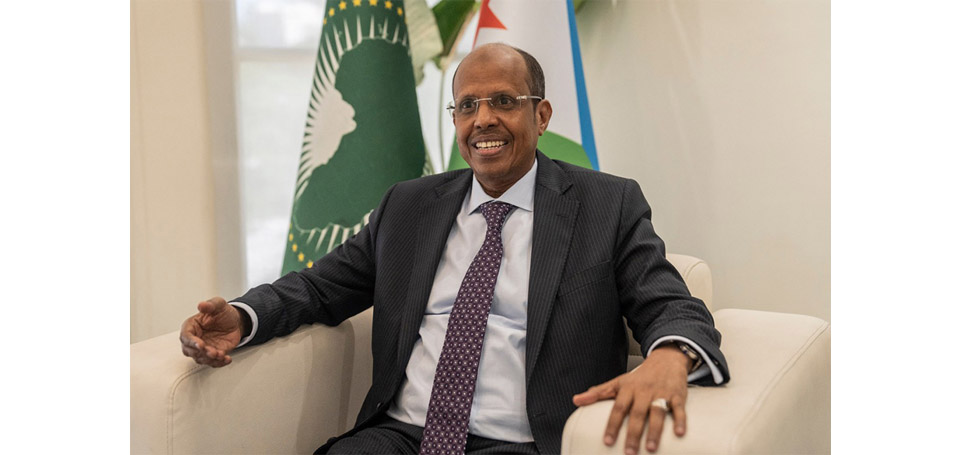
Lloyd Makonya
Correspondent
IN a landmark decision at the recently held 38th Ordinary Session of the African Union (AU) Assembly of Heads of State and Government in Ethiopia’s Addis Ababa, Djibouti’s Foreign Minister, Mahmoud Ali Youssouf was elected as the chairperson of the AU Commission.
This position places Youssouf, a candidate also endorsed by Zimbabwe, at the helm of Africa’s foremost continental body, tasked with steering the organization’s vision and programs for the next four years.
Mahmoud Ali Youssouf’s election was anything, but hard fought as the race for the AU Commission chairmanship spanned seven intense rounds of voting. Among the contenders was Raila Odinga, Kenya’s former Prime Minister, who initially surged ahead, leading the first two rounds of the election, but as the rounds progressed, his momentum faltered.
The third contender in the vote was former Madagascar’s Foreign Minister, Richard Randriamandrato.
Youssouf emerged as a steady and persuasive candidate, gradually gaining traction among member states.
By the decisive final round, he secured a majority vote, clinching the chairmanship with an unassailable 33 votes.
The African Union’s Assembly of Heads of State and Government is the highest decision-making body within the AU framework.
Composed of representatives from all member states, it is responsible for setting the organisation’s priorities, adopting policies, and overseeing their implementation.
The AU Commission, on the other hand, is the operational arm of the organisation, led by the chairperson, and tasked with executing the Assembly’s directives, coordinating initiatives across member states, and promoting unity and development on the continent.
Youssouf succeeds Moussa Faki Mahamat of Chad, who served two terms as AU Commission chairperson.
Mahamat’s tenure was marked by significant milestones, including the rollout of the African Continental Free Trade Area (AfCFTA) and efforts to mediate conflicts across the continent.
As Youssouf assumes office, he inherits two of Africa’s most pressing crises.
In Sudan, a brutal conflict between rival military factions has displaced millions and devastated an already fragile economy.
In the Democratic Republic of Congo (DRC), ongoing violence by armed groups in the eastern region continues to destabilise one of Africa’s largest nations.
Both situations demand urgent attention and effective mediation, placing significant pressure on the new chairperson to deliver results.
In his manifesto, Mahmoud Ali Youssouf envisions an Africa that is peaceful, prosperous, and united, where challenges are addressed with African-led solutions.
At the heart of his vision is a commitment to strengthening peace and security, with a focus on resolving ongoing conflicts and bolstering the AU’s Peace and Security Council to enhance its crisis-response capacity.
Youssouf also aims to accelerate economic integration, building on the African Continental Free Trade Area to minimise trade barriers and foster a unified market that enables businesses across the continent to thrive.
In addition, he is determined to champion climate action, advocating for international support to address Africa’s vulnerability to climate change through adaptation and mitigation projects. Recognising the immense potential of Africa’s youth, Youssouf emphasises the importance of investing in education, innovation, and entrepreneurship, ensuring that the continent’s young population becomes a driver of economic and social transformation.
Furthermore, he has underscored the need for gender equality, vowing to empower women and ensure their active participation in leadership and development across Africa.
As Mahmoud Ali Youssouf takes the reins of the AU Commission, his leadership will be closely watched both within and outside Africa.
With a blend of diplomatic acumen and a clear vision for the continent honed over two decades as foreign minister, he carries the hopes of millions of Africans eager for progress and unity.
However, his success will ultimately be measured by his ability to navigate the complexities of African politics, resolve longstanding conflicts, and turn the AU’s aspirations into tangible realities.



 Online Reporter