

 admin
admin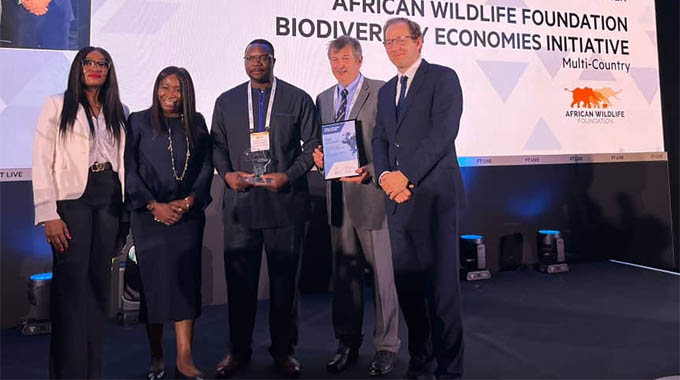
Sifelani Tsiko
Innovations Editor
The African Wildlife Foundation (AWF) has won the inaugural Africa Sustainable Futures award programme to promote solutions to development challenges facing the African continent.
The announcement was made at a ceremony in London that took place this week.
AWF was the winner of the Biodiversity and Ecosystems Protection category for its work in supporting biodiversity economies.
The award were from the Financial Times and the World Bank Group’s Multilateral Investment Guarantee Agency (MIGA).
The Africa Sustainable Futures Awards recognises regenerative projects in Africa that protect ecosystems by conserving or restoring natural capital and leverage biodiversity to create long-term growth, greener and higher quality jobs, more secure supply of food and water, and barriers to natural and man-made disasters.
“This award gives us the motivation to work harder, and we hope to leverage this recognition to go to convince more African countries that we need to build their biodiversity economies as a critical component,” he said
“This model can contribute to our economic growth in so many ways that we are yet to discover.”
Edwin Tambara, AWF director of global leadership accepted the award.”
“We are convinced that nature is an asset for [Africa], that it can drive our economic development. By working with governments to make sure that biodiversity can be seen as an economic pillar, we can create opportunities for Africans, particularly for African youth, who we see as a powerful driver for growth.”
AWF contributed to Zimbabwe’s development and launch of the Zimbabwe Biodiversity Economy Report in 2022, revealing that nature-based tourism annually contributes $1 billion to the economy, with over $500 million from non-timber forest products, $20 million from trophy hunting, and $12 million from wild fisheries. Other key subsectors include forestry and bioprospecting. Insights from this report are already informing policy reviews and improvements, such as the Wildlife Act and Forestry Policy, the biodiversity economy investment blueprint, natural capital accounts, and a carbon credits framework.
AWF’s programs focus on integrating wildlife conservation, human development, and economic growth, ensuring a sustainable future for both people and wildlife.



 Online Reporter