derick.khumalo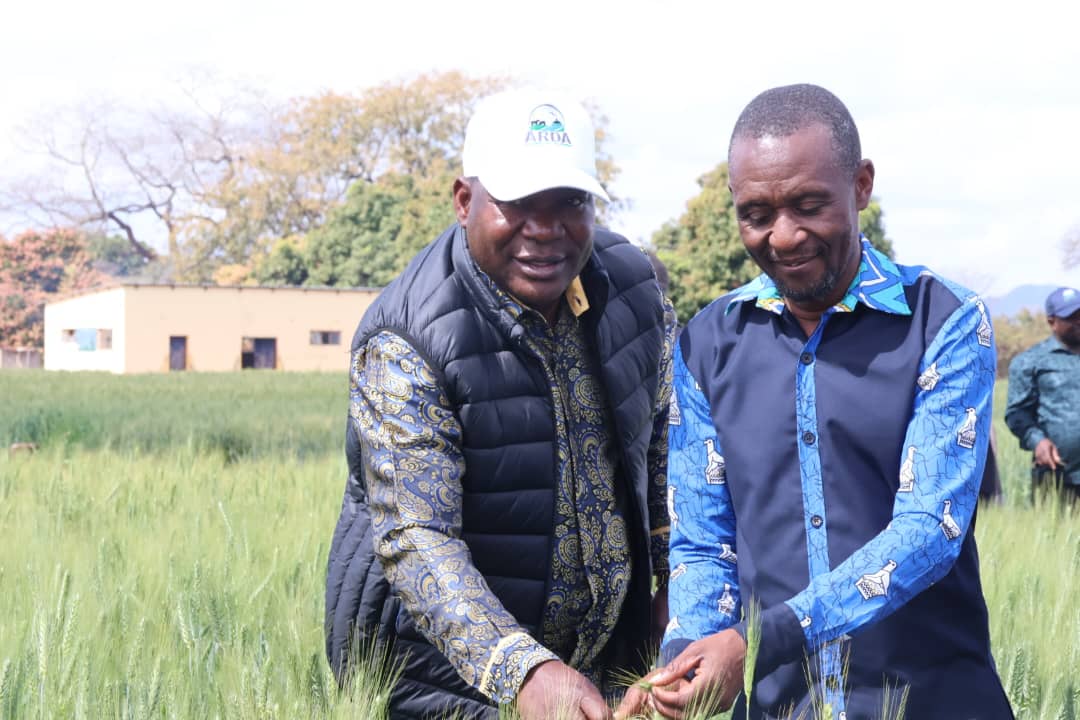
Theseus Mauruki Shambare in CHIVI
BANGA Irrigation Scheme in Chivi has emerged as a model of self-sustaining agricultural production after farmers began using proceeds from previous seasons to finance inputs for the next cropping cycle.
The development comes as the Parliamentary Portfolio Committee on Lands, Agriculture, Water, Fisheries and Rural Development continues its nationwide assessment of Agricultural and Rural Development Authority (ARDA) operations, with the committee now on the fifth day of its oversight tour.
Unlike farmers who remain heavily dependent on Government-provided inputs, Banga farmers have demonstrated that irrigation schemes can progressively become commercially viable enterprises capable of reinvesting their earnings into production.
Banga Irrigation Scheme chairman Munogwei Mateza said farmers had this season purchased their own seed, basal fertiliser and chemicals using proceeds from previous production, with ARDA only providing top-dressing fertiliser.
“This year, we just got top-dressing fertilisers from ARDA but the basal fertilisers, chemicals and seed we bought using the proceeds from the previous season because farming to us is now a business,” he said.
The scheme’s performance has already earned it recognition as the best self-sustaining irrigation scheme out of 70 schemes in Masvingo Province for its previous achievements.
The award underscores the transformation of Banga from a scheme dependent on external support into an organised production enterprise where farmers are increasingly able to finance their own operations.
Banga has 284 farmers, each working on a 0.1-hectare plot, while the scheme has 21 hectares each under winter wheat, maize and groundnuts.
The farmers also produce beans and practise crop rotation across different blocks, allowing them to diversify production while maintaining the productivity of their land.
The scheme expects to harvest about 4.5 tonnes of wheat per hectare, with farmers delivering their produce to the Grain Marketing Board.
However, the Parliamentary Portfolio Committee said Banga’s emergence as a self-sustaining scheme should not result in ARDA withdrawing its support.
Instead, committee members said Government support should evolve towards capital-intensive interventions that can unlock higher production and reduce the limitations imposed by the scheme’s current equipment and water infrastructure.
Committee chairperson Hon Felix Maburutse said Government should continue capacitating ARDA so that the authority can effectively execute its expanded food-security mandate.
“This means shifting the emphasis towards mechanisation and irrigation infrastructure, including the installation of centre pivots to expand the scheme’s productive capacity,” said Maburutse.
The call reflects the changing needs of productive irrigation schemes, where farmers who can increasingly finance recurrent inputs require access to machinery and modern irrigation systems to move production to a higher level.
Epworth South Constituency legislator Honour Taedzwa said the proximity of Tugwi-Mukosi Dam presented an opportunity to address Banga’s water challenges and unlock the wider economic potential of the scheme.
“Considering that Tugwi-Mukosi Dam is just 10km from the scheme, the Government needs to invest in a pipe that will draw water to the scheme such that the local community benefit from the infrastructure in their community,” he said.
A reliable water connection from Tugwi-Mukosi, he said, could potentially provide Banga with a more secure irrigation source while enabling farmers to increase the area under production and improve the efficiency of their operations.
“The intervention would also complement calls for centre pivots and mechanisation, allowing farmers to move beyond simply sustaining existing production towards scaling up output,” he said.
Mutoko South legislator Isaac Tasikani said the committee had witnessed the contribution being made by ARDA and would make recommendations aimed at strengthening the authority.
“ARDA is doing great in ensuring people are food secure and we need to support the entity to ensure it achieves its goal,” he said.
“Indeed, as a committee we will sit down and compile with our chairperson recommendations that will ensure we achieve the national goal.”
The committee’s assessment comes against the backdrop of Government’s transformation of ARDA from a primarily land-administration institution into a production-driven agency expected to play a central role in national food security through large-scale farming, climate-smart agriculture and rural industrialisation.
ARDA was officially mandated in January 2021, before Cabinet further strengthened its operational mandate in July last year under the “leading by farming” thrust.
The authority is expected to contribute significantly towards the country’s Strategic Grain Reserve requirements through production of strategic crops including maize, wheat, sorghum and sunflower while maximising its potential arable land.



 Online Reporter