admin
admin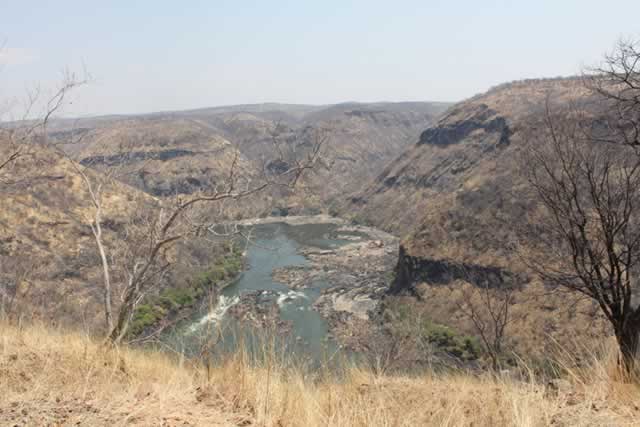
Jeffrey Gogo Climate Story
Some 2 400 megawatts of electricity is now expected to come from the Batoka Gorge hydroelectric power plant, 800MW more than had been originally thought.
That’S what a new study from the Zambezi River Authority has established for the joint Zimbabwe-Zambia project, which has remained on paper for the last quarter century.
There is no clear indication, yet, how much of greenhouse gas emissions reduction will be achieved from the Batoka power plant.
But the project will undoubtedly rank as one of the biggest energy sector mitigatory plans from the two countries within the next decade and beyond.
In the context of clean energy development, Batoka, to be built downstream of the Victoria Falls along the Zambezi River, presents a practical viable option for neutralising emissions from the existing dependence on fossil-fuel based energy.
Dovetailing with Zimbabwe’s plans of increasing its share of renewables in the national energy mix to 10 percent by 2020, Batoka also delivers on two important fronts; power generation and climate change mitigation.
Safe, secure and, in the long run, affordable energy will only be available by switching to renewable energy and improving energy efficiency while creating opportunities for the local economy. That, Batoka represents.
Zimbabwe’s 1 200MW share of electricity from Batoka will significantly address the 15-year-old power crisis that has forced many households to go for several hours in a day without power.
Registering it for recognition as a nationally appropriate mitigatory action (NAMA) with the UN’s Framework Convention on Climate Change (UNFCCC) is the next step, provided funding is secured fast.
By mid-year, the new project cost should be known. At 1 600MW, the initial estimated power output, about $3 billion would have been enough to get the plant running.
Now, the Batoka hydroelectric plant is still in its initial phases, but the plan comes at an appropriate time when developing nations are later this month expected to present their mitigatory proposals ahead of the decisive Paris climate conference in December.
But there’s no guarantee the Batoka plant will receive funding as quickly as is needed. Its potential profiling as a NAMA may be an obstacle. Worldwide, funders have shown less appetite for this kind of investment.
“Most NAMA programmes seek some kind of international support; only a handful has received it,” according to the latest Carbon Markets Monitor, a periodic report from Thomson Reuters.
And the problem is with the NAMA concept, the report says.
“As bottom-up programmes without universal rules it is hard to assess and verify the effect of NAMAs. We believe this is one reason why Western governments are reluctant to invest,” it said.
Nearly 90 nationally appropriate mitigatory actions have been presented to the UNFCCC from 22 developing countries, five of them African, but only 30 of those have quantified targets and mitigation potential.
Also, while the plant mitigates against climate change, it will not escape the science’s dangerous hazards.
A 2012 report from International Rivers reveals that the Zambezi River Basin along with its existing and future large hydropower dams are ill-prepared for climate change.
The report indicates that hydropower projects around the Zambezi are poorly evaluated for the risks from natural hydrological variability, which is very high in that area, much less the risks posed by climate change.
“Dams being proposed and built now will be negatively affected, yet energy planning in the basin is not taking serious steps to address these huge hydrological uncertainties,” said Dr Richard Beilfuss, author of the report.
“The result could be dams that are uneconomic, disruptive to the energy sector, and possibly even dangerous.”
The Intergovernmental Panel on Climate Change says the Zambezi Basin exhibits the worst potential effects of climate change among 11 major sub-Saharan African river basins, and will experience the most substantial reduction in rainfall and run-off.
Warming in this basin will be significant, estimated in the region 0,3-0,6 degrees Celsius within this century while evaporation rates are expected to be higher.
Currently, 13 000 megawatts of new large-dam hydro is proposed for the Zambezi, Africa’s fourth largest river, and its tributaries.
Soon, the Zambezi River Authority, which manages the proposed Batoka Gorge dam project, will begin assessments to measure the plant’s environmental impact.
Tourism operators from the Victoria Falls have already raised concern on the potential negative impacts on white-water rafting, a popular tourists’ leisure sport.
Conservationists say it will drive away birdlife such as the taita falcon, an endangered species that breeds in the dam site, according Pete Roberts writing for the website www.victoriafalls-guide.net.
Unsustainable dam development in the Zambezi undermines the ecological balance, International Rivers said in its report.
An economic valuation study had shown that the annual total value of river-dependent ecosystem services in the Zambezi delta is between $930 million and $1,6 billion. Agriculture, fisheries, livestock, tourism and domestic water supply will all be affected.
“Cumulatively, the economic value of water for downstream ecosystem services exceeds the value of water for strict hydropower production, even without valuation of biodiversity and cultural uses of the river system,” said International Rivers.
God is faithful.


 Online Reporter