Chronicle Editor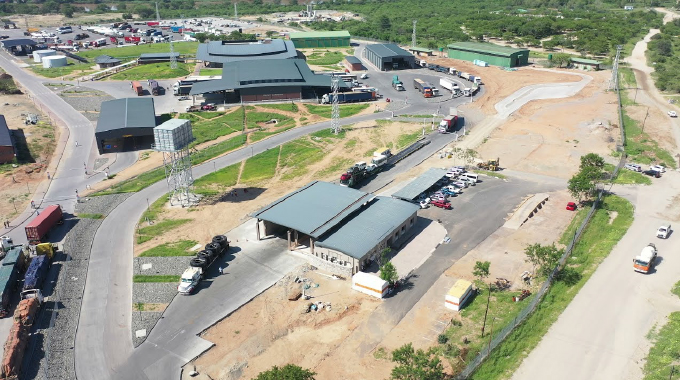
Thupeyo Muleya, Beitbridge Bureau
IN the last 10 years, the story of the transformation of Beitbridge had become that of many intentions and less action.
Taskforce after taskforce had been to Zimbabwe’s southern border town to troubleshoot the challenges affecting the area’s infrastructure growth.
At independence, the place was just a growth point and a mere crossing point for travellers and regional as well as international cargo.
The population has grown from around 3 500 in the last two decades to around an estimated 100 000.
In 2006, the Government under the First Republic and through the Beitbridge Redevelopment Programme (BRP) upgraded the growth point to a town and later a municipality in 2019.
The programme came with massive civil works projects including the construction of 16 blocks of flats to house 64 families mainly middle-class civil servants, 250 core houses for home ownership, 52 F14 houses for civil servants, road dualisation, upgrading water supply and sewer infrastructure in the town.
However, these were progressing at a snail’s pace due to a number of sectorial challenges.
The town’s turning point was in 2018 when the New Dispensation led by President Mnangagwa and its partners poured in resources to modernise the area from a mere crossing point to a modern urban settlement.
At the moment, the city fathers at the municipality have set a target to modernise the town into a medium city in line with the envisaged Vision 2030.
According to residents, the town has indeed undergone a massive infrastructure revolution in the last three years.
An investment of US$300 million was committed to transforming the border post which has also seen efficiencies in the movement of cargo and human traffic drastically improving.

Under the same initiative rolled out through a 17- and-half years’ public-private-partnership between the Government and the Zimborders Consortium, there are five major out of port works.
These include, a new reservoir that carries 11,4 mega litres of water, a new sewer oxidation dam, 220 housing units for Government workers deployed to the border, a new fire station and an animal plant and quarantine centre.
Secondary roads in the local suburbs also got a facelift under the Emergency Road Rehabilitation Programme (ERRP), while the 5,1km dual carriage whose completion had become eternal was completed in less than six months.
Mr Zibusiso Ndlovu a resident of Vhembe-View suburb, said he was delighted to see the border town undergoing a massive transformation process post-independence.
“The road infrastructure has brought a lot of sanity in town. We used to have multiple undesignated road intersections connecting to the main Beitbridge Highway. These were used by Mushikashika Honda fits ‘zvipipi-pipi’,” he said.
“That scenario caused a lot of traffic accidents and congestion. Now motorists are at peace when driving from Bulawayo-Harare roundabout down to the border-post.

“However, I wish the authorities could help restore order at the Border roundabout, an undesignated taxi rank and car park are sprouting there. The setup is disturbing north and south bound traffic moving across the Beitbridge Border.”
The Regional Immigration Officer in charge of Beitbridge, Mr Joshua Chibundu said the transformation of the border is a game changer.
He said the improvement of the work environment and accommodation facilities for the border agencies had boosted morale and translated into improved efficiencies.
The official said the separation of traffic into commercial, buses and private travellers and the automation of services had helped keep away unnecessary people from the port of entry.
“We appreciate the progress made by our Government in transforming the border and the local town,” said Mr Chibundu.
“You will note that it is important to have good office accommodation to efficiently work and after a hard day’s work, you need to retire into decent accommodation.”
He said more Government departments/agencies would be able to beef up staff since there is an improvement in the accommodation facilities.
Miss Evelyn Lunga of Dulivhadzimu suburb said there are notable developments in Beitbridge under the Second Republic.
She said the transformed port of entry, the new fire station and the opening of a community radio station (Lotsha FM) was commendable.
“As someone who grew up in this town, I have been able to see the Government and other development agencies building more critical infrastructure including a fire station, and opening a radio station to push development from the grassroots level,” said Miss Lunga.
Beitbridge Town Clerk (TC), Mr Loud Ramakgapola said the border modernisation, 220 housing units, 11,4 mega litre reservoir and the fire station were the major highlights of the infrastructure development revolution.
He said the completion of the 5,1 km dual carriageway from the border to the major roads linking the town with Bulawayo and Masvingo was a success story.
“These developments have upgraded the status of our town,” said Mr Ramakgapola.
Beitbridge Residents Association committee member, Ms Rumbedzani Ribombo said the town has had a new look since 2018.
“We have seen the town developing rapidly and our hope is that the Government and its partners will keep pouring in more resources,” she said.
Ms Sarudzai Moyo of Dulivhadzimu said she was impressed with the Government’s efforts to ease accommodation woes for its workers following the commissioning of 28 F14 houses by President Mnangagwa and the construction of a staff village that has since absorbed 220 families.
The opening of a passport processing office in the town last year, she said, was a milestone achievement that fulfilled the President’s thrust of leaving no one and no place behind.
She said gone are the days when Beitbridge residents would travel as far as 300km to other towns to apply for passports and yet most of their economic activities were anchored on cross-border related activities.
Beitbridge Mayor, Councillor Munyaradzi Chitsunge said the construction of the water reservoir was a relief for the local authority.
“Once fully operational, we expect households that were not receiving water to start getting the precious liquid,” he said.

“When that happens, it means local authority can expect revenue collection to increase because most people who have not been receiving water have been resistant to pay bills.
“Generally, people associate rates with water so once there is that increase in revenue collection, council can now expedite connecting the whole town to the water network.”
He continued: “We have over 14 000 properties in our town and out of that only 7 700 are connected to water or receiving service fully or are being billed. So you will note the big variance of almost 50 percent is not acceptable especially when you look at water distribution or supply.” @tupeyo


 Online Reporter