admin
admin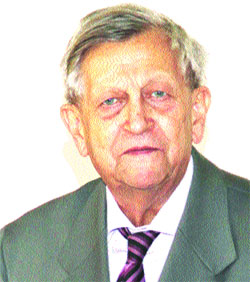
The closure of companies in Bulawayo has infuriated workers’ unions who accuse the Government of failing to properly administer Dimaf.
“We understand this company was one of many which had applied for Dimaf but were not considered. If this money was given to companies on time we will not be having closures by now,” said Mr Pardon Mangena, the southern regional head for the Zimbabwe Federation of Trade Unions (ZFTU).
However, Mr Mangoma could neither deny nor confirm that Belmor Manufacturers had applied for Dimaf.
“I did not get time to verify whether the company had applied for the fund. We should wait for their meeting with our officers,” he said.
CABS, which is administering Dimaf, has said 17 Bulawayo firms have received 80 percent of the $11,4 million disbursed by the bank so far. However, the bank has refused to publicise the names of the beneficiaries but about 60 Bulawayo companies are reported to have applied for funding.
Meanwhile, economic commentator Dr Eric Bloch has said Bulawayo was not the worst affected by the de-industrialisation despite the fact that more than 80 companies have closed shop. Dr Bloch, in his address during the signing of a Memorandum of Understanding (MoU) between the Bulawayo City Council and the City of Polokwane in Limpopo, South Africa, at the Large City Hall on Friday, said stories that Bulawayo was the worst affected by de-industrialisation in the country were baseless.
He said the level of de-industrialisation, in percentage terms, was the same countrywide.
“It is the same in all cities, including Harare, Gweru, Kwekwe and Kadoma. De-industrialisation is only noticed more in Bulawayo because it used to be the country’s industrial hub,” said Dr Bloch.
He said this was giving a wrong impression that Bulawayo was a dying city when it was not.
Dr Bloch said the infact Bulawayo had a lot to offer and was actually undergoing a revival phase.
“Despite failure by parastatals like Zesa and the National Railways of Zimbabwe (NRZ) to provide services to support recovery, the city is on its way to recovery,” said Dr Bloch.
He said the location of Bulawayo alone gave it the advantage for recovery, ahead of other cities in the country.
“It is next to a huge methane bed that stretches from Hwange to Lupane. The bed was explored in 1993 and found to be able to supply the region’s energy needs for the next 150 years. It is also one of the major gateways for tourism in Zimbabwe, the other being Harare. Many tourists as a result pass through the city from other countries,” said Dr Bloch.
He said Bulawayo had the added advantage of being run by the best local authority in the country.
“It is also home to the National University of Science and Technology (Nust), which uses its expertise to continually interact with all sectors of business to aid efficient recovery,” said Dr Bloch.


 Online Reporter