admin
admin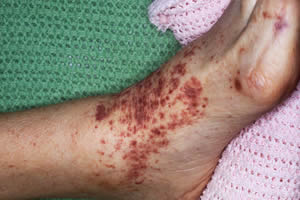
individual treatment of patients in what was then called the African Infectious Diseases Hospital (now Beatrice Road Hospital). Wilkins was not involved.
The disease has even without treatment a much lower mortality than cholera, and the incubation period (the time between infection and the appearance of the first symptoms of the disease) is about a week to two weeks, but can range from as little as five days to five weeks. Recovery of the disease is slow and good convalescent nursing hastens the return of complete fitness.
I personally at the age of 10 years suffered the infection in Aberystwyth, Mid Wales.
The cause of the outbreak was traced eventually to an ice cream vendor on the beach, who was a chronic career of typhoid.
Thirty children died in the outbreak, most of them though misdiagnosis resulting in an unnecessary abdominal surgery.
Happily, my family was not rich enough to consult a doctor and my grandmother cured me by copious quantities of water oats porridge (then called gruel). I make this comment because untreated cases have 90 percent chance of surviving if they are young and healthy.
One of the important sequelae of acute typhoid is hair loss and when I went back to school in September 1947, some jeering, pubescent girls, they had very ugly faces and big boobs in my standard 6 class used to call me “Bald Sticky” Stamps! So patients should be aware of that consequence and know that the loss of their hair is only temporary.
S. typhi does not cause disease in animals or fish therefore unlike some other Salmonella, it is not a zoonois but like all gastro intestinal infections it may be transmitted by flies and cockroaches.
Carrier Status
So, that brings me to my first point. The sources of nutrition should be investigated thoroughly for the presence of an infected carrier. Carriers remain excreting Salmonella typhi for many years, sometimes for life, without any symptoms, but one gram of the faeces contains a million pathogenic bacteria.
The importance of personal hygiene, especially among food handlers cannot be over emphasised and is the major current cause of typhoid outbreaks.
Adults are much more likely than children under 16 to become chronic carriers (3 percent of cases whether treated by antibiotics or not). Women are much more likely than men to be carriers.
Typhoid Mary, as she become known, infested more than 300 people in New York in the early 20th century as a result of her career as short term worker in the hotel kitchens, restaurants and downtown delicatessens.
The carrier status, which may occur even after adequate treatment, seems to be the result of infected bile juice and the treatment for carriers used to be removing the gall bladder when the acute phase was past.
Modern antibiotic, especially, ciprofloxacin, seems to be less traumatic and equally effective but the course of the treatment must be continued for at least six weeks.
Water
That being said, Salmonella typhi can survive for a long time in fresh water.
Indeed, the reason for chemical treatment of the reticulated water is principally to avoid infection with Salmonella typhi, pathogenic E. Coli and similar intestinal causing bacteria including, of course, cholera which is almost exclusively contracted from contaminated water.
Untreated water is a significant risk. Freezing does not kill S. typhi, so the use of ice from affected dispensing machines and domestic freezers should be cautiously (and respectfully) declined unless the consumer is sure that the ice cubes are safe.
People often use running water from a cold water tap.
Safer (and also more economical) methods should be used and sharing toothbrushes discouraged.
And immune – compromised persons – e.g. HIV positive people and those going for cancer treatment are at greater risk of more serious disease.
Symptoms & Diagnosis
Typhoid is especially an urban disease.
The diagnosis can only be made definitely by either a blood culture (which indicates that the infectious organism has got into the blood system) or by rectal swab/faecal culture of the causative organism.
Indirect methods such as the Widal titre (O and H antigens) are of limited value especially as an outbreak progresses.
The classical picture of typhoid fever is a temperature which is intermittent for the first week or so of the illness, then becoming persistent and sometimes very high, coupled with vague symptoms such as headache, weakness, sore joints, abdominal pains (especially in the appendix area) and constipation (kufufutirwa) rather than diarrhoea (manyoka).
Most typhoid sufferers react badly to aspirin, headache pills or powders and in generalised outbreak should be restricted.
Rose spots, which disappear on pressure, occur on the chest and upper abdomen in the first week of the disease, they are not easy to detect in most Zimbabweans.
Treatment
Treatment, as I wrote in an article compiled with the help of Professor AC B Wicks in 1973 is with Cotrimoxazole (which is readily obtainable in Zimbabwe) for about five weeks, starting as soon as possible in the affected patient even if the diagnosis is not absolutely clear when there is a community outbreak.
The main cause of illness is toxaemia (a high level of infection in the blood) blood loss and rupture of the lower small intestine around the so-called Peyer’s patches, which is an accumulation of lymphatic tissues in the small intestine.
That is why a lot of health workers who have not before come across a case of typhoid resort to an appendectomy thus aggravating the condition, and it is especially to be guarded against by patients’ relatives, especially those using the private sector.
Waste Treatment
Raw sewage is a major hazard of all gastro-intestinal infections and has no place in a modern urban environment.
Adequate treatment of all forms of waste and control of flies and informal food vending has always been carried out to avoid a major risk of infection and we should be vigilant at all times and all levels to avoid contamination of food or drink or water which is for human consumption.
And we need to attend to personal hygiene – hand washing in particular.
Fomites
The Environmental Health team should be constantly alert to the possibility of what is called fomite transmission – not only foods – which are very prone to getting contaminated by chronic carriers – but other things that many people touch.
Also, since the introduction of the Us dollar filthy lucre has become even filthier and this is another way which Salmonella type germs can be transmitted from person to person.
If you know where some of the small denominations are kept . . . !
l dr Timothy Stamps is health advisor in the Office of the President and Cabinet



 Online Reporter