admin
admin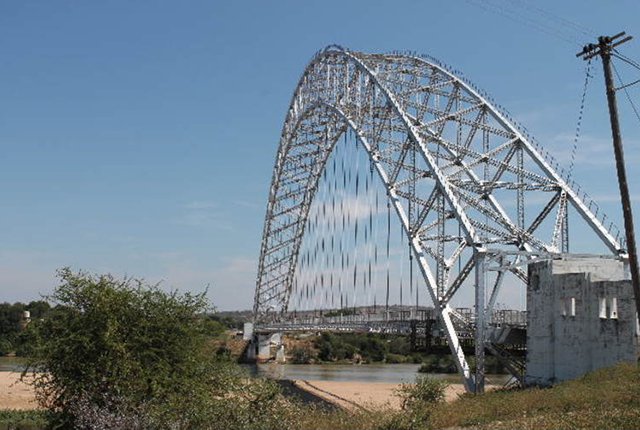
Liberty Dube
Tourism Correspondent
BIRCHENOUGH Bridge is a magnificent and breathtaking steel arch bridge over the mighty Save River, constructed in 1935, and is closing in on nine decades of offering passage to local and cross-border vehicles.
It is an engineering marvel which is the only suspension bridge in Zimbabwe. In terms of beauty, Birchenough Bridge is parallel to none in the country, and its imposing visual marvel has only been equated to Sydney Harbour Bridge in Australia and New York Bridge in the United States of America.
The bridge was named after Sir Henry Birchenough who was the chairman of the Beit Railway Trust and president of the then British South Africa Company.
The bridge was funded by the Beit Trust as a gift to the public of Southern Rhodesia.
The bridge crosses Save River with a single arch which rises to 280 feet above the river, and is 1 080 feet in length.
Birchenough Bridge was designed by Mr Ralph Freeman, a consulting engineer to the Beit Trust, and he is also credited with designing Sydney Harbour Bridge in Australia and Beit Bridge over Limpopo River.
Its construction was supervised by Sir Douglas Fox and Partners of London.
The bridge’s superstructure contains 1 540 tonnes of high tensile steel.
The bridge deck provided a roadway width of 7,2 metres with footways on either side of the bridge and is suspended 20 metres above the river bed.
Foundations to the bridge were commenced in April 1934, and were ready for steelwork in November of the same year.
The arch span was completed on June 17, 1935, and the concrete roadway was practically complete at the end of September 1935.
Construction was completed on December 20, 1935, and the bridge was opened to traffic.
The contractors for the supply of steel, manufacture of steelwork and erection were Dorman Long and Company of Middlesbrough, England whose previous experience, as the builders of Sydney Harbour Bridge, and the arch bridge, of 530 feet span over Tyne, Newcastle was of great value.
Sir Henry Birchenough who was president of the BSAC from 1925 to 1937 to whom there is a memorial plaque on the end fillisters of the bridge, died in 1937, and his ashes and those of his wife are in one of the pillars of Birchenough Bridge.
In 1984, the bridge deck was widened and strengthened as part of the World Bank Highway Project One for Zimbabwe.
The roadway is now 10 metres wide, but the original open grillage footwalks have been retained.
The anchorage ropes used were the actual ropes used for Sydney Harbour Bridge, and are now incorporated in Birchenough Bridge as the suspenders of the roadway.
The surrounding communities also have some form of attachment to the bridge.
It has been claimed that a number of local people who were working on the construction site died before the final completion of the bridge.
Thus, some locals still regard the bridge with reverence which is derived from the spiritual attachments they have with the deceased.
As plans are afoot for the construction of a new bridge over Save River, Birchenough Bridge remains an epitome of engineering genius and a prized Zimbabwean tourist asset.
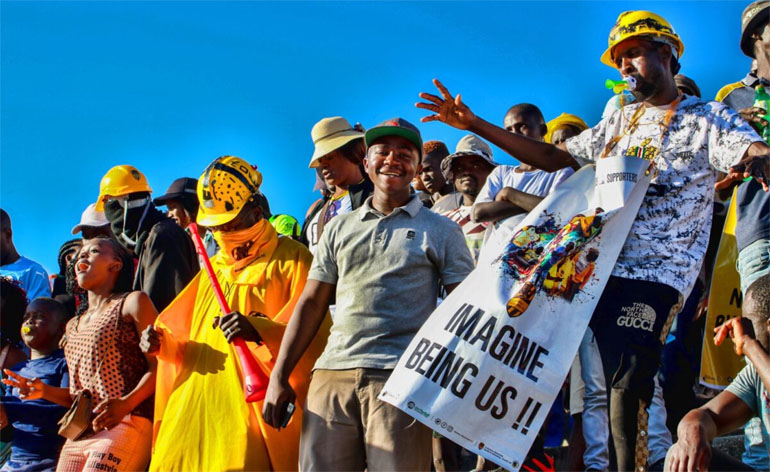
Evidently, scores of merrymakers from across the country, stormed the bridge for the Save Beach Jamboree recently which saw an array of entertainers lighting up the place for the whole night.
Sporting activities were also a thriller.
The jamboree culminated into mid-morning of the following day as people, mixed and mingled in an entertainment and edutainment-filled event that also saw contentious issues such as child marriages and drug abuse being tackled.
It was a spectacular event that was in sync with Government’s thrust of promoting domestic travel this festive season.
Through Zimbabwe Tourism Authority, Government has launched the Domestic Tourism Festive Season Campaign, dubbed: “URIPI” with the main goal to promote travel to tourism sites and accommodation facilities. Tourism and Hospitality Industry Minister, Honourable Babra Rwodzi, recently remarked that her ministry is working on a robust strategy that will lead to a stronger rebound in the tourism and hospitality sector.
“Tourism players’ efforts coupled with Government support has seen a rebound in the performance of the tourism sector in the post Covid-19 pandemic period. The sector has improved significantly in January to September 2023. Tourism receipts increased by 16 percent, from US$615 million in 2022 to US$724 million.
“However, tourism investments registered a 55 percent decline from US$306,7 million in 2022 to US$139,3 million in 2023 during the same period,” she said.
The tourism and hospitality value chain has been traditionally captured as the Tripod of 3As of Access, Accommodation and Activities.
Investment in these 3As creates a must visit destination.
These investments will contribute immensely towards the target of US$5 billion Tourism Economy by Year 2025, and hence contributing towards achievement of National Development Strategy (NDS1) targets towards the National Vision 2030.
Calls are loud for investors to build hotels around the area and provide other amenities that can make tourists comfortable and willing to patronise such places.


 Online Reporter