admin
admin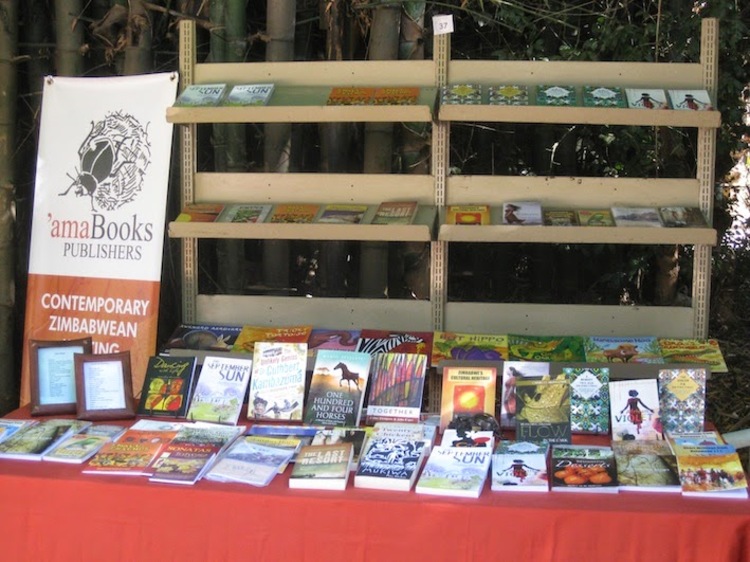

I have with me great news for all book junkies out there.
The time of the year when literary enthusiasts get to mix and mingle is just around the corner with this year’s edition of the Zimbabwe International Book Fair running from July 27 to August 1.
ZIBF 2015 is themed “Growing the Knowledge Economy through Research, Writing, Publishing and Reading”.
This follows Government’s announcement that it has signed deals with several countries to send graduates there, showing there is high demand for knowledge resources outside.
The global economy is transitioning to a knowledge economy as part and parcel of the Information Age dominated by innovation.
In a recent statement, ZIBF Association chair Obey Bvute said development of a knowledge-based economy was centrally linked to globalisation and brought education to the forefront.
“Growing the knowledge economy is a process which includes economic, social, political, scientific and technological dimensions in a globalised world. It is driven by a combination of processes such as increased mobility of scholars and the general public and the rapid movement of information over space which is enabled by powerful new digital technologies,” said Bvute.
Many governments have been benefiting from embracing the transition to a knowledge-based economy.
ZIBF appreciates the idea that educators, writers, book publishers and librarians are a service sector that can be legitimately tapped for economic development.
Bvute said ZIBF’s strategic focus should be inevitably re-aligned through creating a new vision and plan based on several realities.
These include the need to promote knowledge management and education as an important driver of economic growth and development, in line with the global knowledge economic developments Zim-Asset.
The need to develop avenues for action-oriented dialogue that promotes the exchange of ideas and innovative thinking among researchers, writers, publishers, academics, readers and Zimbabwean policy-makers was also highlighted.
Another reality is economic performance that impacts on costs of book publishing, writer’s returns and welfare, market penetration and development of affordable education.
The new era at ZIBF will also foster transformation through advocacy and co-ordinated action plans of the book industry aimed at the creation of new product types enabled by digital technologies.
New publishing models are emerging in response to demand for real-time dissemination of information like the open access model, dynamic content, more collaborative research and authoring environments and usage of rich media.
This will see promotion of innovation where Zimbabwe will be able to develop or acquire digital technologies to publish course materials for global distribution in a way that has never been contemplated in the print era.
ZIBF will also foster new ways for content creation and publication, help to develop alternative distribution models that broaden access, reduce costs, and enable open sharing of content.
“I am also pleased to inform you that we shall actively focus on anti-piracy to promote the welfare and intellectual property rights of writers and publishers. This will require us to collectively look at new ways of curbing piracy and learn from other countries on how they protect intellectual property rights even in the face of both the print and digital knowledge economy,” said Bvute.
Prior submissions on this aspect will be consolidated, evaluated on their impacts as well as outcomes and fed into the new initiative to be implemented.
Focus shall also be on how to raise financial resources for ZIBF outside traditional donor channels so that ZIBF is benchmarked against international best practice shown by big fairs such as Frankfurt Book Fair and the Guadalajara Book Fair.
ZIBF 2015 will have the usual workshops for writers, publishers, booksellers and librarians as well as Meet the Author sessions, The Live Literature Centre, Children’s Reading Tent and the Digital Zone.
Some of the unique activities and topics to be presented at this year’s Indaba and Book Fair include the Junior Achievers Competition, the Teachers Square, the Book Voucher purchase scheme, School Prizes (Best performing schools in 2014 Exams and Live literature – Poetry Slam/Renowned Artiste.
“So far, preparations are at an advanced stage and we are receiving confirmation from several international, regional and local writers and distributors among others who will attend the Fair.”
Established in 1983, ZIBF is one of Africa’s biggest book fairs, showcasing a large and diverse exhibition of books, magazines, journals, CDs and DVDs; as well as printing and publishing technology.



 Online Reporter