Chronicle Editor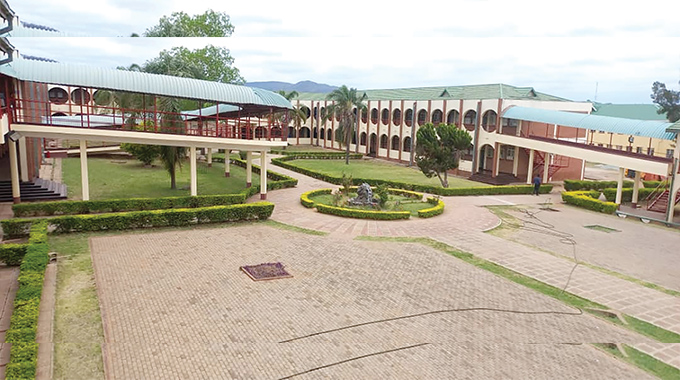
Sukulwenkosi Dube-Matutu, [email protected]
UMZINGWANE Rural District Council has allocated land to the Joshua Mqabuko Nkomo (JMN) Polytechnic for the construction of a graduate-led school in response to Government’s call for graduates to form consortiums to address shortage of schools in the country.
JMN Polytechnic principal, Dr Ngoni Moyo, said plans were underway to engage more local authorities to access land for more graduate-led consortium schools.
Government has encouraged teachers’ college graduates to form consortiums that will help address the shortage of 3 000 schools in the country.
By forming the consortiums, the graduates can pool their resources, skills and expertise and establish new schools that can offer quality education to learners.
The initiative is supported by the Graduate Employment Creation and Development Programme, which anchors on Heritage-Based Education 5.0 design to cause industrialisation and modernisation in Zimbabwe as the nation moves towards achieving Vision 2030.
The programme’s primary goal is nurturing employment creators as opposed to employment seekers with graduates being encouraged to venture into entrepreneurship by forming their own companies.
“In line with the Ministry’s Graduate Employment Creation and Development programme, which is spearheading and supporting Graduate-led consortia schools and Graduate-led business consortia, the Polytechnic is actively seized with this Government initiative to facilitate employment creation, improved livelihoods in communities and empowerment of Zimbabwean citizens in general,” said Dr Moyo.
“I’m pleased to report that the polytechnic has been offered land measuring 69 149 square metres by Umzingwane Rural District Council to build a Graduate-led Primary School.

“The institution is working with a 12-member consortium of former students to ensure that the school is constructed within the shortest possible period. We thank Government for introducing the Graduate Employment Creation and Development Programme,” she said.
Dr Ngoni revealed this during their annual graduation ceremony in Gwanda where she also appealed to CEOs of local councils to support applications for land to set up schools and other business ventures for the benefit of our communities and the country at large.
She said the polytechnic has recorded significant milestones as it moves to implement the Heritage-Based Education 5.0. The polytechnic already has registered a company, Big Josh Poly Private Limited, which has five subsidiary companies, which is into clothing making, printing and branding, construction, catering and confectionery services and solar assembling and installation.
She said the polytechnic has also embarked on several projects, consistent with the demands of the Heritage-Based Education 5.0 philosophy.
“These flagship projects include hatchery, horticulture, poultry production, automotive services and repairs, and indigenous languages literature production,” said Dr Moyo.
“In implementing our mandate as an institution, we are guided by Zimbabwe’s Economic Blueprint, the National Development Strategy 1 (NDS1).
“During the NDS1 period, Government’s thrust is on the Heritage-Based Education 5.0 to equip students with skills that empower them to become innovative towards societal development through transformative science, technology and knowledge application that delivers goods and services.”
The hatchery project, which can incubate 5 000 eggs per month, is now operational with a target to expand the project to reach its full capacity. Under horticulture the institution has cabbages, tomatoes and okra seedlings.
Dr Ngoni said the institution also continues to develop students through its traditional short courses programme, which seeks to empower students with skills in bakery, catering, beauty therapy, electrical house-wiring, brick and block laying, basic motor vehicle maintenance services and solar installation.
The polytechnic is following up on the graduates from the various training programmes to assist them in starting their businesses and to facilitate trade testing for those in the designated trades.
“The poultry project, which for now is basically on broiler production is being upgraded to increase production from the current 1 200 birds per batch to automated facilities with a capacity to produce 10 000 birds per batch,” she said.
“The Automotive Engineering Section has embarked on vehicle servicing and repairs to serve the Gwanda community.” — @DubeMatutu


 Online Reporter