Online Reporter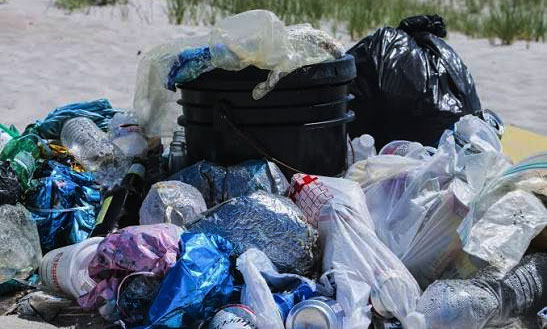
Lovemore Kadzura
Post Reporter
THE world recently marked International Plastic-Free Day, with environmentalists, waste management experts and community advocates urging citizens to move beyond symbolic observances and adopt practical solutions to curb plastic pollution, create green jobs and strengthen climate resilience.
Plastic pollution remains one of the most urgent environmental challenges of the 21st century.
Across Manicaland, discarded plastic bags, bottles, food packaging and other single-use plastics have become a common sight in streets, rivers, wetlands and open spaces, posing serious threats to ecosystems and public health.
During the rainy season, plastic waste frequently blocks drainage systems, increasing the risk of urban flooding. In rural communities, improperly disposed plastics contaminate water sources, degrade soil quality and endanger livestock and wildlife.
Against this backdrop, experts say that while plastics have become an integral part of modern life due to their affordability, durability and convenience, the environmental and economic costs associated with poor waste management can no longer be ignored.
For environmental advocates, International Plastic-Free Day is more than a commemorative event; it is a call to action aimed at promoting sustainable habits, responsible consumption and long-term behavioural change.
Climate Action Network Zimbabwe (CANZIM) national coordinator, Mr Wellington Madumira, said Zimbabwe must accelerate its transition towards sustainable production and consumption patterns to address the growing plastic waste crisis.
He noted that reducing dependence on single-use plastics, promoting recycling initiatives and encouraging investment in environmentally friendly alternatives would not only protect the environment but also contribute to economic development through the creation of green jobs and sustainable enterprises.
Mr Madumira said the fight against plastic pollution requires collective action from Government, industry, communities and individuals, adding that lasting change will only be achieved through stronger environmental stewardship and responsible waste management practices.
“The fight against plastic pollution begins with individual choices but must be supported by strong national policies. We need to reduce our dependence on unnecessary single-use plastics, encourage reusable alternatives and improve waste management systems throughout the country.” Said Mr Madumira, noting that plastic pollution is closely linked to climate change because most plastics are manufactured from fossil fuels, while their production, transportation and disposal contribute to greenhouse gas emissions.
“Every plastic bag or bottle that is avoided represents a small contribution towards reducing pollution and protecting our climate. Communities, businesses and the Government all have a responsibility to build a cleaner and more sustainable future. Local authorities should strengthen waste collection services, while the Government introduces stronger incentives for manufacturers to adopt biodegradable and recyclable packaging materials. Environmental responsibility should become part of everyday life. People should carry reusable shopping bags, avoid unnecessary plastic packaging whenever possible and dispose of waste responsibly. Small actions, when multiplied across millions of people, produce significant environmental benefits.
“Protecting the environment is not the responsibility of the Government alone.
Every citizen, household, business and institution has a role to play. By reducing plastic waste, supporting recycling and changing our daily habits, we are investing in healthier communities, stronger livelihoods and a more climate-resilient Zimbabwe,” he said.
While reducing plastic consumption remains the first priority, experts argue that recycling offers enormous opportunities for economic growth and employment.
Director of Lets Green the Future Trust, Ms Tendai Gracious Moyo, believes the country has the potential to develop a thriving circular economy where plastic waste is treated as a valuable resource rather than rubbish.
“Plastic is often viewed only as waste, yet it is also a raw material that can generate employment, stimulate entrepreneurship and reduce pressure on our environment. Recycling should be recognized, not only as an environmental intervention, but also as an economic opportunity,” said Ms Moyo, adding that communities could benefit from establishing organised collection centres where households, schools and businesses can deposit recyclable materials for resale to recycling companies.
Ms Moyo said recycled plastics can be transformed into a wide range of products, including paving bricks, roofing tiles, fencing poles, garden furniture, school desks and construction materials.
“If communities understand that plastic has commercial value, they are more likely to collect it instead of throwing it away. At the same time, entrepreneurs can establish businesses that purchase, process and manufacture products from recycled materials,” she said.
According to Ms Moyo, investment in recycling infrastructure will reduce landfill waste, while creating thousands of green jobs, particularly for unemployed youth and women.
She also called on the private sector to increase investment in recycling technologies and support innovation in environmentally friendly packaging.
Another area receiving growing attention is waste separation at source, a practice experts say could dramatically improve recycling efficiency across Zimbabwe. Currently, many households dispose of all waste in a single container, mixing food waste with plastics, paper, metals and glass.
This contamination reduces the quality of recyclable materials and increases sorting costs.
Environmentalist, Mr Justice Zvaita, said source separation is one of the simplest interventions available to households.
“Waste should be separated where it is generated. Households should have different containers for biodegradable waste, plastics, paper, glass and metals. Once recyclable materials are mixed with food waste, they become much more difficult and expensive to recover. Through waste separation at source municipalities spend less on waste disposal, recycling companies receive cleaner materials, waste pickers can work more efficiently and less waste ends up polluting rivers, wetlands and open spaces.
“Communities need continuous awareness campaigns, demonstrations in schools and support from local authorities. Behavioral change is just as important as infrastructure,” he said.
Environmental organisations are also advocating for the composting of biodegradable waste to reduce the amount of organic material reaching dumpsites while producing nutrient-rich compost for household gardens. For many locals, plastic waste represents more than an environmental concern — it is a source of daily income.
In urban settlements like Mutare, Chipinge and Rusape, informal waste pickers collect discarded plastic bottles and containers for sale to recycling companies, providing an important service that often goes unnoticed.
Ms Lucy Makoni, a waste picker from Rusape, said waste pickers recover tonnes of recyclable materials every year despite working under difficult conditions.
She, however, noted the numerous challenges they face, including very low prices offered by buyers, limited access to protective equipment and stigma which leads to lack of official recognition.
“People often overlook the work we do, but every bottle we collect is one less bottle polluting our environment. Recycling supports many families and helps keep our communities cleaner.
‘‘We need gloves, boots, protective clothing and safer working conditions. Local authorities should recognise waste pickers as important partners in environmental management because we are already contributing to recycling every day. When plastics are separated from food waste, they are cleaner and easier to recycle. It also makes our work safer and more productive,” she said.
Environmental advocates believe the nation can draw lessons from countries that have successfully reduced plastic pollution through integrated waste management systems combining public awareness, producer responsibility, recycling incentives and strong environmental regulations.
Among the recommendations emerging from this year’s International Plastic-Free Day are expanding community recycling centres, strengthening enforcement against illegal dumping, introducing deposit-return schemes for plastic bottles, promoting reusable packaging, supporting waste pickers through formal integration into municipal systems and encouraging businesses to invest in environmentally sustainable packaging. Schools also have an important role to play by incorporating environmental education into everyday learning, helping children develop lifelong habits around waste reduction, recycling and responsible consumption.
For Zimbabwe, the path towards a plastic-free future begins with simple but deliberate actions: refusing unnecessary single-use plastics, separating waste at source, supporting recycling initiatives and recognising that every piece of plastic diverted from the environment is a step towards a healthier, more sustainable nation.