Online Reporter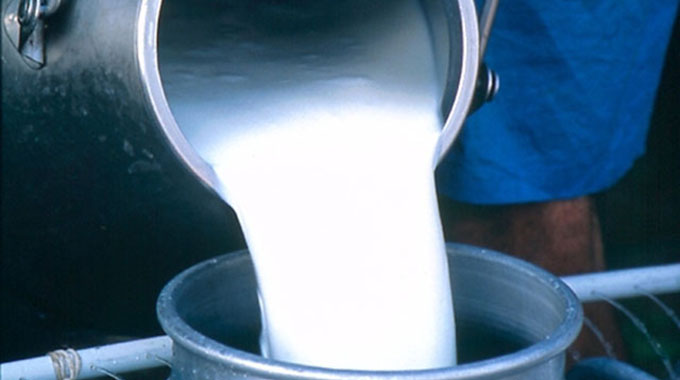
Judith Phiri, Zimpapers Business Hub
THE Ministry of Lands, Agriculture, Fisheries, Water and Rural Development has commended Bubi dairy farmer, Mr Francesco Marconati of Queens Dairy Farm, for establishing a complete value chain enterprise that has ensured a consistent milk supply in Bubi District and surrounding areas.
A complete dairy value chain includes all stages from milk production to consumption —covering production, collection, processing, distribution and marketing.
Queens Dairy Farm’s investments support the Government’s broader efforts to boost domestic milk production and achieve national self-sufficiency.
In 2025, Zimbabwe’s dairy industry is targeting the production of 132 million litres of raw milk — a 15 percent increase from the previous year’s 115 million litres.
This output is expected to meet the country’s self-sufficiency target. Initiatives such as the Dairy Revitalisation Fund and the reduction of duty-free milk powder imports are designed to stimulate local production and reduce reliance on imports, thereby saving valuable foreign currency.
Located 55 kilometres along the Bulawayo–Nkayi Road, Queens Dairy Farm maintains a herd of 338 dairy cattle and operates a milk parlour producing approximately 600 litres per day. Mr Marconati plans to expand the herd to over 2 000 heifers, aiming to become a leading milk producer and processor in the region.
Speaking at a field day held at the farm on Saturday, the Ministry’s Permanent Secretary, Professor Obert Jiri, in a speech delivered on his behalf by the Director of the Department of Livestock Production and Development, Dr Sitokozile Sibanda, praised Mr Marconati for his significant contribution to the district.
“Queens Dairy’s complete value chain enterprise in Matabeleland North’s Bubi District is an exciting initiative. The district is known for its rich mineral resources and agricultural potential, making it an ideal location for dairy farming and related enterprises.
“Bubi District has a strong focus on agricultural development, with opportunities for irrigation, value addition, and agro-processing. Given the district’s potential and support infrastructure, Queens Dairy’s enterprise is likely to include dairy farming, milk processing, and possibly cattle breeding and fodder production,” he said.
He noted that dairy farming plays a vital role in advancing Zimbabwe’s Rural Development 8.0 programme, which aims to support the country’s vision of becoming an upper-middle-income economy by 2030. The programme focuses on transforming agriculture through mechanisation, irrigation development and value addition.
“The Ministry is committed to driving agricultural transformation with the principle of leaving no one and no place behind.
As a region, we lack value chain facilities and robust out-grower support programmes. This initiative comes at the right time, offering farming communities a valuable opportunity to generate income.
“I see this development transforming Zimbabwe’s dairy value chain and supporting previous projects such as the Zimbabwe Agricultural Growth Programme (ZAGP), which aimed to strengthen linkages between production, processing and financing,” Dr Jiri said.
He also called for further investment in irrigation infrastructure, rural roads, and storage facilities to improve dairy farming efficiency and reduce operational costs.
Matabeleland North Provincial Affairs and Devolution Permanent Secretary, Ms Sithandiwe Ncube, in a speech read on her behalf by Deputy Director Mr Dhasai Parenda, expressed pride in the growth and potential of the dairy sector in the province.
“This event showcases the hard work and dedication of our farmers, who are the backbone of our agricultural industry. It highlights the importance of innovation, technology, and best practices in driving the growth of our dairy sector.
“Matabeleland North Province is endowed with vast agricultural potential, and dairy farming is a key area that holds great promise for our province’s economic development,” she said.
Host farmer Mr Marconati said the farm requires additional land to grow silage pastures to support its expansion plans.
“We are buying from local farmers, but it’s not enough. For our current herd of 338 dairy cattle, we need close to seven tonnes of silage per day. If we expand to 2 000 dairy cattle, we’ll need around 90 tonnes per day, which cannot be sourced locally.
“If the Government could assist us in acquiring additional land near the farm, we would be able to install centre pivots and irrigate our own silage pastures to support the herd we are targeting by the end of 2026,” he said.
He said that the farm produces about 600 litres of milk per day — sufficient for the surrounding communities in Bubi — but the goal is to reach over 4 000 litres daily to supply the wider Matabeleland region and other parts of the country.