admin
admin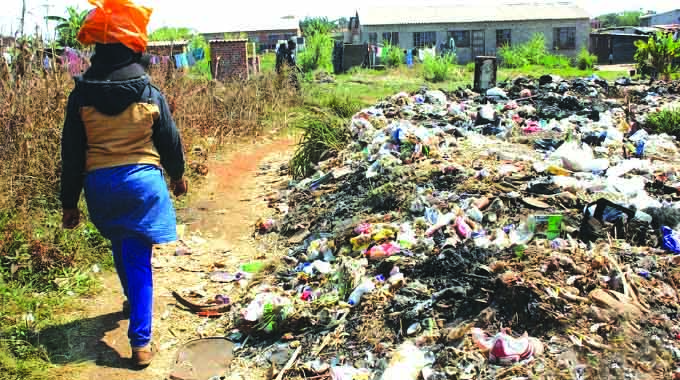
Trust Freddy
Correspondent
If you live in Budiriro suburb of Harare, you do not need to go far to witness how the opposition Citizen Coalition for Change (CCC)-led city council has neglected service delivery in the capital.
It is now clear that two decades after the opposition party, which started off as the MDC, then MDC-T, then MDC-A and now CCC, has failed to serve residents, not only of Harare, but other cities and towns where they are elected.
The Harare City Council is now characterised by urban neglect, maladministration, screaming corruption and putrid decay, in the process inviting the wrath of the residents who are now feeling the ineptitude of the CCC councillors.
Budiriro is one of Harare’s high density suburbs and within the same area lies a pristine new housing development being spearheaded by different companies and individuals who are constructing breath-taking houses.
The current development is bound to change the perception in regards to housing options that are within reach of the people’s pockets.
But the suburb is not getting the attention it deserves in terms of service delivery as the CCC-led Harare City Council dithers, with its councillors preoccupied with lining their pockets.
Today, poor service delivery is evidenced by the perennial water crisis, and apart from that, who can fail to notice the mounds of uncollected garbage in almost every parking area and street corner.
Rotten fruits and vegetables, raw sewage and bins over-spilling with garbage welcome the visitor to Budiriro.
All this neglect and dirt is a step backwards for the city, when everyone else is pressing forward to attain Vision 2030 of becoming an upper middle income economy.
Yet the city officials have preoccupied themselves with corruptly amassing wealth, selling every available open space and charging people money for services they never deliver.
Budiriro residents are no longer getting media attention because people have been made to believe that their plight is a natural phenomenon.
“What have we done wrong to deserve this?” Blessing Nyamupanga, who lives in the suburb posed the question while pointing to a pile of uncollected garbage.
“We have lost hope in the Harare City Council, they should just take responsibility for their action and stop this blame game.
“Every time we approach them, they shift blame to the Government. Honestly, we cannot continue to deal with people who are not ready to offer solutions. I had gone for a holiday, but I was surprised on return to see a mound of refuse piling at my gate.”
City council workers are allegedly demanding bribes from residents for them to collect garbage.
A resident who requested anonymity said the workers ask for “something” between US$2 and US$5 for them to collect refuse.
“What really hurts us is that sometimes we see refuse trucks, but they come here already filled to the brim with garbage,” he said. “They collect bins from selected houses and if you want to see them again you have to give them something.
“We do not have money to give city council workers, the Harare City Council must dedicate a whole day for Budiriro residents so that refuse can be collected. They simply pass through here. Nothing is being collected.”
Another resident, Ms Clara Marufu, a newspaper vendor, said they had “normalised the abnormal”.
“I have been staying here in Budiriro for more than eight years,” she said. “We just find an open space to empty our bins. People used to approach the city council, but they are now tired of doing that.
“But if you come back in the next few months, city council workers will be at work. We are now approaching elections and they have a tendency of coming out of their shells when it is election time.”
In fact, Budiriro residents have since created their own “Pomona” dump site and a huge dark cloud of smoke could be seen billowing from the burning mound of garbage along Nzou Road in Budiriro 2.
Garbage is now encroaching into the road, forcing motorists to divert their routes.
As for Budiriro residents, it is a double tragedy with the twin challenges of shortage of water and the uncollected rubbish.
Another resident, Kuda Maziti, they had gone for months without running water.
“We have never had the pleasure of seeing water coming out of these gleaming taps. It is just a design,” he said while standing beside a newly built house in Budiriro 2.
“Our relatives in Glen Norah and Glen View get water at least twice a week, but here in Budiriro we have been completely neglected.”
Mrs Mitchell Gotere, who is among the few individuals receiving city council water said she hesitates to use it in her garden.
“The water comes out dark or yellowish and we wonder how we are going to convince our little kids that water is colourless,” she said. “It leaves our vegetables with yellowish spots.
“If you open the tap and just let the water run, you will not be tempted to drink it and we receive it usually late at night.”
Another resident who preferred to be called Kelvin said he was making some money out of the crisis created by the city council officials.
“We charge US$1 per four buckets of water,” said Kelvin while standing behind a pushcart full of buckets of water. “There are new stands in this area and most of the owners dug their own wells, so that is our main sources of water for sale.”
Kelvin appealed to Government for more boreholes to be drilled in the area.
“We are appealing to Government to bring the borehole drilling scheme here,” he said. “Other suburbs have more boreholes as compared to us. Most of the people here are resorting to unprotected sources of water. We are surviving by the grace of God. “
Harare City Council spokesperson, Mr Innocent Ruwende, said the water crisis was being caused by lack of treatment chemicals.
“There is no significant improvement in the supply of water treatment chemicals,” he said. “We expect improvements starting today (yesterday).
“There is one pump that is supplying some western suburbs, including Budiriro and Kuwadzana. We expect supply to improve this (yesterday) afternoon.”
Mr Ruwende could neither confirm nor deny the corruption allegations against city workers, but said people should expect improvement in service delivery.
It remains to be seen if water will now be pumped to all Budiriro residents and what action will be taken against the city council workers allegedly demanding bribes to remove refuse.
Residents are also not happy that after obtaining what they think are proper papers for residential stands, including some with signatures of city council officials, the local authority waits for them to construct and then come for demolition on the argument that the areas were not designated for housing.
Just recently, at least 20 families from Budiriro were left homeless after their houses were demolished.
This came barely few months after 160 other families in Budiriro 5 were left counting losses, battling rains, with some women openly crying after their houses were destroyed by the council.
All this is a result of failure by the city council to reign-in land barons, with some investigations done in the past proving a close link between the land barons and some city officials.
Under successive opposition councils, most residents in the capital and its satellite towns did not have access to running water, yet water is classified as a basic human right.
But now the status is changing, thanks to President Mnangagwa’s intervention to ensure the residents led a normal life in terms of access to portable water.
In the short-term, the Second Republic under President Mnangagwa has drilled boreholes in most of Harare’s perennially dry suburbs under the Presidential Borehole Drilling Scheme to ensure residents have access to safe water.
This dovetails with President Mnangagwa’s vision as stated in the ruling party’s 2018 election manifesto on water and sanitation that said the Second Republic will, inter alia, carry out a national rehabilitation programme of all water purification plants, construct Gwayi-Shangani; Mutange; Musami and Kunzvi dams and the Wenimbi Pipeline.
The borehole drilling programme in urban centres is in line with this vision of ensuring no one and no place is left behind when it comes to access to basic needs.



 Online Reporter