Moffat Mungazi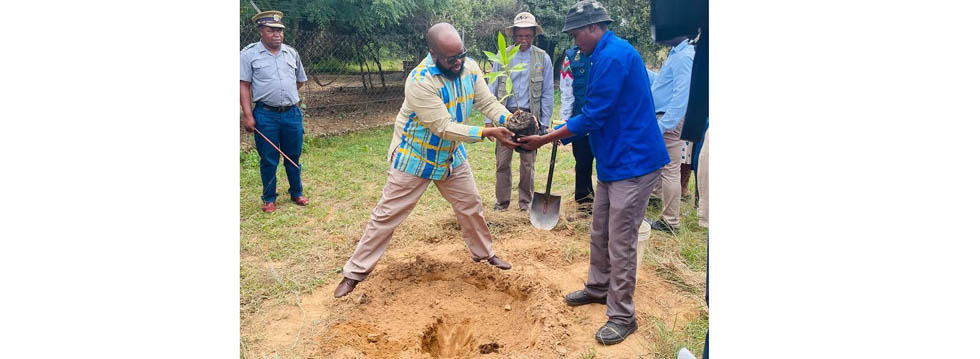
Lloyd Makonya
Correspondent
BUHERA Ward 31’s Mukoto Village recently became a vibrant hub of academic exchange and policy discourse as it hosted the much-anticipated Community-Based Tourism Research Conference at Mai Chimuti’s homestead.
The conference, held under the theme: “Resilient Communities: Navigating Climate Change Challenges through Tourism Innovations in Rural Communities”, attracted 14 tertiary institutions from across Zimbabwe.
Spanning three days, the event saw the presentation of 23 research papers, reinforcing the critical role of academia in shaping sustainable tourism policies that uplift rural communities.
The conference provided a platform for academics, policymakers, and local communities to engage in meaningful dialogue aimed at fostering economic growth through tourism.
One of the major highlights of the conference was the Rural District Councils (RDCs) Roundtable Session, which facilitated discussions on the integration of traditional knowledge systems in community-based tourism.
The session also explored strategies to mitigate human-wildlife conflict and promote rural entrepreneurship through village business units.
Additionally, the bonfire session, led by National Museums and Monuments of Zimbabwe’s (NMMZ) Eastern region director, Dr Paul Mupira, delved into community engagement in heritage management.
Dr Mupira emphasised the potential for rural communities to collaborate with NMMZ in developing viable tourism projects anchored on cultural heritage.
“Collaboration with NMMZ can turn cultural heritage assets into sustainable tourism products,” he urged.
The final day was marked by a keynote speech from Minister of State for Manicaland Provincial Affairs and Devolution, Advocate Misheck Mugadza.
He commended academia for their commitment to complement Government’s efforts in achieving President Mnangagwa’s Vision 2030, which aims to transform Zimbabwe into an upper-middle-income economy.
“Academia must continue to forge stronger ties with policymakers and local communities to uplift rural livelihoods through tourism. The 2017 Community-Based Tourism (CBT) guidelines and masterplans provide a framework for such initiatives, ensuring that tourism remains a key economic driver in Zimbabwe,” he stated.
He further acknowledged the role of CBT in empowering women and rural communities, and emphasised the importance of exploring opportunities in ecotourism, dark tourism, and cultural fairs.
“Tourism presents a significant opportunity for economic transformation, and with the right policies and collaborations. It can contribute even more to national GDP, which stood at 23 percent in 2023,” he added.
Zimbabwe Parks and Wildlife Management Authority (ZIMPARKS) Director-General, Professor Edson Gandiwa, also addressed the gathering, shedding light on the significance of shared natural heritage in driving CBT initiatives.
“Community-based tourism is anchored on shared resources, and Zimbabwe is blessed with an abundance of wildlife heritage. We have the second-largest elephant population in Africa, with between 75 000 and 80 000 elephants, and we rank fourth in terms of the rhino population,” he noted.
He also pointed out that animals like hyenas and crocodiles, often seen as threats, could present unique tourism opportunities.
“Our trans-frontier parks, such as, Lower Zambezi, Greater Mapungubwe, Greater Limpopo, and KAZA, offer immense potential for international models of conservation and potential collaborations,” he explained.
Professor Gandiwa emphasised the need to document heritage trails and leverage social media for marketing, adding that structures within CAMPFIRE (Communal Areas Management Programme for Indigenous Resources) which run in 59 out of the 60 rural district councils in Zimbabwe could also be duplicated for CBT initiatives.
Representing the Ministry of Tourism and Hospitality Industry, Mrs Chipo Chitagu outlined how communities can kick-start CBT projects.
“Government is committed to sustainable tourism development through well-structured CBT projects. Gastronomy tourism can enhance rural livelihoods by promoting local cuisines, while homestays and tour guiding can create economic opportunities for community members,” she explained.
She further stated that CBT projects are public initiatives owned by the communities, and the ministry would assist with capacity building, business planning, and marketing strategies to ensure their success.
“Every community has unique resources and gifts, and it is crucial to make the most of them in order to drive inclusive economic growth,” she added.
The academic fraternity hailed the conference as a resounding success.
Dr Ngoni Shereni of Lupane State University noted that: “This platform has, not only uplifted rural communities, but has also provided academia with an opportunity to contribute to sound policy development.”
Dr Daud Taranhike, co-founder of Integral Kumusha with his wife Christine, at whose homestead the conference was held, expressed gratitude for the support received from Government, traditional leadership, and the local community.
“Our goal is to improve rural livelihoods through tourism, and we are encouraged by the collaborative spirit demonstrated at this conference,” he said.
The 2025 Community-Based Tourism Research Conference in Buhera was a landmark event that reinforced Zimbabwe’s commitment to integrating tourism with sustainable rural development.
It fostered stronger partnerships between academia, policymakers, and communities, paving the way for innovative, climate-resilient tourism projects that will empower rural Zimbabweans for generations to come.



 Online Reporter