Online Reporter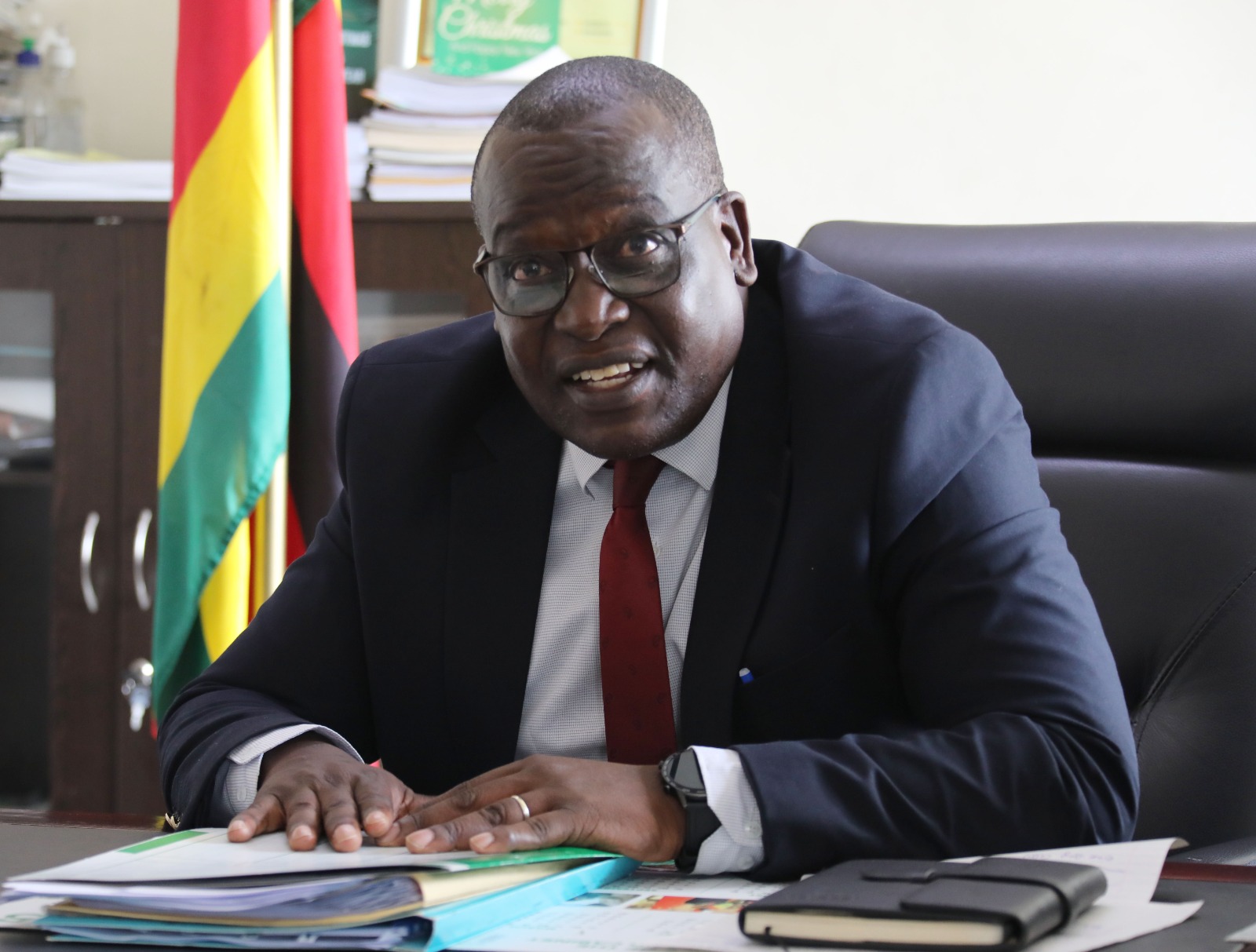
Vusumuzi Dube, Deputy Radar Editor
THE Government has applauded Bulawayo’s industrial resurgence during the National Development Strategy 1 (NDS1), the five-year economic blueprint that comes to an end this month, calling it a milestone worth celebrating.
After years marked by deindustrialisation, the second largest city is experiencing an industrial rebound under the Second Republic led by President Mnangagwa, with notable advances in textiles, agro-processing, leather and pharmaceuticals.
Permanent Secretary for Provincial Affairs and Devolution in Bulawayo, Mr Paul Nyoni, detailed the industrialisation milestones in an interview, highlighting the need to generate more skills fill the employment gaps.
He noted, in particular, the rapid expansion in the textile sector, which has since created an unprecedented shortage of skilled tailors and machinists in the city.
“I can tell you that with the expansion in the textile industry, there is a shortage of machinists and tailors in Bulawayo right now, and this is not an exaggeration. You can talk to the companies because there has been this expansion, quite rapid,” said Mr Nyoni.
“We have indeed recorded significant growth, especially in textiles. Archer Paramount, Edgar’s Carousel, they’re importing many more people than they were employing three or four years ago.
“I think Archer Carousel, at peak, reached 1,400, which is quite heart-warming. Edgar’s Carousel is now above 800. The Government assisted them to acquire new equipment, and they’ve been talking about 1 000 to 1 100.”
Mr Nyoni said there were now efforts to foster collaboration between established textile companies and emerging producers to address these labour shortages.
“We are actively encouraging that, the collaboration between these big companies, and the up-and-coming textile producers who are contracted to do the hard work of these various designs, also in the private sector,” he said.
Mr Nyoni said a task force has already been formed to tackle the skills gap, with plans to launch a training programme early next year.
“We have enough training centres that we can use. The big textile companies are prepared to actually cede some of their older equipment to our centres. For instance, if we go to Sizinda, we will have decent machinery to assist with the training,” he said. “The training is like three months. So, we are launching something in the New Year. Watch this space.”
Highlighting workforce demographics, Mr Nyoni noted that young women constitute a large share of employees in the sector.
“About 75 to 80 percent of the employees in these companies are female and young. Most of them are below 30, between 18 and 30, and we want to continue in that trajectory.”
On agro-processing, he said Bulawayo stands out as a hub with the country’s largest number of millers producing for human and animal consumption.
“We have realised some massive expansion in the last two to three years, whether one is talking about National Foods, the Bakers Inn family, Oceans Food, or Arenel. There has been serious expansion, increasing employment,” said Mr Nyoni.
Despite challenges such as drought and import tariffs, the sector remains robust.
“We are quite excited about those that produce, again, for agriculture, like the Mealie brands, which provide equipment that is used in this very fast-expanding agricultural sector. We have registered some significant successes.
The hand-held tractor is priced in Zimbabwe now; it’s quite affordable, and it’s because of the work that has been put in by Bulawayo’s industry,” said Mr Nyoni.
He said the leather industry has also expanded, with companies like Zambezi Tanneries doubling capacity during NDS1. Government-backed projects include a leather design studio developed in collaboration with the Common Market for Eastern and Southern Africa (Comesa), using computer-aided design and 3D printing to improve quality and standardise production.
“Now you have a place where you go and design the whole thing on a computer, and you can do 3D printing, and then work backwards, producing something acceptable to all the layers of the value chain. So, that was the major complaint,” Mr Nyoni said.
Further training programmes have been enhanced through partnerships with tertiary institutions, offering certificates and diplomas tailored to the leather industry’s needs. The aim is to shift toward producing finished leather goods rather than exporting raw materials.
In pharmaceuticals, local companies such as Plus Two, Datlabs, and Zimpharm have earned praise for their vital role during the COVID-19 pandemic.
“They were stalwarts during the time of COVID-19 in producing what we required and I think going forward, we should continue to support their efforts. We spotlight their efforts and try to bring it to the attention of health institutions,” said Mr Nyoni.
He described the industrial revival as proof of the Second Republic’s commitment to economic growth and job creation in Bulawayo, with plans to build on these gains as NDS2 gets underway, starting January 2026 up to 2030.